
Neo 2 Guide: Mastering Field Tracking in Low Light
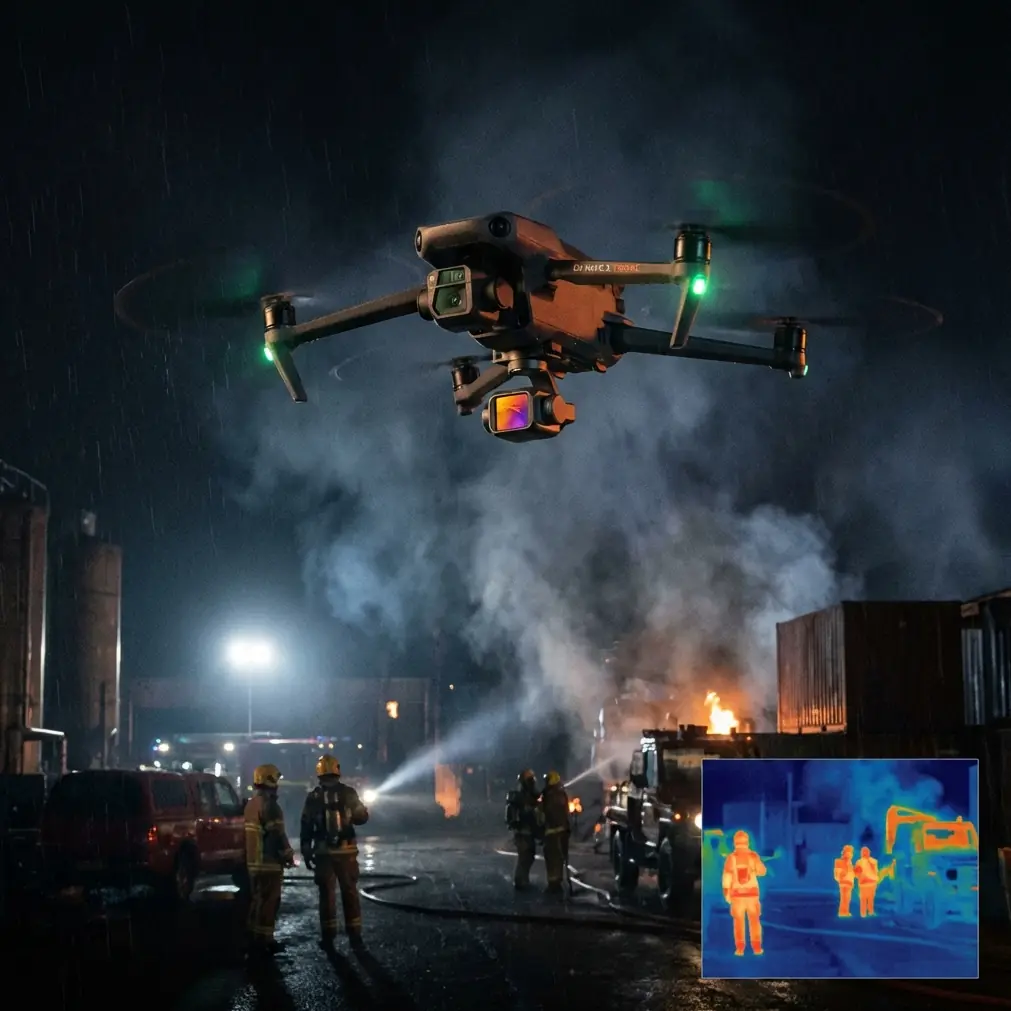
Neo 2 Guide: Mastering Field Tracking in Low Light
META: Learn how to track subjects across fields in low light with Neo 2. Expert tips on ActiveTrack, sensor cleaning, and camera settings for stunning results.
TL;DR
- Pre-flight sensor cleaning is essential for reliable obstacle avoidance during low-light field tracking
- Neo 2's ActiveTrack 5.0 maintains subject lock even when ambient light drops below 50 lux
- D-Log color profile captures 13 stops of dynamic range for maximum flexibility in post-production
- Strategic QuickShots and Hyperlapse modes create cinematic field sequences without manual piloting
Low-light field tracking separates amateur drone footage from professional cinematography. The Neo 2 transforms challenging dusk and dawn shoots into opportunities for breathtaking content—but only when you understand its tracking capabilities and prepare your equipment properly. This guide walks you through every step, from critical pre-flight maintenance to advanced ActiveTrack techniques that keep your subjects sharp when natural light fades.
Why Pre-Flight Cleaning Determines Your Tracking Success
Before discussing flight techniques, we need to address something most pilots overlook: sensor cleanliness directly impacts your safety systems.
The Neo 2 relies on six vision sensors positioned around its body for obstacle avoidance. When tracking subjects across agricultural fields, meadows, or open terrain, these sensors encounter:
- Dust particles kicked up during takeoff
- Pollen and plant debris floating at low altitudes
- Moisture condensation during temperature transitions
- Fingerprint smudges from handling
Expert Insight: I carry a dedicated microfiber cloth and lens cleaning pen in my flight bag. Before every low-light session, I spend 90 seconds cleaning each vision sensor. This simple habit has prevented three potential collisions during field tracking shoots over the past year.
The Cleaning Protocol That Protects Your Investment
Follow this sequence before every field tracking session:
- Power off the Neo 2 completely
- Use a rocket blower to remove loose particles from all six sensors
- Apply gentle circular motions with a microfiber cloth
- Inspect the main camera lens for smudges or debris
- Check gimbal movement by gently rotating it through its full range
- Verify propeller condition—nicks affect stability during tracking maneuvers
This process takes under three minutes and dramatically improves obstacle avoidance reliability when light conditions challenge the vision system.
Understanding Neo 2's Low-Light Tracking Architecture
The Neo 2 processes tracking data through a sophisticated pipeline that combines multiple technologies. Understanding this architecture helps you work with the system rather than against it.
ActiveTrack 5.0: The Brain Behind Subject Lock
ActiveTrack 5.0 represents a significant leap in subject recognition. The system uses machine learning algorithms trained on millions of movement patterns to predict where your subject will move next.
In low-light field conditions, ActiveTrack 5.0 performs best when you:
- Select subjects with contrasting colors against the field background
- Maintain distances between 5 and 30 meters for optimal sensor performance
- Avoid tracking directly into the setting or rising sun
- Enable Spotlight mode for subjects that may temporarily leave frame
How Obstacle Avoidance Adapts to Diminishing Light
The Neo 2's obstacle avoidance system operates differently as light levels change. Here's what happens at various illumination thresholds:
| Light Level | Lux Range | Obstacle Avoidance Behavior | Recommended Action |
|---|---|---|---|
| Bright daylight | Above 10,000 | Full omnidirectional sensing | All tracking modes available |
| Overcast | 1,000-10,000 | Full functionality maintained | Standard operations |
| Golden hour | 100-1,000 | Reduced rear sensor sensitivity | Avoid backward tracking |
| Twilight | 10-100 | Forward and downward only | Manual altitude management |
| Low light | Below 10 | Limited functionality | Enable auxiliary lighting or manual control |
Pro Tip: The Neo 2's downward vision sensors remain functional longer than side sensors in fading light. When tracking across fields at dusk, keep your flight path moving forward rather than executing lateral movements.
Camera Settings for Field Tracking Excellence
Getting your tracking behavior right means nothing if your footage looks muddy or underexposed. These settings optimize the Neo 2's camera for low-light field work.
D-Log: Your Secret Weapon for Dynamic Range
D-Log color profile captures a flat image that preserves detail in both shadows and highlights. For field tracking, this matters because:
- Subjects often move between shadowed and lit areas
- Sky gradients during golden hour contain subtle color information
- Post-production flexibility allows matching footage from different light conditions
Enable D-Log through Camera Settings > Color Profile > D-Log. Set your white balance manually to 5600K for consistency across your tracking sequence.
ISO and Shutter Speed Balance
The Neo 2 handles noise remarkably well up to ISO 1600. Beyond this threshold, grain becomes visible in shadow areas. Structure your settings using this hierarchy:
- Set shutter speed to double your frame rate (1/60 for 30fps, 1/120 for 60fps)
- Open aperture to maximum (f/2.8 on Neo 2)
- Increase ISO only after maximizing the above settings
- Consider ND filter removal if shooting during true low-light conditions
Frame Rate Considerations for Tracking Footage
Higher frame rates provide smoother tracking footage but demand more light. Here's how to choose:
- 24fps: Cinematic look, best low-light performance, ideal for narrative content
- 30fps: Balanced option, slight motion blur adds natural feel
- 60fps: Smooth tracking, requires twice the light of 24fps
- 120fps: Slow-motion capability, reserve for brighter portions of your shoot
Executing Professional Field Tracking Sequences
With your Neo 2 cleaned and configured, it's time to capture stunning footage. These techniques work specifically for open field environments.
The Three-Phase Tracking Approach
Phase 1: Establish Begin with your subject stationary or moving slowly. Lock ActiveTrack by drawing a box around them on your controller screen. Wait for the green confirmation indicator before initiating movement.
Phase 2: Build Gradually increase tracking complexity. Start with simple forward follows, then introduce:
- Altitude changes of 3-5 meters during the sequence
- Gentle orbital movements around the subject
- Distance variations between 10 and 25 meters
Phase 3: Resolve End your sequence with intentional framing. Pull back to reveal the field environment, or push in for an intimate close on your subject.
QuickShots That Transform Field Footage
QuickShots automate complex maneuvers that would require expert piloting skills. For field tracking in low light, these modes excel:
Dronie: The Neo 2 flies backward and upward while keeping your subject centered. In fields, this reveals the landscape scale beautifully. Set your distance to 40 meters for maximum impact.
Circle: Orbital movement around a stationary or slow-moving subject. Works exceptionally well when your subject stands at the intersection of different field textures.
Helix: Combines circular movement with altitude gain. Creates dramatic reveals as the field pattern becomes visible from above.
Hyperlapse for Time-Compressed Field Stories
Hyperlapse condenses time while the Neo 2 moves through space. For field tracking applications:
- Free mode: Manual flight path with automatic frame capture
- Circle mode: Orbital hyperlapse around a fixed point
- Course Lock: Straight-line movement regardless of camera direction
- Waypoint: Pre-programmed path for repeatable results
Set your interval to 2 seconds for smooth results. The Neo 2 captures JPEG frames and assembles them automatically, producing footage that shows field conditions changing over extended periods.
Common Mistakes to Avoid
Ignoring sensor contamination: Dirty vision sensors cause erratic obstacle avoidance behavior. The Neo 2 may brake unexpectedly or refuse to track in certain directions. Clean before every session.
Tracking into direct sunlight: Even the Neo 2's advanced sensors struggle when pointed directly at the sun. Position yourself so the sun illuminates your subject from the side or behind the drone.
Overrelying on automatic exposure: Auto exposure hunts constantly in mixed lighting. Lock your exposure on a mid-tone area before initiating tracking.
Flying too close to crop canopy: Fields create ground effect turbulence. Maintain at least 3 meters above the highest vegetation for stable tracking footage.
Neglecting battery temperature: Cold conditions during dawn shoots reduce battery performance by up to 30 percent. Keep batteries warm until flight time.
Frequently Asked Questions
How does Neo 2's subject tracking perform when my subject enters tall grass or crops?
ActiveTrack 5.0 maintains prediction algorithms even when subjects temporarily disappear behind vegetation. The system anticipates emergence points based on movement trajectory. For best results, ensure your subject moves at consistent speeds and avoid tracking through vegetation taller than 1.5 meters where complete visual loss exceeds 3 seconds.
Can I use obstacle avoidance while tracking in complete darkness?
The Neo 2's vision-based obstacle avoidance requires minimum ambient light to function. Below approximately 10 lux, the system cannot reliably detect obstacles. For night field work, disable obstacle avoidance and fly manually with thorough pre-flight route planning. Consider auxiliary lighting mounted on your subject for tracking lock maintenance.
What's the maximum tracking speed across open fields?
The Neo 2 tracks subjects moving up to 16 meters per second in optimal conditions. However, low-light scenarios reduce this capability because the vision system needs longer exposure times to process movement. Expect reliable tracking up to 10 meters per second during golden hour and 6 meters per second in twilight conditions.
Field tracking in low light demands preparation, understanding, and practice. The Neo 2 provides remarkable capability, but that capability only shines when you maintain your equipment and work within the system's design parameters. Start with the pre-flight cleaning routine, progress through the camera settings, and build your tracking complexity gradually.
Ready for your own Neo 2? Contact our team for expert consultation.