
Surveying Venues in Extreme Temperatures With Neo 2
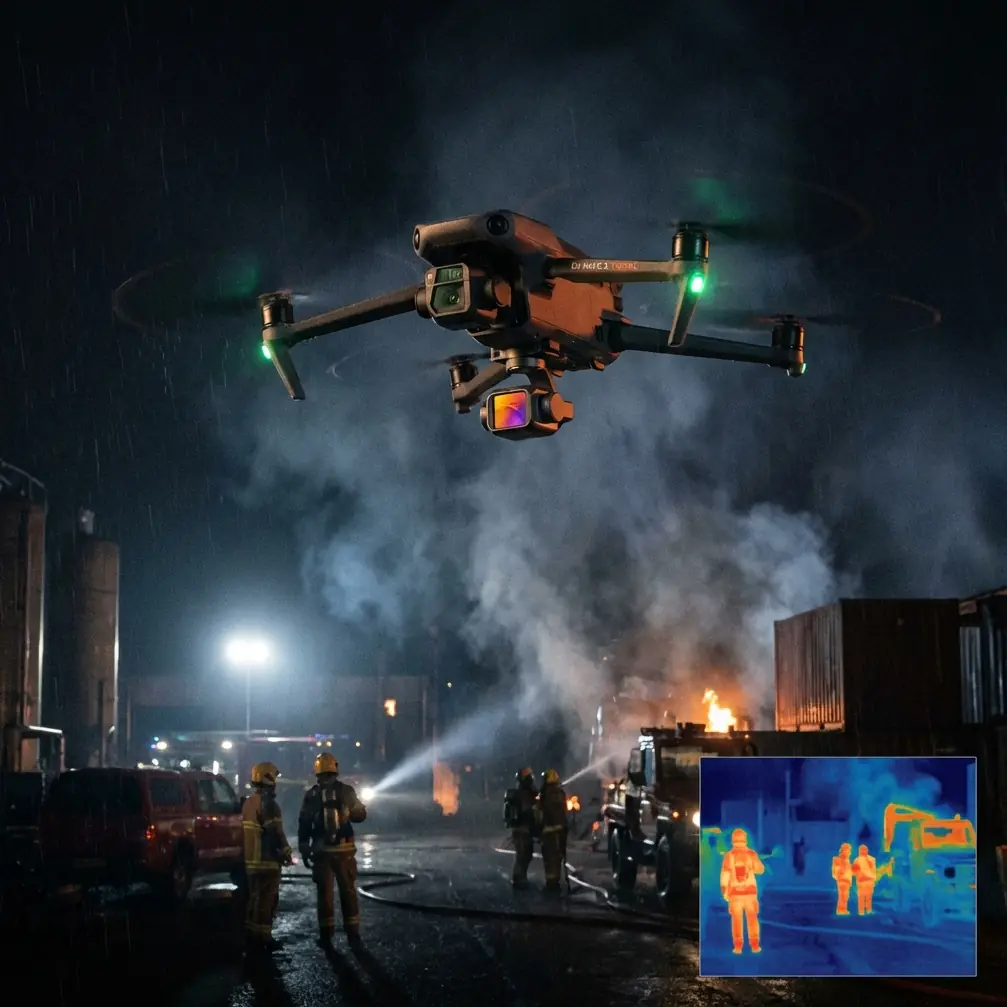
Surveying Venues in Extreme Temperatures With Neo 2: Field Tips That Actually Matter
META: Practical Neo 2 venue surveying advice for hot and cold conditions, with battery management, flight planning, tracking, obstacle awareness, and workflow tips grounded in real-world event security context.
Large venues change the way a small drone behaves.
A training field is forgiving. A stadium district, fan zone, parking complex, or temporary event site is not. Add extreme heat or biting cold and the margin for error gets thinner still. That is exactly why Neo 2 deserves a more practical discussion than the usual “easy to fly” summary. If your job is surveying venues before public activity begins, you care less about flashy specs and more about whether the aircraft can help you gather usable footage, stay predictable, and finish the mission without battery drama.
The broader industry context makes this even more relevant. One recent DRONELIFE report described Sentrycs landing major counter-drone contracts across World Cup host cities in the U.S., Mexico, and Canada, part of a wider push to establish new counter-UAS protocols around high-profile sporting events and critical infrastructure. That matters operationally for Neo 2 users because venue work is no longer just about capturing a clean overview. It now happens in airspaces and event footprints where drone policies are tighter, coordination is stricter, and pre-event documentation needs to be deliberate. If you are surveying a venue in that environment, every flight should have a clear purpose.
For Neo 2, the real question is simple: how do you use a compact aircraft effectively when temperature, venue complexity, and time pressure all stack up at once?
The problem with venue surveys in heat and cold
Extreme temperatures expose bad habits fast.
In hot conditions, crews often rush because the site is active early and surface temperatures climb by the hour. You launch, grab a few passes, and assume the mission is under control. Then battery drain picks up, the aircraft starts managing heat, and your plan compresses. In cold conditions, the opposite happens. The air may be calm and visibility sharp, so pilots get comfortable. But cold batteries sag under load, return-to-home timing changes, and the first aggressive climb can tell you the pack is not as ready as you thought.
Venue work compounds this because you rarely survey one simple open area. You are evaluating entry gates, circulation roads, rooftop sightlines, temporary structures, lighting rigs, crowd-channeling barriers, nearby trees, utility poles, and reflective surfaces. At sports and event sites, you are also often trying to create footage that is useful to multiple stakeholders: operations, facilities, contractors, and safety teams.
That means Neo 2 features like obstacle avoidance, ActiveTrack, subject tracking, QuickShots, Hyperlapse, and D-Log are not just creative extras. Used correctly, they become tools for repeatable documentation.
Why the World Cup city security trend changes how you should fly
The Sentrycs story is about counter-drone systems, not Neo 2 directly. But the takeaway for venue survey operators is significant.
When host cities across three countries are hardening their approach to UAS activity, venue-adjacent drone operations become more structured. Flights near high-profile sports infrastructure are increasingly shaped by layered permissions, tighter schedules, and expectations that operators know exactly why they are in the air. A small drone like Neo 2 fits well in this climate because it can be deployed quickly for civilian inspection and site review, but only if the workflow is disciplined.
Operationally, two details from that report stand out.
First, the geographic spread matters: the U.S., Mexico, and Canada. If a venue program crosses regions, crews can encounter different weather extremes and different compliance expectations within the same project portfolio. Neo 2 operators need a process that travels well. Heat management in a southern parking complex and cold-weather preflight discipline in a northern host city are not edge cases anymore. They are standard planning variables.
Second, the report links these deployments to high-profile sporting events and critical infrastructure. That raises the bar for flight intent. Venue surveying has to be purposeful, low-friction, and easy to explain. A rushed orbit for “general footage” is less defensible than a planned sequence documenting ingress routes, roofline obstacles, signage visibility, and temporary asset placement.
The Neo 2 approach that works: short, structured, repeatable flights
My advice with Neo 2 in extreme temperatures is to stop thinking in terms of one long mission. Think in terms of compact modules.
Run one flight for perimeter context. Another for entry and circulation patterns. Another for elevated visual checks on structures and obstructions. If needed, a final pass for cinematic but still functional overviews using D-Log for better grading latitude in mixed light.
This solves several problems at once.
- It reduces battery exposure to temperature stress.
- It makes the mission easier to pause if conditions shift.
- It gives each sortie a clear operational purpose.
- It produces folders of footage that stakeholders can actually use.
Small drones are at their best when the pilot avoids trying to make one battery do everything.
My field battery tip for Neo 2 in extreme temps
Here is the battery habit I wish more operators adopted: never judge the pack by percentage alone. Judge it by behavior in the first 60 seconds.
In cold weather, I keep batteries insulated before flight, but I do not baby them once airborne. After takeoff, I hold a stable hover, then make a controlled forward acceleration and a measured climb. Not aggressive. Just enough to see whether voltage behavior feels normal and whether the aircraft response is consistent. If the pack dips harder than expected, that battery gets reassigned to a shorter, lower-risk pass or comes down immediately.
In high heat, the mistake is leaving packs sitting in a vehicle or on dark equipment cases between flights. I rotate them in shade, let them breathe between sorties, and avoid launching a heat-soaked battery just because it shows a healthy charge level. A hot battery can look ready and still underperform in a way that compresses your safe working window.
That first minute tells the truth. Better than the percentage number. Better than optimism.
Obstacle avoidance is not permission to get casual
Venue environments are cluttered in ways open fields are not. Decorative lighting, netting, suspended banners, scaffold edges, temporary fencing, scoreboards, and glossy surfaces all affect how carefully you need to fly. Neo 2’s obstacle awareness is useful, but on event sites the real value is not that it “saves” a reckless path. The value is that it gives you margin while executing a conservative one.
I recommend treating obstacle avoidance as a backup layer, not as a route planner. Build your lines around obvious hazards and leave extra spacing around anything temporary. Temporary event infrastructure is often the least predictable object on site. It may have changed since the last briefing, and it may not present as cleanly from every angle.
Operationally, this matters because venue surveys are often repeated over multiple days. A path that was clear on setup day can be partially obstructed the next morning. Neo 2 helps when conditions evolve, but only if the pilot assumes change rather than stability.
ActiveTrack and subject tracking for venue walkthroughs
A lot of pilots think of ActiveTrack and subject tracking mainly as creator features. That undersells them.
For venue surveying, they are useful when you want consistent visual context around a moving ground reference. For example, tracking a site lead, facilities manager, or contractor vehicle along internal access roads can reveal sightline issues, signage conflicts, bottlenecks, or uneven lighting transitions better than a static hover ever could. You are not tracking for style. You are tracking to understand movement through the venue.
The caution is straightforward: use tracking only where the airspace around the subject is simple and predictable. At busy sites with cranes, lines, masts, or intermittent foot traffic, manual control is often the better call. Neo 2’s automated tools are strongest when they reduce workload without introducing ambiguity.
QuickShots and Hyperlapse can support documentation, not just aesthetics
QuickShots and Hyperlapse get dismissed too often in professional workflows because they sound recreational. That is shortsighted.
A well-chosen automated movement can create repeatable visual references from one survey date to the next. If you want to compare staging progress, parking layout changes, temporary buildouts, or the visibility of roof equipment, a repeatable automated move is sometimes more useful than a hand-flown clip. Hyperlapse can also show how a venue zone changes over time, especially in early setup windows when traffic flow, delivery patterns, or shadow movement affect operational decisions.
The trick is to use these modes selectively and label the output clearly. One smooth, repeatable movement over a key zone can tell a project team more than ten random clips.
D-Log matters when venues mix harsh light and deep shade
Sports and event venues create ugly lighting. You get bright concrete, reflective vehicles, shaded concourses, dark roof overhangs, and isolated hot spots from LED signage. That is where D-Log earns its place.
If you are documenting a site for teams that need to inspect what changed, wider tonal flexibility helps preserve both highlight detail and shadow information. It does not replace good exposure discipline, but it gives you better material when the venue throws extremes at the camera. For teams reviewing access points, structural edges, or temporary installations, that can make footage more usable in post instead of forcing editors to choose between blown highlights and crushed shadows.
For a small aircraft working under temperature stress, that matters because you may not get endless second takes. Better source footage on the first pass is a real operational advantage.
A simple problem-solution workflow for Neo 2 venue surveys
Here is the framework I use.
Problem: Conditions change faster than the survey plan
Solution: Break the mission into 5- to 8-minute objectives. Do not chase a full-site masterpiece in one go.
Problem: Batteries behave differently in extreme heat and cold
Solution: Evaluate battery performance in the first minute of flight, not just before takeoff. Shade hot packs. Insulate cold ones before launch.
Problem: Venue obstacles multiply during setup
Solution: Fly wider than necessary on the first pass. Tighten later only if the environment remains stable.
Problem: Teams need footage they can compare over time
Solution: Use repeatable QuickShots or measured manual routes at the same altitude and angle for progress tracking.
Problem: Lighting ruins detail
Solution: Capture key inspection-style passes in D-Log when the contrast is harsh.
Problem: Ground movement is hard to interpret from static overheads
Solution: Use ActiveTrack or subject tracking selectively to follow a site lead through key circulation routes.
That is the difference between “I flew the venue” and “I delivered useful survey material.”
What civilian operators should take from the current event-security environment
The DRONELIFE report on counter-drone contracts around World Cup cities is a reminder that major venues are entering an era of stricter sky management. For civilian Neo 2 operators, the lesson is not fear. It is precision.
Show up with a defined mission. Coordinate properly. Keep flights compact. Know what each battery is there to accomplish. Build footage sets that answer practical venue questions. If your role is pre-event surveying, your best asset is not just the drone. It is the predictability of your workflow.
That is especially true in extreme temperatures, where environmental stress punishes improvisation. Neo 2 can do valuable work at venues because its compact format supports fast deployment and low-friction documentation. But compact does not mean casual. The smaller the aircraft, the more your process matters.
If you are building a Neo 2 venue-survey routine and want to compare field setups with someone who has done this in mixed climates, you can message me here.
Final take
Neo 2 makes sense for venue surveying when the mission is disciplined enough to match the aircraft.
In hot weather, protect battery quality and shorten objectives. In cold weather, prove the pack in the first minute before trusting it deeper into the mission. Use obstacle avoidance as margin, not permission. Treat ActiveTrack, QuickShots, Hyperlapse, and D-Log as documentation tools, not gimmicks. And remember what the current event landscape is telling us: around high-profile venues, especially across markets as varied as the U.S., Mexico, and Canada, drone work is increasingly judged by clarity of purpose.
That is where Neo 2 can quietly excel. Not by pretending to be a bigger aircraft, but by doing small-aircraft work with discipline.
Ready for your own Neo 2? Contact our team for expert consultation.