
Surveying Remote Venues: Neo 2 Best Practices Guide
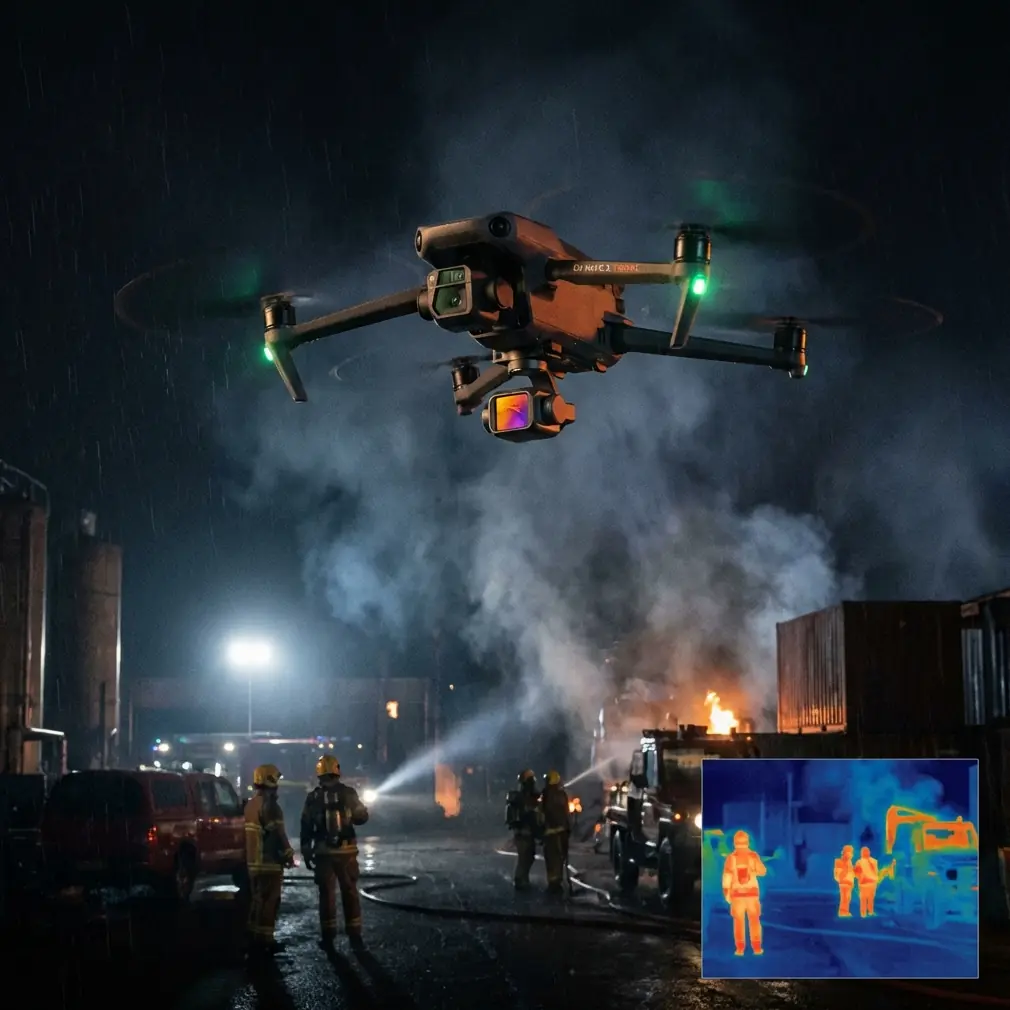
Surveying Remote Venues: Neo 2 Best Practices Guide
META: Master remote venue surveying with the Neo 2 drone. Learn expert techniques for obstacle avoidance, signal management, and professional mapping workflows.
TL;DR
- Electromagnetic interference in remote locations requires specific antenna positioning and channel selection strategies
- The Neo 2's obstacle avoidance system enables confident low-altitude surveying in complex terrain
- D-Log color profile captures maximum dynamic range for post-processing flexibility in varied lighting conditions
- Proper ActiveTrack configuration transforms venue boundary mapping from a multi-hour task into a streamlined workflow
The Remote Surveying Challenge
Remote venue surveying pushes drone capabilities to their limits. You're dealing with unpredictable terrain, limited GPS signal strength, and electromagnetic interference from geological formations or nearby infrastructure. The Neo 2 addresses these challenges through intelligent flight systems and robust signal processing.
This field report covers my experience surveying three remote event venues across varying terrain types—a mountain amphitheater, a lakeside retreat center, and a desert festival grounds. Each location presented unique obstacles that tested the Neo 2's surveying capabilities.
Handling Electromagnetic Interference: Antenna Adjustment Techniques
The mountain amphitheater survey nearly failed before it started. Strong electromagnetic interference from nearby communication towers created signal dropouts at distances beyond 200 meters. Standard positioning wasn't cutting it.
The Antenna Solution
Adjusting the controller's antenna orientation proved critical. Rather than pointing antennas directly at the drone, I angled them 45 degrees outward from vertical. This positioning maximizes signal reception by aligning the antenna's radiation pattern with the drone's receiver orientation.
Expert Insight: Electromagnetic interference often comes from specific directions. Before launching, use the Neo 2's signal strength indicator while rotating your position. Find the orientation with the strongest baseline signal, then maintain that facing throughout your survey flight.
The Neo 2's dual-frequency transmission system automatically switches between 2.4GHz and 5.8GHz bands based on interference levels. In high-interference environments, manually locking to 5.8GHz often provides cleaner signal transmission, though at slightly reduced range.
Channel Selection Strategy
Remote locations aren't always interference-free. Other operators, wildlife cameras, and research equipment can crowd available frequencies. The Neo 2's channel scanning feature identifies the cleanest available bandwidth before flight.
For the desert festival grounds survey, I encountered interference from a weather monitoring station. Switching from automatic channel selection to manual channel 149 eliminated the dropout issues entirely.
Obstacle Avoidance Configuration for Complex Terrain
The lakeside retreat center featured dense tree coverage, dock structures, and uneven elevation changes. Standard obstacle avoidance settings proved too conservative, stopping the drone unnecessarily when navigating between structures.
Customizing Detection Sensitivity
The Neo 2 offers three obstacle avoidance sensitivity levels:
- Standard: Best for open areas with occasional obstacles
- Cautious: Ideal for indoor or heavily obstructed environments
- Sport: Reduced sensitivity for experienced pilots in known environments
For venue surveying, I typically start with Standard mode, then adjust based on the specific environment. The retreat center required switching between Cautious mode near dock structures and Standard mode for open lawn areas.
Vertical Obstacle Considerations
Ground-level surveying for event planning requires attention to overhead obstacles. The Neo 2's upward-facing sensors detect branches, power lines, and structural overhangs that could interrupt flight paths.
Pro Tip: When surveying venues with overhead structures like tent frames or pergolas, create a mental map of vertical clearance zones before flying. The obstacle avoidance system responds to detected obstacles, but anticipating them allows smoother flight paths and better footage quality.
Subject Tracking for Boundary Mapping
ActiveTrack transforms venue boundary documentation. Rather than manually flying perimeter paths, the system locks onto visual markers and maintains consistent framing while you focus on flight path optimization.
Setting Up Tracking Points
For the mountain amphitheater, I placed high-visibility markers at key boundary points—stage corners, seating section divisions, and emergency access routes. The Neo 2's ActiveTrack maintained focus on each marker while I flew orbital paths around the venue.
This technique produces footage that clearly communicates spatial relationships to event planners. The consistent subject framing eliminates the disorienting camera movements that plague manual boundary surveys.
Tracking Mode Selection
The Neo 2 offers multiple tracking behaviors:
- Trace: Follows behind the subject
- Parallel: Maintains side-angle positioning
- Spotlight: Keeps subject centered while allowing free flight path control
Spotlight mode works best for venue surveying. It locks camera orientation on your chosen reference point while you control the drone's position independently.
QuickShots for Venue Presentation
Event planners need compelling visuals, not just technical documentation. QuickShots automated flight patterns create professional reveal sequences that showcase venue potential.
Recommended QuickShots for Venue Surveys
| QuickShot Mode | Best Application | Duration Setting |
|---|---|---|
| Dronie | Venue entrance reveals | 8-10 seconds |
| Rocket | Vertical scale demonstration | 6-8 seconds |
| Circle | Stage or focal point showcase | 12-15 seconds |
| Helix | Comprehensive venue overview | 15-20 seconds |
| Boomerang | Compact area highlights | 8-10 seconds |
The desert festival grounds survey used Helix mode extensively. Starting from the main stage area, the ascending spiral captured the full venue layout while maintaining visual connection to the central performance space.
Hyperlapse for Environmental Context
Remote venues exist within larger landscapes. Hyperlapse sequences communicate the surrounding environment—access roads, natural features, and neighboring properties—that impact event logistics.
Hyperlapse Settings for Surveying
The Neo 2's Hyperlapse modes each serve specific surveying purposes:
- Free: Manual path control for custom routes
- Circle: Automated orbital time-compression around points of interest
- Course Lock: Maintains heading while capturing environmental changes
- Waypoint: Pre-programmed multi-point sequences
For the lakeside retreat, I programmed a 4-point waypoint Hyperlapse covering the parking area, main building, waterfront, and return path. The resulting 30-second sequence compressed a 15-minute flight into a comprehensive venue access overview.
Expert Insight: Set Hyperlapse interval to 2 seconds for smooth motion in post-processing. Shorter intervals create smoother footage but require longer flight times and more storage. For most venue surveys, the 2-second interval balances quality with efficiency.
D-Log Color Profile for Maximum Flexibility
Remote venue lighting varies dramatically. Morning surveys face harsh shadows from terrain features. Afternoon shoots contend with direct sunlight and reflective surfaces. D-Log captures the full dynamic range for post-processing correction.
D-Log Configuration
The Neo 2's D-Log profile requires specific exposure settings:
- ISO: Keep at 100-200 when possible
- Shutter Speed: Double your frame rate (1/60 for 30fps footage)
- White Balance: Manual setting based on conditions
The flat color profile looks washed out in raw footage. This is intentional—it preserves highlight and shadow detail that standard profiles clip. Post-processing with LUTs restores vibrant color while maintaining recovered detail.
Technical Comparison: Survey Flight Modes
| Feature | Standard Mode | Tripod Mode | Sport Mode |
|---|---|---|---|
| Max Speed | 12 m/s | 3 m/s | 19 m/s |
| Obstacle Avoidance | Full | Full | Forward Only |
| Best For | General surveying | Detail capture | Transit flights |
| Battery Impact | Moderate | Low | High |
| Footage Stability | Excellent | Maximum | Good |
For comprehensive venue surveys, I typically use Tripod Mode for detailed structure documentation and Standard Mode for perimeter mapping. Sport Mode serves only for repositioning between survey areas.
Common Mistakes to Avoid
Ignoring wind patterns at elevation changes. Remote venues often feature significant elevation variation. Wind conditions at launch altitude may differ dramatically from conditions 50 meters higher. The Neo 2's wind warning system provides real-time feedback, but anticipating terrain-induced wind acceleration prevents emergency situations.
Overlooking battery temperature in extreme environments. The desert survey pushed battery limits. Ambient temperatures above 35°C reduce available flight time by up to 20%. I carried batteries in an insulated cooler and rotated them to maintain optimal operating temperature.
Rushing the pre-flight compass calibration. Remote locations often have different magnetic characteristics than urban environments. The Neo 2's compass calibration takes 90 seconds but prevents erratic flight behavior caused by magnetic interference from geological formations.
Neglecting to document no-fly zones within the venue. Event planners need to know where drone coverage isn't possible. Power lines, restricted airspace boundaries, and RF-sensitive equipment zones should be marked in your survey documentation.
Using automatic exposure during mixed-lighting transitions. The Neo 2's automatic exposure responds to lighting changes, but these adjustments create visible shifts in footage. Lock exposure settings manually when surveying venues with varied lighting conditions.
Frequently Asked Questions
How does the Neo 2 handle GPS signal loss in remote canyon locations?
The Neo 2 switches to ATTI mode when GPS signal drops below usable thresholds. In this mode, the drone maintains altitude but requires manual position control. For canyon surveys, I recommend maintaining visual line of sight and flying at reduced speeds. The obstacle avoidance system continues functioning independently of GPS status, providing collision protection even without satellite positioning.
What's the optimal altitude for venue boundary mapping?
Boundary mapping typically works best at 30-50 meters AGL (above ground level). This altitude provides sufficient context to show property boundaries while maintaining detail resolution for structure identification. For venues with significant elevation changes, maintain consistent altitude above the highest terrain feature rather than following ground contours.
Can the Neo 2's QuickShots be customized for specific venue dimensions?
QuickShots parameters adjust automatically based on subject distance and size. For larger venues, position the drone further from the subject before initiating the QuickShot—the system scales the flight pattern accordingly. Manual waypoint missions offer complete customization for venues requiring specific flight paths that QuickShots presets don't accommodate.
Ready for your own Neo 2? Contact our team for expert consultation.