
Neo 2 Best Practices for Dusty Forest Surveys
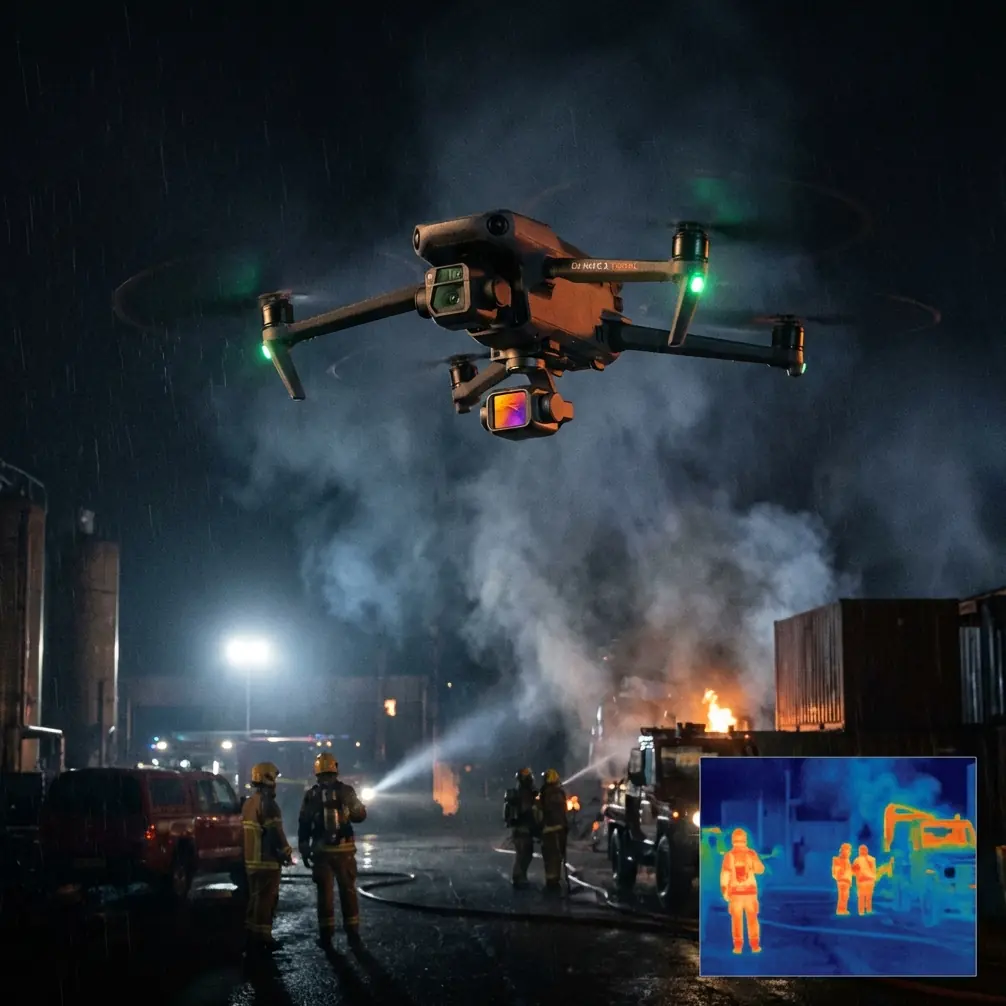
Neo 2 Best Practices for Dusty Forest Surveys: Turning Aerial Imaging Into Environmental Insight
META: Learn how a Neo 2 workflow can support dusty forest and environmental survey missions with smarter imaging, efficient coverage, multispectral-style planning, and field-proven monitoring logic inspired by real UAV environmental practices.
Dusty forests are hard on equipment and even harder on decision-making. Visibility changes by the hour. Ground access is slow. Traditional point checks tell you what is happening at one spot, not across an entire stand, drainage corridor, or disturbed clearing. That gap matters when you are trying to document erosion, watch sediment moving toward surface water, or understand whether airborne dust is tied to a specific activity zone.
This is where a Neo 2-based survey workflow becomes genuinely useful—not because it replaces every specialist platform, but because it borrows the logic of professional environmental drone monitoring and adapts it to a lighter, more deployable field routine.
The reference material behind this discussion comes from a Chinese UAV environmental monitoring solution centered on multirotor operations. Two details stand out. First, the source emphasizes that drone-acquired data can reach centimeter-level accuracy while reducing large amounts of field labor. Second, it describes a real operational method: using a multirotor platform such as the iFly D1 to collect regional imagery, monitor water conditions through multispectral capture, and support air-quality work through live transmission, mobile atmospheric sensing, or airborne sampling returned to a lab. Those are not abstract claims. They point to a practical shift from isolated sampling to continuous, area-based observation.
For someone surveying forests in dusty conditions, that shift is the story.
The real problem in dusty forest surveys
Dusty forest environments create three operational headaches at once.
The first is access. Forest roads may be rough, blocked, or simply too slow for broad inspection. If you are checking multiple compartments, haul tracks, stream crossings, and edge zones in one day, every extra ground stop drains the schedule.
The second is fragmentation of data. Teams often gather scattered photos, a few notes, perhaps handheld readings near a trail or water edge. Useful, yes. Complete, no. The reference document makes a sharp criticism of traditional environmental monitoring for exactly this reason: point-based monitoring has limitations and can give a one-sided picture of area-wide conditions. In a dusty forest, that is especially true. Dust plumes drift. Runoff pathways change. Sediment impact appears far from the source.
The third is timeliness. By the time a team revisits a site, conditions may already have shifted. The source material highlights drone systems for their broad field of view and timely, continuous observation. That combination matters when you are trying to understand not just whether dust exists, but where it starts, where it moves, and what it threatens next.
Why Neo 2 fits the field better than a purely ground-based workflow
Neo 2 is not a laboratory instrument. It is a field tool. In dusty forest work, that distinction is helpful.
A compact aircraft can be launched from a narrow clearing, a service road turnout, or the edge of a cut block. It can document canopy gaps, road shoulders, drainage channels, log decks, exposed soil, and adjacent water features in a single flight sequence. That is already a major gain over walking segment by segment with a camera and notebook.
The environmental solution reference repeatedly stresses higher work efficiency, broader coverage, and labor savings for multirotor drone monitoring. Applied to Neo 2 operations, the operational significance is straightforward: one pilot can build a visual record of a large and messy site without sending staff repeatedly into dusty active zones. That reduces time in the field and improves consistency of the record.
There is another layer here. Dust in forests is rarely only a visibility issue. It often sits inside a bigger environmental chain: soil disturbance, runoff, water discoloration, vegetation stress along edges, and complaints from nearby stakeholders. A drone that can quickly gather repeatable visual evidence becomes the connective tissue between separate observations.
From “nice aerial footage” to usable environmental evidence
A lot of drone users stop at attractive overhead video. That is not enough for survey work.
The source document describes a structured monitoring sequence for water environments: assess terrain and landform first, plan the mission, conduct area aerial acquisition, then generate thematic outputs from the imagery. Even if your Neo 2 setup is not running the same specialist sensor stack as the iFly D1 examples, that workflow is still the right one.
For a dusty forest survey, I would use Neo 2 in the same disciplined order:
1. Read the terrain before flying
Look for slope breaks, unsealed roads, exposed haul routes, stream approaches, culvert outlets, storage pads, and recent disturbed ground. Dust problems are rarely random. They cluster around movement corridors and bare surfaces.
2. Build area coverage, not isolated clips
Instead of shooting only the obvious dust cloud, capture the wider context: source area, travel path, downwind deposition zone, and nearby water features. The reference material values wide-view, continuous observation for a reason. Environmental conditions make more sense when seen as systems.
3. Return to the same viewpoints
Repeatable passes are often more useful than one dramatic flight. If you revisit after wind changes, after vehicle activity, or after rainfall, the comparison reveals trends that a single mission cannot.
4. Convert imagery into decision support
You may not be creating full thematic water-quality maps on every Neo 2 mission, but you can still classify visible findings: dust source zones, sediment pathways, affected crossings, canopy edge impacts, and maintenance priorities.
That is the difference between media capture and environmental documentation.
What the water-monitoring reference teaches forest survey operators
One of the most valuable facts in the source is the use of a multirotor platform with a multispectral imager to quickly obtain waterbody imagery and monitor surface water conditions more intuitively and comprehensively. It then notes that such imagery can support interpretation of eutrophication, algal bloom, transparency, suspended matter, and pollution discharge points.
Why does that matter for a Neo 2 article aimed at dusty forest surveys?
Because dusty forest missions often intersect with water risk before anyone notices. Fine particulates from roads and disturbed ground do not stay on the road. They migrate. If your forest survey area includes ponds, streams, drainage ditches, or wetland margins, a structured aerial routine helps reveal visible water-surface changes, sediment plumes, or inflow discoloration much earlier than sporadic on-foot checks.
Operationally, this means your Neo 2 should not only look upward and outward across the forest. It should also inspect the interfaces: where road runoff reaches water, where exposed banks shed material, where crossings are under strain, and where dust-producing activity may become a water-quality issue. The source’s multispectral workflow underscores a bigger truth: environmental drone work gets stronger when image collection is designed around consequences, not just assets.
Air-quality logic, adapted for a lighter drone workflow
The same reference also outlines two atmospheric monitoring models using the iFly D1. One supports real-time monitoring through live image transmission, with HD photos or video sent back to a ground monitoring center. Another supports specialized atmospheric monitoring by carrying a mobile automatic monitoring platform to detect pollutants existing systems cannot monitor, or by using an airborne sampler to collect air samples and return them for laboratory analysis.
Even if your Neo 2 mission is not carrying that same payload class, the operational lesson is still useful.
In dusty forest conditions, real-time transmission and immediate review help a field team validate where dust is originating, whether active operations are worsening conditions, and which areas deserve a second pass. The source frames this as a way for a ground center to process and analyze incoming data to understand key pollution sources in real time. Translate that to a Neo 2 team, and the significance is obvious: you do not wait until the end of the day to discover you missed the haul road switchback where most of the particulate release occurred.
If your operation needs expanded capability, this is where a third-party accessory can meaningfully improve the mission. A clip-on landing pad and filter-storage field case from a third-party supplier may sound minor, but in dusty forest work it is not. It keeps takeoff and recovery cleaner, speeds turnaround, and reduces the amount of debris introduced during battery swaps. On some teams, a third-party sun hood for the mobile display has made an equally large difference by preserving visibility during live assessment of dust plumes and edge detail.
Small accessories rarely get headline attention. In actual field surveys, they often decide whether the data is usable.
Neo 2 settings and flight habits that matter in dust
The context hints—Obstacle avoidance, Subject tracking, QuickShots, Hyperlapse, D-Log, ActiveTrack—are often discussed as creative features. In a forest survey, they need to be treated as tools, not toys.
Obstacle avoidance
In dusty woods, depth cues can degrade quickly, especially near branches, trunks, and partially obscured edges. Obstacle avoidance is not there to encourage aggressive flying. It is there to preserve a stable inspection margin when tracing roads, open lanes, or riparian edges.
ActiveTrack and subject tracking
These features become useful when you need consistent framing of a moving dust source such as a vehicle along a forest road. The advantage is not cinematic polish. It is repeatability. A stable track can make it easier to compare dust intensity and dispersion over multiple passes.
D-Log
If the mission includes post-analysis, D-Log can preserve more tonal information in scenes with bright dust, dark canopy, and reflective water surfaces. That helps when trying to interpret subtle visual changes rather than just produce a pleasing image.
Hyperlapse
Used carefully, Hyperlapse can compress changing conditions into a short review sequence. This is particularly helpful when you want to show how dust lingers over a corridor or clears after activity stops. It should be planned, not improvised.
QuickShots
For strict survey documentation, QuickShots are less central. They can still serve in briefing material or stakeholder communication if used sparingly to establish geography and access relationships.
The larger point is this: in environmental survey work, automated flight features are valuable only when they support consistency, safety, and interpretability.
A practical problem-solution workflow for dusty forest sites
Let’s make this concrete.
A forestry contractor or environmental consultant is asked to inspect a dusty forest zone where vehicle traffic has increased. Nearby drainage leads into a surface-water feature. Ground crews suspect the issue is larger than a few dry road sections, but they need evidence.
A Neo 2 workflow can solve that in stages:
- Launch from a clean portable pad at the edge of the site.
- Capture broad establishing passes over the road network and disturbed zones.
- Use repeatable tracking runs over active movement corridors.
- Record downwind deposition patterns on canopy edges and clearings.
- Inspect drainage lines, crossing points, and receiving water areas.
- Review live feed on site to identify missed hotspots.
- Return on a second pass at a different angle or activity phase.
- Archive geolocated visuals in a standardized reporting structure.
This mirrors the discipline embedded in the source material: planned monitoring, broad-area observation, efficient coverage, and outputs that support decision-making rather than guesswork.
If your team is refining this kind of workflow and wants to compare accessory options or field setups, you can share mission details directly via this planning channel.
Why centimeter-level thinking changes the standard
The source reference mentions centimeter-level precision. Even when a lighter operational workflow does not replicate every specialist survey output from a larger environmental platform, that benchmark still matters conceptually. It pushes teams away from vague “inspection footage” and toward measurable spatial documentation.
In a dusty forest, small differences matter. A slight widening of a bare shoulder. A narrow runoff path that did not exist last week. A discharge point at a culvert mouth. A localized patch of suspended material in water. Precision-minded flying encourages tighter altitude control, more repeatable lines, and cleaner comparisons over time.
That is where Neo 2 can punch above its size: not by pretending to be every sensor platform, but by helping surveyors document evolving environmental conditions with enough consistency to make the data defensible.
The bottom line for Neo 2 users in forest survey work
The environmental monitoring reference built around the iFly D1 is valuable because it shows what serious multirotor environmental operations are trying to achieve: less labor-intensive fieldwork, wider coverage, richer data, real-time visibility, and outputs that show an entire area rather than a few isolated points.
Those same principles transfer well to Neo 2 in dusty forest surveys.
Use it to widen your view beyond the road itself. Inspect the source, the transport path, and the receiving environment. Borrow the structure of professional water and air monitoring even when your payload is simpler. Treat live review, repeatability, and accessory discipline as part of the mission, not afterthoughts. And when conditions are dusty enough to make the ground story incomplete, let the aircraft provide the continuity that point observations cannot.
That is the practical value here. Not spectacle. Not feature chasing. A smarter way to see the site as one connected environmental system.
Ready for your own Neo 2? Contact our team for expert consultation.