
Neo 2 for Spraying Venues in Complex Terrain
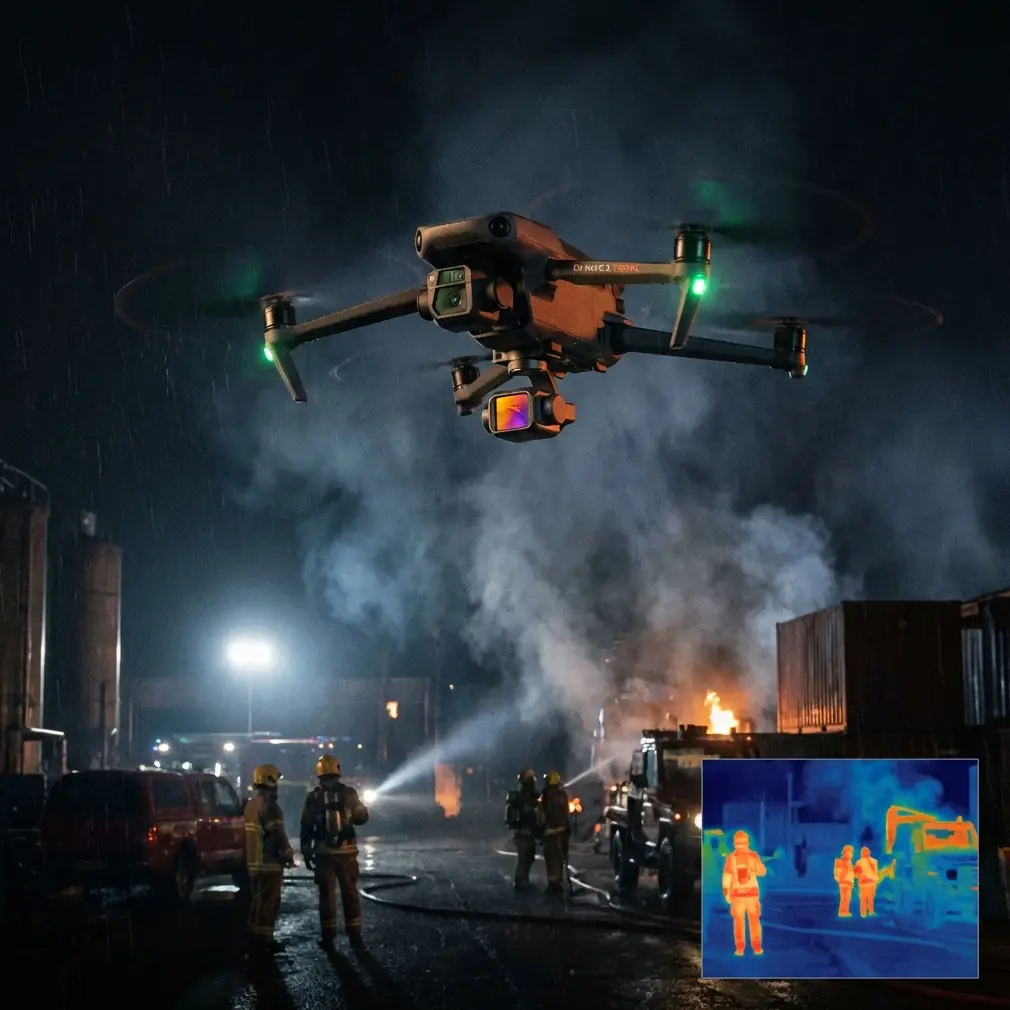
Neo 2 for Spraying Venues in Complex Terrain: What Actually Matters in the Field
META: A practical, field-focused look at using Neo 2 around complex spraying venues, with emphasis on obstacle avoidance, ActiveTrack, QuickShots, Hyperlapse, D-Log, and handling electromagnetic interference through antenna adjustment.
Complex terrain changes everything.
A flat, open venue lets almost any modern drone look capable. Add ridgelines, retaining walls, tree canopies, metal roofing, utility infrastructure, narrow access paths, and shifting wind, and the conversation gets more serious. If your goal is documenting, scouting, or visually managing spraying venues with a Neo 2, the real question is not whether the aircraft can fly. It is whether it can keep delivering stable, usable footage and predictable behavior when the environment starts pushing back.
That is where the Neo 2 becomes interesting.
I am approaching this less like a spec-sheet admirer and more like someone who has had to get the shot, maintain situational awareness, and come home with material that is actually useful. For spraying venues in complex terrain, the drone is not just a camera in the sky. It becomes a visibility tool. It helps teams read access routes, identify blocked margins, monitor drift-sensitive edges, inspect how terrain channels airflow, and document conditions before and after work. In that setting, features like obstacle avoidance, ActiveTrack, D-Log, and even QuickShots are not decorative extras. They affect whether the mission is efficient or messy.
The real problem with spraying venues in uneven ground
Spraying sites rarely behave like neat rectangles.
Terraced land, orchards, vineyard-like row structures, steep embankments, and mixed-use rural edges create three layers of difficulty at once. First, the pilot has to manage altitude changes and obstacle density. Second, the camera operator has to produce footage that reveals enough detail to support planning or reporting. Third, the link between aircraft and controller can become less reliable around metallic structures, power infrastructure, and terrain shadows.
Most people focus on the first problem. The third one can ruin the whole session.
Electromagnetic interference is not always dramatic. Sometimes it shows up as intermittent signal weakness near a pump station, greenhouse frame, utility line corridor, or steel-roofed shed. Sometimes the drone itself is fine, but the downlink gets noisy or unstable just when you need precision to inspect a narrow boundary or follow a vehicle route into the site. In complex terrain, that kind of interruption is more than annoying. It breaks workflow and can force repeated flights.
So a useful Neo 2 operating method has to solve two things at once: spatial complexity and signal discipline.
Why obstacle avoidance matters more here than in simple aerial photography
Obstacle avoidance is often discussed as if it exists only to save beginners from trees. That misses the operational point.
At a spraying venue, obstacles are often layered and irregular. A site may include low branches over an access track, poles at the margin, netting, fencing, and sudden elevation changes that make a safe line of flight look safe only from one angle. In these conditions, obstacle avoidance gives the pilot decision time. That matters because the pilot is usually multitasking—watching the live feed, reading the wind pattern indirectly through vegetation movement, monitoring the route, and checking that the camera angle still tells the story of the site.
For pre-spray visual assessment, obstacle avoidance supports lower-altitude route planning where detail is easier to see. For post-spray documentation, it helps maintain smoother passes along edges and infrastructure without turning every close move into a manual stress test. The feature is not a replacement for judgment. It is a buffer that helps preserve judgment when terrain complexity rises.
This becomes especially useful when documenting drainage channels, edge vegetation, storage areas, or contour transitions where a small vertical misread can put the aircraft too close to branches or structures. In practical terms, obstacle avoidance buys consistency. Consistency is what makes aerial footage usable for operations rather than merely attractive.
ActiveTrack and subject tracking are more useful than they sound
There is a tendency to treat ActiveTrack and subject tracking as creator features. For venue work, that is too narrow.
On a spraying site, vehicles, utility carts, and personnel movements often define the real operational story. If you are documenting access logistics or following a support vehicle moving through irregular ground, subject tracking helps maintain framing while the pilot focuses on route safety. That is especially valuable when the terrain forces constant micro-adjustments.
Imagine a support vehicle weaving along a narrow farm track bordered by trees on one side and a slope on the other. Manually holding composition while also monitoring obstacles can turn into a high-load task. ActiveTrack reduces that burden. It allows more attention to be spent on altitude, standoff distance, and signal quality. The result is not just prettier footage. It is footage that better documents how the venue actually functions.
That same logic applies when recording perimeter checks or access constraints before a spraying team enters a site. Tracking movement through the venue helps reveal bottlenecks, blind corners, and turning limitations. A static overhead shot can miss that. A tracked sequence shows flow.
QuickShots are not just for social clips
QuickShots are easy to dismiss if you have only seen them used for travel-style videos. In venue documentation, they can serve a different purpose.
A repeatable automated movement gives you visual consistency. That is valuable when you want to compare a venue over time. A predictable reveal from above a tree line, a controlled orbit around a storage or staging area, or a short pullback from a field edge can create a standardized visual reference. When repeated across days or phases, those clips make changes easier to notice.
For spraying venues in complex terrain, the key is restraint. QuickShots should be used to establish context, not replace direct inspection passes. Their strength is that they produce stable, legible geometry with less pilot workload. When the environment is busy, reducing manual input can also reduce the chance of overcorrecting near obstacles.
If the purpose is documenting terrain relationships—how a mixing area sits relative to a slope, how close a tree line is to a boundary, how access roads wrap around embankments—a clean automated sequence can tell the story faster than several improvised passes.
Hyperlapse has a practical role in venue monitoring
Hyperlapse sounds cinematic, and yes, it can be. But for complex spraying venues, it also has operational value.
Terrain and weather interact visibly over time. Shadows move, fog burns off, workers reposition equipment, vehicles cycle in and out, and wind effects become more obvious when compressed. A Hyperlapse sequence can turn an hour of slow environmental change into a readable planning tool. That is useful when timing matters—especially in areas where slopes and vegetation patterns create uneven exposure or airflow.
Used carefully, Hyperlapse can help visualize site readiness. It can show when sun reaches a terrace, when access lanes dry out, or how activity clusters around a staging point. On venues with limited entry routes, that temporal perspective is often more informative than a single still image or one-time overhead pass.
Why D-Log belongs in a workflow like this
D-Log matters when the venue includes hard contrast.
That is common in complex terrain. You may have bright open ground next to dark tree cover, reflective roofing near shaded drainage lines, or pale dust roads cutting through dense vegetation. Standard color profiles can render these scenes in a way that looks acceptable at first glance but throws away useful detail in highlights and shadows.
D-Log gives more flexibility in post-processing. For a photographer or visual documentarian, that means you can preserve edge detail, vegetation texture, and surface variation with more control. Operationally, this helps when footage is meant to communicate conditions rather than simply impress. A retaining wall half in shade, a narrow runoff path, or a partially obscured boundary line can all be easier to interpret when tonal detail is maintained.
That is the difference between footage that looks dramatic and footage that supports decisions.
Handling electromagnetic interference: the habit that saves flights
Now to the field problem too many pilots underestimate.
When electromagnetic interference shows up, people often react by blaming the drone, the controller, or the location in a vague way. A better response starts with antenna adjustment and aircraft positioning. This sounds simple because it is simple. It is also one of the fastest ways to recover link quality without wasting time.
If the Neo 2 is operating near metal structures, utility hardware, or terrain that blocks line of sight, do not just stand frozen and hope the signal stabilizes. Reassess your body position relative to the drone, regain clearer line of sight if possible, and adjust the controller antenna orientation deliberately rather than randomly. Small changes in angle can matter. In practical field use, the goal is not mystical “better reception.” The goal is cleaner geometry between controller and aircraft.
This is especially relevant in venues cut by slopes or segmented by buildings. A drone passing behind a tree line on a hillside may still feel close, yet the signal path can degrade sharply. Good antenna discipline reduces the chance that a minor dead spot becomes a disrupted shot or an aborted run.
There is also a planning lesson here. Before committing to a longer route, perform a short signal sanity check from the most difficult section of the venue. If the link weakens near a metal shed, irrigation hub, or power-adjacent edge, treat that as a routing constraint. Build the flight around it. Do not discover it halfway through your key pass.
If you want a quick field discussion on link stability and antenna positioning around difficult venues, this direct WhatsApp channel is a practical place to ask.
A workable problem-solution approach for Neo 2 at these venues
The most effective Neo 2 workflow for complex spraying venues is not fancy. It is disciplined.
Start with a high, slow establishing pass to understand terrain shape, obstacle clusters, and likely signal shadows. Then use QuickShots selectively for repeatable context views if the site will be monitored across multiple sessions. Follow that with lower manual or assisted passes focused on routes, boundaries, vegetation edges, drainage, and staging zones. Use obstacle avoidance as a margin of safety, not as permission to get reckless. Deploy ActiveTrack when movement through the venue is the subject and you want to reduce control load while maintaining composition.
If the light is harsh or the scene contains strong contrast, capture in D-Log so the footage retains enough information to be genuinely useful later. If timing and environmental shifts matter, add a Hyperlapse sequence from a stable, safe position. Throughout the flight, watch for areas where signal quality degrades and correct early through antenna adjustment and better controller positioning.
Each feature solves a different part of the same problem.
- Obstacle avoidance helps protect the aircraft and smooth out close terrain work.
- ActiveTrack and subject tracking make moving subjects in irregular spaces easier to document.
- QuickShots bring repeatability to venue overviews.
- Hyperlapse reveals time-based site behavior.
- D-Log preserves visual information in difficult lighting.
- Antenna adjustment helps maintain control confidence when electromagnetic interference enters the picture.
That is not a random feature stack. It is a field toolkit.
The bigger takeaway
The Neo 2 makes the most sense at spraying venues when you stop treating it like a flying camera and start treating it like a visual operations instrument. Its usefulness is tied to how well you combine automation, caution, and signal awareness.
Complex terrain punishes lazy flying. It also rewards preparation. A pilot who understands obstacle behavior, uses ActiveTrack with intention, captures editable footage in D-Log, and responds intelligently to electromagnetic interference will get more value from the aircraft than someone chasing dramatic angles without a plan.
For photographers, the appeal is obvious: better structure, better footage, fewer compromises. For venue managers and field teams, the benefit is more practical: clearer visibility into the site, cleaner documentation, and fewer surprises when terrain and infrastructure start complicating the job.
That is the real story with Neo 2 in this setting. Not hype. Not abstract capability. Just a set of tools that become genuinely useful when the ground below is uneven, the airspace feels crowded, and the mission depends on seeing the venue as it really is.
Ready for your own Neo 2? Contact our team for expert consultation.