
Neo 2 Field Report: Flying Dusty Spraying Venues Without
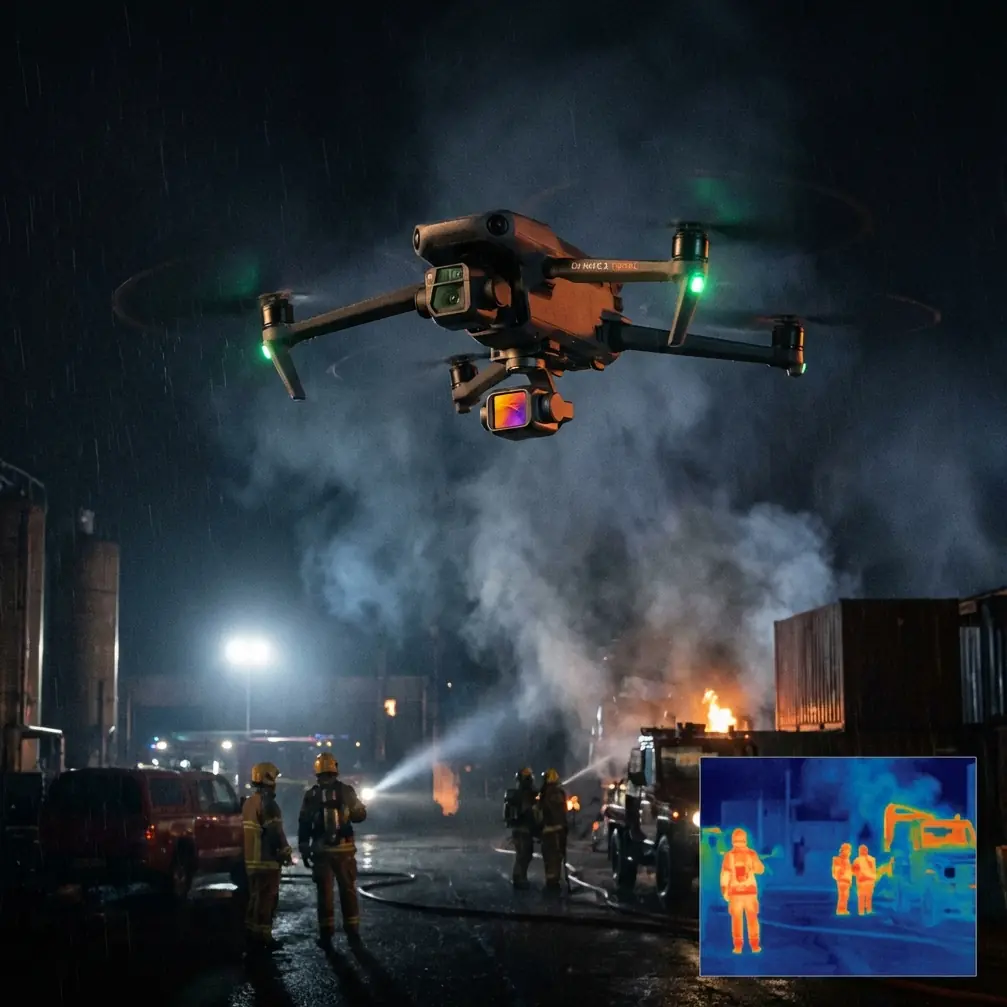
Neo 2 Field Report: Flying Dusty Spraying Venues Without Losing Tracking or Control
META: A field-based Neo 2 article for dusty spraying venues, covering obstacle avoidance, subject tracking, ActiveTrack behavior, D-Log workflow, and antenna adjustment for electromagnetic interference.
Dust changes everything.
Not in the abstract, and not just for image quality. At spraying venues, fine particulate hangs in the air, drifts across takeoff zones, softens contrast, and turns a routine Neo 2 flight into a constant exercise in reading the environment. Add pumps, temporary power runs, metal fencing, parked support vehicles, and handheld radios, and you get the sort of location where small mistakes stack fast.
I’ve spent enough time shooting in working environments to know that a compact drone is often the right tool only if the pilot adjusts expectations. The Neo 2 conversation usually gets framed around ease of use, subject tracking, and quick capture modes. Those matter. But in a dusty spraying venue, the real story is how those features behave when visibility is inconsistent, background contrast is weak, and electromagnetic noise starts interfering with link stability.
That is where this field report sits: not in brochure language, but in the practical middle ground between “the drone can do it” and “the site will make it harder than expected.”
Why dusty spraying venues are unusually demanding
A spraying venue is busy in a way that many recreational flight areas are not. Airborne dust can reduce the visual clarity the aircraft depends on for stable sensing. Ground patterns are irregular. Workers move unpredictably. Tanks, rigs, and barriers create narrow pockets where obstacle avoidance has to interpret clutter rather than clean geometry.
Operationally, two things happen at once.
First, subject tracking becomes more fragile. ActiveTrack and related follow functions tend to perform best when the subject is visually distinct from the background. Dust works against that. If the person, cart, or vehicle you want to track is covered in the same muted beige tone as the venue itself, the drone has less separation to work with. The issue is not whether tracking exists as a feature. It is whether the subject stays legible enough for tracking to remain trustworthy.
Second, radio behavior gets less predictable around power infrastructure and equipment. Neo 2 pilots often think about interference only after they see hesitation in the live feed or a warning on screen. At spraying venues, you should assume interference risk before launch. Portable generators, communication gear, electric pumps, and even the layout of steel structures can all affect the control link.
That is why antenna adjustment is not a minor technique here. It is part of the flight plan.
The first priority is not cinematic mode. It is a clean control link
When I arrive at a venue like this, I do not begin by testing QuickShots. I begin by checking how the aircraft and controller behave while stationary, with the drone powered and the site fully active. If there is electromagnetic interference in the area, you often get early clues before takeoff: momentary signal dips, inconsistent telemetry, or feed instability when vehicles or machinery cycle on nearby.
The fix is not magic. It is geometry.
If the signal begins to wobble, I adjust the controller antennas to improve line-of-sight alignment with the aircraft and physically reposition myself away from the densest cluster of electrical equipment. That sounds obvious until you are actually on location and tempted to stay near the crew, the shade tent, or the staging area. Those are often the worst places to stand.
A small shift can matter. Move several meters away from power cables, angle the controller for a cleaner path, and suddenly the link settles. In practical terms, this is the difference between a usable tracking pass and a sequence ruined by lag, drift, or a forced pause. At dusty venues, pilots tend to blame the environment broadly. More often, the problem is a controllable combination of placement and antenna orientation.
This matters even more if you plan to use subject tracking. ActiveTrack is only as dependable as the chain beneath it: stable control, consistent video, clear subject recognition. Break any one of those links and the “smart” behavior becomes hesitant.
Obstacle avoidance helps, but dust changes how you should trust it
Obstacle avoidance is one of those terms that gets treated as a blanket safety net. In clean, open airspace, it can feel close to that. In a dusty venue with fencing, poles, suspended hoses, support trucks, and uneven visual conditions, it is better understood as a layer of assistance rather than a substitute for conservative route planning.
Dust can reduce scene definition. Thin or irregular objects can be harder to interpret. Backlit conditions make everything worse, especially late in the day when venue work often looks most dramatic on camera. If you are filming near sprayer rigs or perimeter structures, the smarter move is to build your shot around wider clearance than you think you need.
This is where many Neo 2 users make the wrong trade. They rely on automation for precision in spaces that really call for margin.
When I’m planning a pass over a dusty working lane, I think less about what obstacle avoidance might catch and more about what the aircraft should never have to decide in the first place. A wider arc. More altitude. Cleaner exits. Simpler backgrounds for tracking. Better separation from vertical clutter. That kind of discipline keeps obstacle avoidance in the role it performs best: backup, not primary pilot.
Subject tracking in dust works best when the subject is visually simple
If your goal is to follow an operator walking a lane, a utility cart moving between zones, or a vehicle leaving the spray area, Neo 2’s subject tracking can still be useful. But the setup matters more than the feature label.
Here is the pattern I have seen repeatedly: tracking holds better when the subject fills enough of the frame, contrasts with the background, and moves in a predictable line. Dust strips away contrast, so you need to create it where you can. Bright safety vests, clean edge definition, and simple framing all help. If your tracked subject blends into a tan or gray plume and the background is full of similar shapes, ActiveTrack is being asked to solve a much harder problem than it faces in clean outdoor scenes.
This is also why I prefer shorter tracking segments at these venues. Instead of one long automated follow shot, I break the scene into multiple controlled passes. That gives the aircraft repeated opportunities to reacquire a clean subject view and gives me chances to reset position if the environment changes.
The operational significance is straightforward: shorter, better-framed tracking clips outperform long unstable ones, even if the long take feels more efficient in theory. Dust punishes theory.
QuickShots and Hyperlapse are usable, but only if the air is settled enough
QuickShots are attractive because they reduce workload when you need a polished reveal or orbit fast. At a spraying venue, though, they are best used selectively. Automated shot paths assume that conditions remain readable and consistent for the duration of the move. Dust gusts can interrupt that assumption instantly.
A reveal that starts clean can end in a haze patch. An orbit around equipment can look great until the background becomes a flat wall of airborne dust, making the subject lose visual separation. If you are going to use QuickShots, reserve them for windows when the venue activity is stable and the air is relatively clear.
Hyperlapse has its own issue. Dust density can change frame to frame in ways that make time-compressed footage flicker or feel muddier than expected. The effect can still work, especially if you are documenting site activity rather than chasing pristine aesthetics, but you need to be realistic about what the venue gives you. Hyperlapse in these conditions is less about postcard smoothness and more about showing movement, workflow, and atmosphere.
That can be powerful if it is intentional.
D-Log earns its keep in this environment
Dusty venues produce difficult light. Highlights bounce off pale ground and equipment, while the dust itself can veil shadows and flatten color. This is where D-Log becomes more than a spec-sheet talking point.
A flatter profile gives you more room to balance the scene in post, especially when the shot includes bright ground, reflective gear, and a subject partially obscured by haze. You are not trying to manufacture drama that is not there. You are trying to preserve enough tonal information that the final image reflects what the eye experienced on site: depth in the dust, definition in the machinery, and skin or fabric tones that do not collapse into the same muted band.
I would not treat D-Log as optional if the job includes mixed light and airborne particulate. In editing, that extra flexibility can rescue footage that would otherwise feel washed out. It also helps maintain consistency between clips captured manually and clips created using assisted modes, which often behave differently under changing light.
For photographers and hybrid shooters, this matters because venue work rarely unfolds under stable conditions. The same lane can look sharply defined one minute and fully diffused the next. D-Log helps bridge those changes into a coherent sequence.
A practical launch routine for Neo 2 in a spraying venue
Before every dusty-site flight, I keep the process stripped down.
Pick a takeoff point away from active spray drift and away from concentrated electrical infrastructure. Confirm the subject and route before the aircraft leaves the ground. Check link stability while holding position. If there is even minor signal inconsistency, reposition first and adjust antenna angle before committing to the shot. Don’t assume it will improve once airborne.
Then assess whether the shot truly needs automation.
If the subject path is clean and visual contrast is solid, ActiveTrack can save effort and produce a better result than manual steering alone. If the venue is chaotic, the background is visually dense, or machinery is creating interference pockets, manual flight with simpler framing is often the smarter choice.
This kind of decision-making is what separates successful site footage from footage that only looked promising on the controller screen.
What Neo 2 does well here
Neo 2 fits venues like this because a smaller aircraft lets you work quickly, adapt angles, and capture operations without the footprint of a larger setup. It is well suited to brief deployment windows, repeated passes, and mixed capture styles. You can shift from a manual establishing shot to a tracked movement clip to a short automated move without rebuilding the whole workflow.
But the strength is not just flexibility. It is recoverability.
When the air gets thicker, the background becomes messy, or interference starts to creep in, you can reframe and reset without losing the entire shoot rhythm. That is a real advantage in working environments where the venue will not pause for your drone.
If you need help planning a difficult site workflow or refining your tracking setup, you can message me here and compare notes from the field.
The biggest mistake pilots make at dusty venues
They treat all limitations as separate issues.
Dust, interference, obstacle avoidance performance, and tracking reliability are not four unrelated topics. They interact. Dust reduces visual clarity. Reduced clarity affects tracking and sensing. Venue infrastructure can degrade signal quality. Weak signal makes any automated mode feel less confident. Once that stack begins to wobble, pilots overcorrect, fly too close, or trust the aircraft to solve a problem created by poor setup.
A better approach is to think in systems.
Choose the cleanest takeoff zone you can. Maintain stronger visual separation for the subject. Use wider safety margins around obstacles. Watch the live link before launch, not after problems appear. Adjust antenna orientation deliberately if interference shows up. Use D-Log when the light is harsh and dusty. Keep QuickShots and Hyperlapse for moments when the environment is stable enough to support them.
None of that is glamorous. All of it works.
And that is the real story with Neo 2 in dusty spraying venues. The aircraft’s smart features are useful, but they become truly valuable only when the operator understands what the environment is taking away. Once you account for that—especially the twin pressure points of visibility and electromagnetic interference—the drone becomes much more predictable, and the footage becomes much more usable.
Ready for your own Neo 2? Contact our team for expert consultation.