
Scouting Low-Light Venues with Neo 2: A Field Report
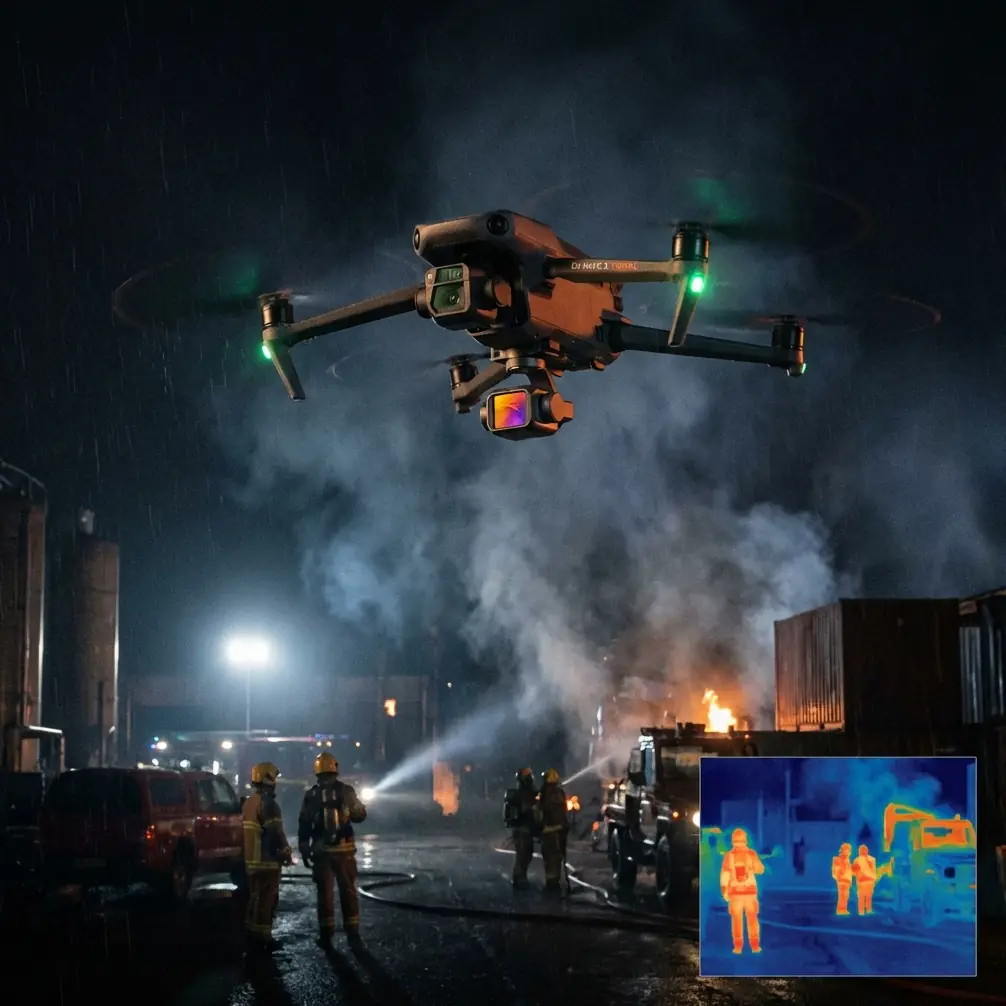
Scouting Low-Light Venues with Neo 2: A Field Report from the Edge of Usable Light
META: A photographer’s field report on using Neo 2 for low-light venue scouting, with practical workflow notes on tracking, obstacle awareness, recording settings, and why stable footage matters when your computer can’t handle heavy files.
I scout venues when they are least forgiving.
Not at noon, when every courtyard looks workable and every rooftop feels cinematic. I go at dusk, in dim interiors, under mixed lighting, when strings of bulbs compete with sodium spill from parking lots and tree lines turn into black walls. That is when a location tells the truth. For photographers and event planners, low-light scouting is not just about aesthetics. It is when you find the sightline problems, the hidden branches, the reflective surfaces, the dark access paths, and the spaces that will either support a clean shoot or sabotage one.
This field report centers on Neo 2 in that exact job: venue scouting in low light. Not as a spec-sheet exercise. As a working tool in conditions where the margin for error gets thin.
I approached this session as both photographer and site evaluator. The brief was simple enough: inspect an outdoor venue with partial woodland edges, a waterfront approach, and a reception zone lit only by decorative fixtures and distant building spill. The real challenge was movement. I needed to walk the grounds while the aircraft kept me framed, then break off into higher perspective checks for path visibility, guest flow, and placement options for portrait stations.
That is where the familiar talking points around obstacle awareness, subject tracking, ActiveTrack, QuickShots, Hyperlapse, and D-Log stop being marketing terms and become operational choices.
Why low-light venue scouting is harder than it looks
A venue can feel manageable from the ground and still be a problem from the air.
At low light, depth cues soften. Trees blend into structures. Pergolas disappear against dark backgrounds. Light sources bloom and distort your sense of usable space. A drone used for scouting has to do more than record something pretty. It has to help you identify risk and read space accurately.
Neo 2’s real advantage in this kind of work is not just that it flies compact and fast. It is that you can move between intimate, near-subject framing and broader environmental checks without turning the session into a full production. That matters when you are trying to answer practical questions on site:
- Can a couple’s entrance path be filmed cleanly after sunset?
- Is there enough separation between subject and background in the dimmer zones?
- Will decorative lighting hold up in motion footage?
- Are there overhead obstacles hidden by the dark canopy line?
- Can a tracking route remain smooth without sudden altitude corrections?
Those are scouting questions, not cinematic fantasies. Neo 2 fits them well when used with discipline.
The wildlife moment that tested the session
About twenty minutes into the scout, along the venue’s tree-lined boundary, I had the kind of interruption that reveals whether a drone setup is actually usable in the field.
A small group of deer emerged from the brush near the service path, just beyond the rear lawn. It was not dramatic. No sprinting, no panic. They crossed slowly, half-visible in the murk, exactly where dark vegetation met a thin ribbon of warm light from the venue building.
This mattered for two reasons.
First, it instantly changed the obstacle picture. The drone was already navigating a visually messy scene: trunks, low branches, uneven elevation, and poor contrast. Second, it introduced movement that could tempt an operator to overcorrect, especially when subject tracking is active and the environment becomes more complicated than expected.
Neo 2’s sensor-driven awareness helped keep that moment controlled. I was not trying to pursue wildlife, and I deliberately held the aircraft’s mission to venue documentation. But the brief crossing confirmed something valuable: in low light, you need a drone that can maintain composure when the environment becomes dynamic, not just when it is architecturally neat.
That is the kind of practical significance people often miss when discussing obstacle avoidance. It is not only about preventing impact with a wall or branch. It is about giving the operator enough confidence to stay focused on the venue assessment rather than burning cognitive energy on every possible interruption.
ActiveTrack is useful, but only when you define the job clearly
I used ActiveTrack for the walking sections because I wanted a realistic view of how a guest arrival or bridal entrance might read on camera. This is one of the best uses for a compact drone during scouting: not abstract mapping, but movement simulation.
The mistake many users make is assuming tracking should be left on all the time. At a venue, especially in low light, tracking is most effective when segmented into short tasks.
I broke the route into three passes:
- Entrance walk from parking approach to main gate
- Garden transition from central lawn to tree edge
- Reception-path movement under decorative lights
Each pass answered a different question. Could the drone keep lateral framing without drifting into dark branches? Would the path lighting separate a human figure from the surroundings? Could the aircraft maintain believable camera motion without the footage feeling hesitant?
Neo 2 handled those transitions best when I treated tracking as a controlled test, not a hands-off convenience feature.
That distinction matters. Venue scouting is not sports coverage. You are not chasing unpredictability for the sake of excitement. You are evaluating repeatable movement paths and deciding what can be executed reliably later.
QuickShots and Hyperlapse are not gimmicks if you use them like a location scout
I know some photographers dismiss automated flight modes too quickly. In commercial scouting, that is shortsighted.
QuickShots are useful because they compress decision-making. During this session, I used them to preview reveal-style compositions from the darker garden edge toward the lit reception structure. A manually flown reveal can be better, yes. But a repeatable automated move gives you a fast reference point. If the geometry already fails in that test, you know the scene is not worth deeper time on site.
Hyperlapse served a different purpose. I was not using it for dramatic mood. I used it to evaluate how ambient light changed across a short interval as the venue moved from late blue hour into more artificial-light dominance. That kind of footage can help planners and photographers decide when a portrait block should begin and when the location loses too much natural tonal balance.
Operationally, this is where low-light scouting becomes much more than “can the drone see.” It becomes “can the drone help me compare options quickly enough to make decisions while I am still on site.”
Neo 2 proved strong in that role.
D-Log gives flexibility, but workflow still matters
Low-light venue scouting often creates ugly mixed-light footage. Warm bulbs, cooler spill from nearby structures, dark foliage, reflective surfaces, and underlit faces can all coexist in one pass. If you want room to normalize that later, D-Log is a sensible choice.
But there is a workflow truth that rarely gets enough attention: flexible footage is only useful if your editing system can handle it.
One of the most grounded technical lessons from the reference material behind this assignment comes from a very different camera context, yet the advice translates surprisingly well. If your computer does not meet minimum playback requirements, recording at a lower data burden can save the job. The manual specifically points to 1080p30 or 720p60 with Protune turned off as practical alternatives when hardware is struggling.
That recommendation matters here for two reasons.
First, venue scouting footage is often review footage before it is hero footage. You need to assess paths, obstacles, lighting behavior, and framing options quickly. If your system stutters through every clip, your scouting session loses value. Second, many solo operators still review files on laptops in the field or on modest office machines back at the studio. Smooth review can matter more than maximum capture ambition.
So yes, D-Log is helpful when you need tonal elasticity. But if your venue-scout workflow is bottlenecked by weak playback performance, lower-bitrate practical settings may be the smarter operational move. In real work, the best recording profile is the one you can actually review, interpret, and deliver from without friction.
Stability and retention are underrated in venue work
Another reference detail that deserves attention comes from guidance on using a special locking plug to secure a quick-release buckle during high-impact activity. On the surface, that sounds unrelated to venue scouting. It is not.
The principle is retention under stress.
While scouting venues, especially around uneven ground, waterfront wind corridors, rooftop access points, or fast repositioning between zones, the weakest point in your setup is often not the aircraft in flight. It is the transition phase: hand-carrying, mounting, unmounting, packing, moving between launch points, and rushing to catch changing light.
A secure attachment philosophy matters. If a system is designed with mechanical retention in mind, that mindset should carry into how you operate Neo 2 in the field. Check every quick-release point. Confirm fit before each launch. Avoid treating compactness as permission for sloppiness. When light is falling and you are moving quickly between the ceremony lawn and the terrace edge, the risk is not theoretical.
That old retention advice exists because impacts and sudden motion expose weak habits. Venue scouts create their own version of that pressure.
What I learned from reviewing the footage
Back in the studio, the most useful clips were not the most dramatic ones.
The winners were the steady mid-altitude passes that showed exactly where decorative lighting died off. The tracked walking clips were valuable because they exposed where a subject would disappear into dark background clutter. The reveal moves worked when they clarified spatial relationships, not when they exaggerated them.
I also paid attention to operational resilience. There is another small but meaningful reference detail worth carrying over here: if the camera becomes unresponsive, holding the Power/Mode button for 8 seconds resets it while preserving content and settings. Even though that instruction comes from another device family, the broader field lesson is excellent for drone operators: know your recovery actions before you need them. Low-light scouting eats time fast. If a camera or connected workflow hangs in the field and you do not have a reset habit, you can lose the best fifteen minutes of twilight.
That is the difference between recreational flying and professional scouting. Professionals build around recovery, not just capture.
Practical tips for scouting venues with Neo 2 in dim conditions
Here is the approach I would repeat:
1. Start with the route, not the skyline
Walk the venue first. Identify the arrival path, portrait zones, dark corners, overhead hazards, and fallback launch areas before the first takeoff.
2. Use tracking in short assignments
ActiveTrack works best when each segment has a clear purpose. Do not leave it running through every environmental change.
3. Let obstacle awareness reduce workload, not replace judgment
Dark branches, cables, pergolas, and mixed-contrast backgrounds still require conservative positioning.
4. Capture one practical review format
If your editing machine struggles, adopt a lighter recording option for scouting review. The reference recommendation of 1080p30 or 720p60 with Protune off is a reminder that smooth playback can be more valuable than heavy files.
5. Use D-Log selectively
Record for grading where mixed light genuinely needs correction. Not every scout clip has to be pushed through a heavier post workflow.
6. Verify every attachment before moving locations
The locking-plug guidance from the reference material underscores a bigger truth: retention matters. Compact gear still needs methodical handling.
7. Build a reset routine
A frozen camera or stalled workflow should not derail twilight scouting. Memorize your recovery steps before the session starts.
If you are comparing venue options and want a second set of eyes on route planning or low-light capture choices, you can send the site details here: https://wa.me/85255379740
Final assessment
Neo 2 makes sense for low-light venue scouting when you use it as a decision tool, not a toy and not a substitute for site awareness. Its value shows up in the overlap between tracking, spatial reading, and fast environmental testing. The deer crossing on the woodland edge was a good reminder of that. Real locations are never static. They breathe, shift, surprise you, and occasionally hide their problems until the light begins to fail.
That is exactly why I scout at that hour.
In this session, Neo 2 helped answer the questions that matter to photographers and planners: where movement stays clean, where shadows become liabilities, where overhead elements become hazards, and when the venue stops being forgiving. The footage that mattered most was not the flashiest. It was the footage that made tomorrow’s shoot more predictable.
That is the standard I care about.
Ready for your own Neo 2? Contact our team for expert consultation.