
Neo 2 in Remote Vineyard Monitoring: What Real
Neo 2 in Remote Vineyard Monitoring: What Real-Time Aerial Response Actually Looks Like
META: A technical review of Neo 2 for remote vineyard monitoring, covering obstacle avoidance, ActiveTrack, D-Log workflow, response speed, and field-ready practices inspired by real-time aerial intelligence operations.
Remote vineyard monitoring has a very specific problem: timing.
If a block starts showing irregular canopy color, if an irrigation line fails on the far edge of the property, if vehicle movement appears where it should not, the value of aerial data drops quickly with every minute lost between detection and response. That is why the most useful lens for evaluating Neo 2 is not “how cinematic is it?” but “how fast does it help an operator go from signal to decision?”
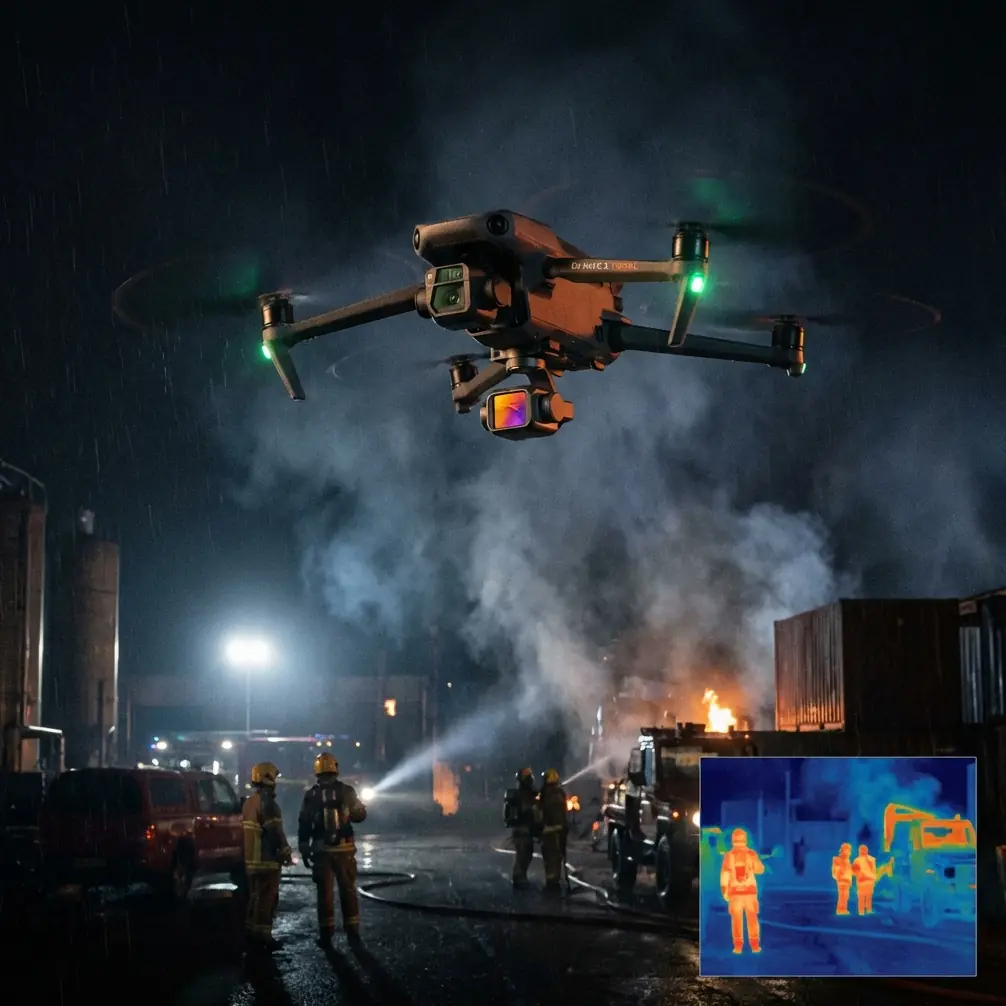
A useful clue comes from a very different aerial environment. In April 2026, DRONELIFE reported from the Motorola Solutions Summit 2026 on how a real-time operations center in Ouachita Parish used aerial intelligence to help teams arrive informed and safer, moving from the first call to the final decision with current overhead context. Strip away the public-safety setting and the core lesson still matters for civilian operations: the drone is most valuable when it shortens the gap between an event in the field and an informed action on the ground.
For a vineyard manager working remote acreage, that same operational logic applies cleanly. Neo 2 is not just a flying camera in this scenario. It is a rapid-response observation tool. The real question is whether its design supports quick deployment, reliable line-of-sight work near rows and trellises, and usable imagery when conditions on the property are changing by the hour.
That is where this aircraft becomes interesting.
Why a real-time response mindset fits vineyard work
Most drone reviews separate creative features from practical field use. In vineyards, that split makes less sense. A feature usually marketed for content capture can become genuinely operational if it helps an operator understand conditions faster.
The Ouachita Parish example highlighted a “system built for real-time response.” That phrase deserves attention. In a remote agricultural setting, real-time response is not about drama. It is about preserving crop consistency and reducing wasted labor. If a field scout has to drive out, walk rows, then report back before any decision is made, the process is slow and expensive. A drone that can be launched quickly and provide immediate aerial context changes that workflow.
Neo 2 fits best when used as the first look, not the final diagnosis.
That distinction matters. You are not replacing detailed agronomy work or sensor-rich mapping platforms. You are giving vineyard teams a fast set of eyes over terrain that may be difficult to access quickly, especially across broken topography, long row structures, or blocks separated by roads and vegetation barriers.
Flight confidence near trellises and uneven terrain
In remote vineyards, obstacle handling is not a side feature. It is central.
Rows can create deceptive flight corridors. Wires, end posts, support structures, windbreak trees, and utility lines all raise the difficulty level, especially when you are trying to inspect from a low altitude for visible stress patterns, irrigation issues, or access-road conditions. This is where obstacle avoidance has operational significance well beyond simple safety messaging.
With Neo 2, obstacle avoidance directly affects how confidently an operator can work closer to the canopy edge and infrastructure without flying overly conservative routes that miss useful detail. In practice, that means less time spent repositioning manually and fewer abandoned passes around row ends or trellis intersections.
For vineyard monitoring, confidence is not the same as aggression. The best use of obstacle handling is to reduce pilot workload while preserving stable, deliberate flight paths. That matters more in remote areas where one operator may be handling the aircraft, checking video feed quality, logging observations, and coordinating with a field team at the same time.
A drone that lowers that cognitive load is a better farm tool.
ActiveTrack and subject tracking are more useful than they first appear
Subject tracking often gets framed around athletes, cyclists, or social content. In vineyard operations, the more valuable use case is following moving assets during inspection and response.
Think about a utility vehicle moving along service roads after a report of standing water, broken fencing, or unusual activity near an access gate. With ActiveTrack or subject tracking, Neo 2 can maintain visual context on that moving asset while also revealing the surrounding conditions from above. That gives managers more than just location awareness. It creates relationship awareness: where the vehicle is, what terrain it is approaching, whether the route is blocked, and what nearby crop zones may be affected.
That is very close in spirit to the DRONELIFE report’s “first call to final decision” framing. The technology becomes useful not because it captures movement elegantly, but because it supports better decisions while events are still unfolding.
This is an underappreciated point in agriculture. A vineyard often does not need a drone for long autonomous missions every day. It needs short, smart flights that answer immediate questions.
ActiveTrack helps do that.
Imaging workflow: why D-Log matters in a vineyard review
D-Log is easy to dismiss if you only associate it with stylized color grading. In vineyard monitoring, its operational value is subtler.
Remote properties are notorious for difficult light. Morning haze, high noon glare, shadowed rows, reflective irrigation surfaces, dusty service roads, and dark tree lines at parcel edges all compete in the same frame. D-Log preserves more flexibility when you need to recover information across those mixed lighting conditions in post.
That does not mean every flight should become a lengthy editing project. It means that when documenting recurring crop stress, erosion progression, drainage failures, or perimeter changes over time, footage with greater tonal flexibility can produce more consistent comparisons. Consistency is everything when you are trying to compare one week’s condition against the next.
For technical users, that makes Neo 2 more than a convenience aircraft. If your workflow includes maintaining visual records for agronomy consultations, contractor coordination, or owner reporting, image latitude matters.
You may still choose standard profiles for quick same-day decisions. But the ability to move into D-Log when documentation quality matters is a strong practical advantage.
QuickShots and Hyperlapse are not just creative extras
This is where a lot of reviews get lazy. QuickShots and Hyperlapse are usually bundled into a throwaway “fun features” paragraph. For a remote vineyard, they can have genuine monitoring value when used deliberately.
QuickShots can standardize repeatable visual routines around a block, facility, or road junction. That kind of repeatability makes it easier to produce comparable visual snapshots without requiring the pilot to manually recreate the exact same flight behavior every time. If you are checking seasonal canopy development or documenting access conditions before and after weather events, repeatability reduces operator variability.
Hyperlapse has even more operational relevance than people assume. Vineyards are systems of change over time. Fog lift, vehicle movement, worker activity around receiving areas, water pooling dissipation, and shifting shadow exposure can all tell you something important. Hyperlapse compresses those changes into a format that can reveal patterns a static inspection pass might miss.
Used carelessly, these modes create attractive but useless footage. Used intentionally, they become efficient observation tools.
What the Ouachita Parish story teaches vineyard operators
The strongest takeaway from the DRONELIFE report is not about the sector it covered. It is about the workflow principle underneath it.
The article described how aerial intelligence helped responders arrive informed and safer, and it placed that inside a “real-time” operational system discussed at the Motorola Solutions Summit 2026. For vineyard management, that principle translates directly into a simple field doctrine:
- Launch early.
- Gather context before sending people deep into the property.
- Share what matters quickly.
- Use the drone as a decision accelerator, not a data archive machine.
That is exactly where a compact aircraft like Neo 2 can outperform larger, more specialized platforms in day-to-day use. A bigger drone may offer more sensor options, longer endurance, or broader mapping capability. But if it is not the aircraft your team reaches for immediately when an issue emerges, its practical value drops.
Speed to airborne matters.
So does speed to understanding.
A third-party accessory that genuinely improves capability
One accessory that makes a real difference in remote vineyard use is a high-gain signal range extender for the controller setup. Not because you should push reckless distances, but because vineyards often create messy radio environments with terrain undulation, vegetation bands, and intermittent line-of-sight interruptions near outbuildings or tree rows.
A good third-party signal booster can improve link stability at the edge of normal operating envelopes on large properties, especially when inspecting down long corridors or across separated blocks. The real benefit is not “more range” in a headline sense. It is steadier video and more confidence during legally compliant, line-of-sight flights in challenging terrain.
That steadier feed supports better decisions. A shaky or inconsistent link turns every inspection into guesswork.
For teams building a practical field kit, this is one of the smarter add-ons to consider. If you want to compare compatible accessory options for your setup, you can message the field gear desk here: ask about controller signal extenders and vineyard flight kits.
Practical best practices for monitoring remote vineyards with Neo 2
A technical review should end where field operations begin. Here is the operational approach I would recommend.
Use Neo 2 as a tier-one scout
Do not force it into being your only aerial system. Its best role is rapid visual verification. Launch it when a manager needs immediate context: irrigation concern, road washout, perimeter issue, labor coordination, canopy irregularity, or weather impact.
Build repeatable short missions
Instead of one long exploratory flight, create a library of short monitoring patterns for specific zones: upper slope rows, pump area, storage yard, access gate, drainage basin. Short routines are easier to repeat, compare, and delegate.
Lean on obstacle avoidance, but don’t abdicate judgment
Trellis environments remain complex. Obstacle avoidance reduces workload; it does not remove the need for conservative route planning. Keep row-end turns wide and treat wires as persistent risk points.
Reserve ActiveTrack for moving assets, not tight row flying
Tracking a utility cart or service vehicle works well when the route is relatively open. It is less useful in highly compressed spaces where the aircraft may need frequent intervention. Use it where it adds oversight, not where it adds uncertainty.
Capture standard profile for action, D-Log for records
If a block supervisor needs an answer now, standard footage may be enough. If you are documenting a trend, preparing comparative visuals, or escalating findings to consultants, D-Log gives you more room to produce a consistent record.
Use Hyperlapse sparingly but strategically
Wind movement, fog drift, water recession, and repeated equipment activity can all be easier to interpret over compressed time. Hyperlapse is not for every flight, but when timing is the story, it becomes surprisingly valuable.
Final assessment
Neo 2 makes the most sense in remote vineyard monitoring when judged by responsiveness, not by spec-sheet vanity. Its real strengths emerge when you view it as a fast aerial decision tool: obstacle avoidance that reduces pilot burden near agricultural infrastructure, ActiveTrack that can follow field assets during active checks, and D-Log support that improves long-term visual documentation under difficult light.
The April 21, 2026 DRONELIFE reporting from Ouachita Parish offers a useful operational model here. Their aerial system was framed around real-time response, helping teams move from the first signal to a safer, better-informed decision. That same logic scales elegantly to vineyard work. Different mission. Same truth. Current aerial context changes the quality of the response.
For remote growers and managers, that is the right way to think about Neo 2. Not as a novelty aircraft. Not as a replacement for every specialized drone in agriculture. As the drone you can launch quickly enough to matter.
Ready for your own Neo 2? Contact our team for expert consultation.