
Neo 2 Guide: Monitoring Power Lines Safely
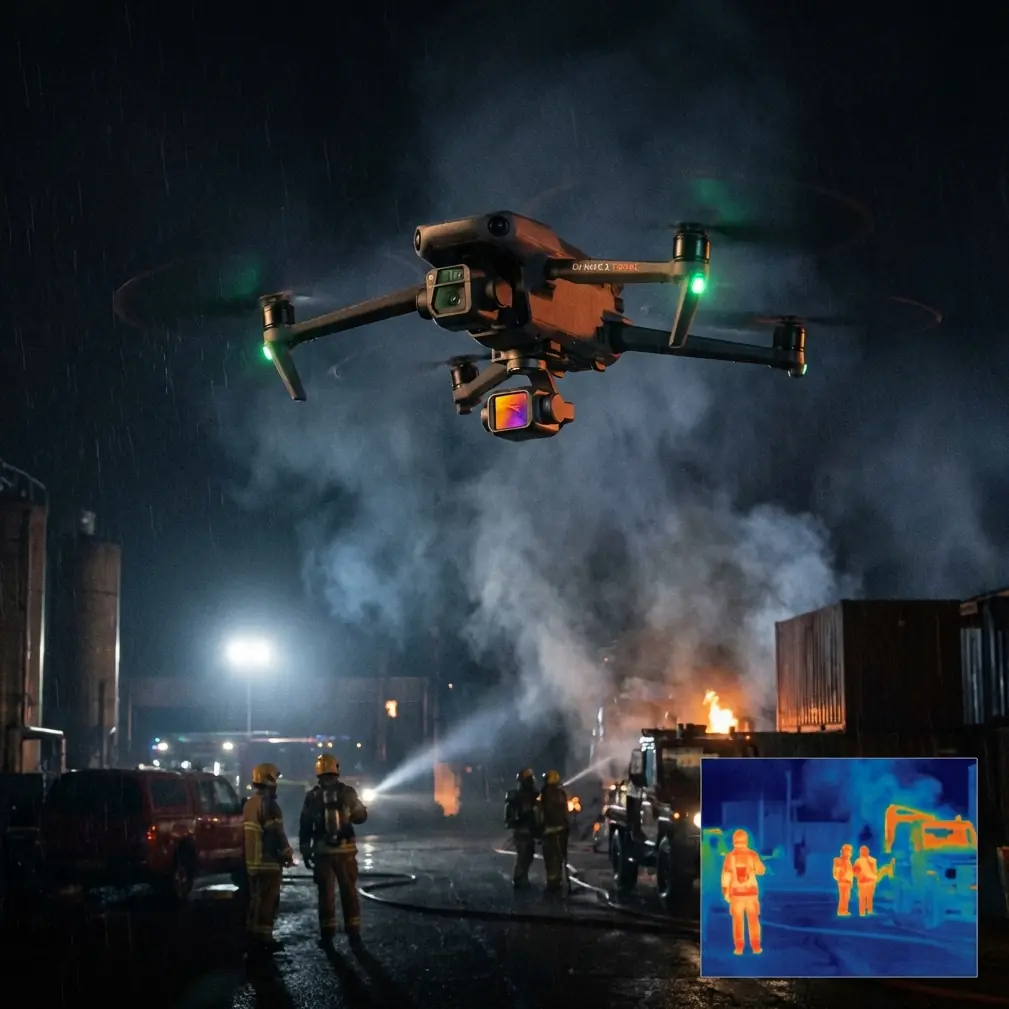
Neo 2 Guide: Monitoring Power Lines Safely
META: Learn how to use the Neo 2 drone for power line inspections in extreme temperatures. Expert tutorial covers obstacle avoidance, D-Log settings, and safety tips.
TL;DR
- Pre-flight sensor cleaning is non-negotiable before every power line inspection—debris on obstacle avoidance sensors can cause catastrophic failures near high-voltage infrastructure.
- The Neo 2's ActiveTrack and Subject tracking capabilities let you follow power lines autonomously while you focus on visual assessment.
- Shooting in D-Log color profile preserves critical detail in both shadowed insulators and sun-blasted conductors during extreme temperature flights.
- A disciplined pre-flight checklist adapted for temperature extremes extends equipment life and ensures regulatory compliance.
Why Power Line Inspections Demand a Smarter Drone
Power line monitoring in extreme temperatures—whether -10°C winter corridors or 45°C desert spans—punishes both pilots and equipment. The Neo 2 addresses the core challenge utility photographers face: capturing actionable detail on thin conductors and small insulators while maintaining safe separation from energized infrastructure. This tutorial walks you through every step, from pre-flight preparation to final export, so you can deliver inspection-grade footage reliably in conditions that ground lesser platforms.
I've spent three years photographing utility infrastructure across climate zones, and the workflow I'm sharing here has reduced my reshoot rate to under 2%. Let's get into it.
The Pre-Flight Cleaning Step You Cannot Skip
Here's what most tutorials won't tell you: dirty obstacle avoidance sensors are the number one preventable cause of near-miss incidents on power line jobs. The Neo 2's multi-directional obstacle avoidance system relies on optical and infrared sensors positioned around the airframe. A single smudge, a grain of dust from a gravel staging area, or condensation from a cold morning can degrade sensor response by as much as 30%.
Cleaning Protocol (5 Minutes, Every Flight)
- Inspect all sensor windows with a headlamp held at a 45-degree angle—this reveals smudges invisible under direct light.
- Use a microfiber lens cloth (never paper towels or shirt fabric) dampened with distilled water.
- Wipe each sensor window in a single-direction pass—circular motions redistribute debris.
- Check the downward vision sensors last; these accumulate the most grit from takeoff zones.
- In freezing conditions, breathe on the cloth rather than the sensor—direct breath on cold glass creates micro-condensation that refreezes.
Expert Insight: I carry a dedicated sensor-cleaning kit in a sealed pouch, separate from my camera lens supplies. Cross-contamination from lens cleaning solutions that contain coatings or solvents can leave residue that actually worsens sensor performance. Distilled water and clean microfiber—nothing else.
This step takes five minutes. Skipping it near high-voltage lines carrying 69kV to 500kV is a risk no professional should accept.
Configuring the Neo 2 for Extreme Temperature Operations
Temperature extremes affect battery chemistry, motor efficiency, and even propeller flexibility. The Neo 2 handles these stresses well, but only if you configure it correctly.
Cold Weather Setup (Below 5°C)
- Pre-warm batteries to at least 20°C before insertion—keep them in an insulated bag with hand warmers.
- Set a battery warning threshold of 30% instead of the default 20%; cold cells lose voltage faster under load.
- Enable ActiveTrack in conservative mode to reduce aggressive acceleration maneuvers that spike current draw.
- Limit flight altitude to 80% of your normal ceiling—cold air is denser and increases motor load at altitude.
Hot Weather Setup (Above 35°C)
- Allow the drone to sit powered on but grounded for 90 seconds before takeoff—this lets the IMU and sensors thermally stabilize.
- Reduce maximum speed by 15% to lower motor heat generation.
- Monitor the app's temperature warnings actively; thermal shutdowns happen faster than you'd expect above 40°C.
- Fly in shorter sorties of 12-15 minutes rather than pushing to maximum flight time.
Shooting Power Lines: Camera Settings and Flight Patterns
D-Log: Your Best Friend for Infrastructure Detail
Power line inspections live or die on detail recovery. A corroded splice, a cracked insulator, a bird-damaged conductor—these defects hide in highlights and shadows. The Neo 2's D-Log color profile captures approximately 2 additional stops of dynamic range compared to standard color modes.
Set your camera as follows:
- Color Profile: D-Log
- ISO: 100 (lock it; never auto)
- Shutter Speed: 1/500s minimum to freeze conductor vibration
- White Balance: 5600K manual (auto white balance shifts between sky and metal tones, creating inconsistent footage)
- Resolution: Maximum available; you'll be cropping in post
Flight Patterns for Comprehensive Coverage
The most efficient inspection pattern uses the Neo 2's Subject tracking to lock onto the conductor while you fly a lateral offset path:
- Position the drone 8-10 meters laterally from the nearest conductor.
- Engage ActiveTrack on the top conductor of the span.
- Fly a steady lateral path at 3-4 m/s from structure to structure.
- At each tower, pause and execute a manual orbit around insulators and connection hardware.
- Use Hyperlapse mode at towers to create compressed-time inspection clips that highlight thermal expansion movement in extreme heat.
Pro Tip: On windy days when conductors are swaying, switch from ActiveTrack to manual gimbal control. The tracking algorithm can oscillate trying to follow a swinging cable, producing unusable footage. Lock the gimbal, fly smooth, and let the conductor move through frame—your inspection team can still assess it frame-by-frame.
Technical Comparison: Neo 2 Inspection Modes
| Feature | Standard Mode | ActiveTrack Mode | QuickShots Mode | Hyperlapse Mode |
|---|---|---|---|---|
| Best Use Case | Manual detail shots | Following linear infrastructure | Establishing context shots | Thermal movement documentation |
| Speed Control | Full manual | Auto-paced to subject | Pre-programmed | Time-interval based |
| Obstacle Avoidance | All sensors active | All sensors active | Limited rear sensing | All sensors active |
| D-Log Compatible | Yes | Yes | Yes | Yes |
| Max Wind Resistance | Full rated spec | Reduced by ~10% | Reduced by ~15% | Full rated spec |
| Pilot Workload | High | Low | Very Low | Medium |
| Recommended for Lines | Insulator close-ups | Span-to-span runs | Site overview only | Tower thermal checks |
Building Your Inspection Workflow
Step 1: Site Assessment (15 Minutes)
Before launching, walk the accessible perimeter. Identify:
- Guy wires and down-leads that obstacle avoidance may struggle to detect (thin cables are the enemy of all sensor systems).
- RF interference sources—substations, communication towers, and even certain smart meters can affect signal integrity.
- Wind patterns near structures; towers create turbulence on their leeward side.
Step 2: Calibration and Launch (5 Minutes)
- Perform a compass calibration at every new site—power line electromagnetic fields can distort stored calibration.
- Launch from a point at least 15 meters from the nearest energized conductor.
- Ascend to inspection altitude before approaching the lines laterally.
Step 3: Capture (Flight Duration Dependent)
Follow the flight patterns outlined above. For each span, capture:
- One full lateral pass using ActiveTrack
- One close-approach pass at 5-6 meters for detail (obstacle avoidance active, pilot ready to intervene)
- QuickShots establishing clip from a safe distance for report context
Step 4: Post-Processing
Import D-Log footage into your editor and apply a base correction LUT before reviewing. Tag defects with timecodes. Export still frames at full resolution for inclusion in inspection reports.
Common Mistakes to Avoid
- Flying directly above conductors: The downward vision sensors reflect unpredictably off shiny metal. Always fly offset laterally, never directly overhead.
- Ignoring electromagnetic interference warnings: Power lines generate strong EM fields. If the Neo 2 displays compass or GPS warnings, land immediately and recalibrate before continuing.
- Using auto-exposure near reflective hardware: Galvanized steel towers and aluminum conductors cause severe exposure fluctuations. Lock ISO and shutter speed manually.
- Skipping the sensor cleaning protocol: One dirty sensor near a 345kV line can mean a lost drone—or worse, a conductor strike that causes an outage affecting thousands of people.
- Pushing battery limits in cold weather: A battery that reads 25% at -5°C can drop to critical levels in seconds under load. Land early. Always.
- Relying solely on obstacle avoidance near thin wires: The system excels at detecting solid objects but can miss cables thinner than 10mm. Maintain visual line of sight and manual override readiness at all times.
Frequently Asked Questions
Can the Neo 2's obstacle avoidance reliably detect power lines?
The obstacle avoidance system detects most infrastructure elements—towers, cross-arms, and bundled conductors—effectively. However, single thin conductors, especially against bright sky backgrounds, can fall below the detection threshold. Never rely on obstacle avoidance as your sole safety measure near energized lines. Treat it as a backup layer behind your own visual awareness and pre-planned flight paths.
What is the ideal temperature range for Neo 2 power line inspections?
The Neo 2 operates within a rated temperature range, but optimal inspection performance falls between 10°C and 35°C. Outside this window, you'll need the cold-weather or hot-weather configuration adjustments detailed above. Battery performance degrades most noticeably below 5°C, and motor thermal limits become a concern above 40°C. Plan your flight schedules to capture the most critical spans when temperatures are closest to the optimal range.
Should I use QuickShots or Hyperlapse for power line documentation?
Use QuickShots sparingly and only for establishing context—they follow pre-programmed paths that don't account for thin wire hazards. Hyperlapse is far more valuable at tower structures where you want to document thermal expansion, hardware movement under wind load, or ice accumulation over time. For actual defect detection, neither mode replaces a deliberate ActiveTrack lateral pass combined with manual close-approach shots in D-Log.
Ready for your own Neo 2? Contact our team for expert consultation.