
Neo 2 in Dusty Fields: A Photographer’s Field Report
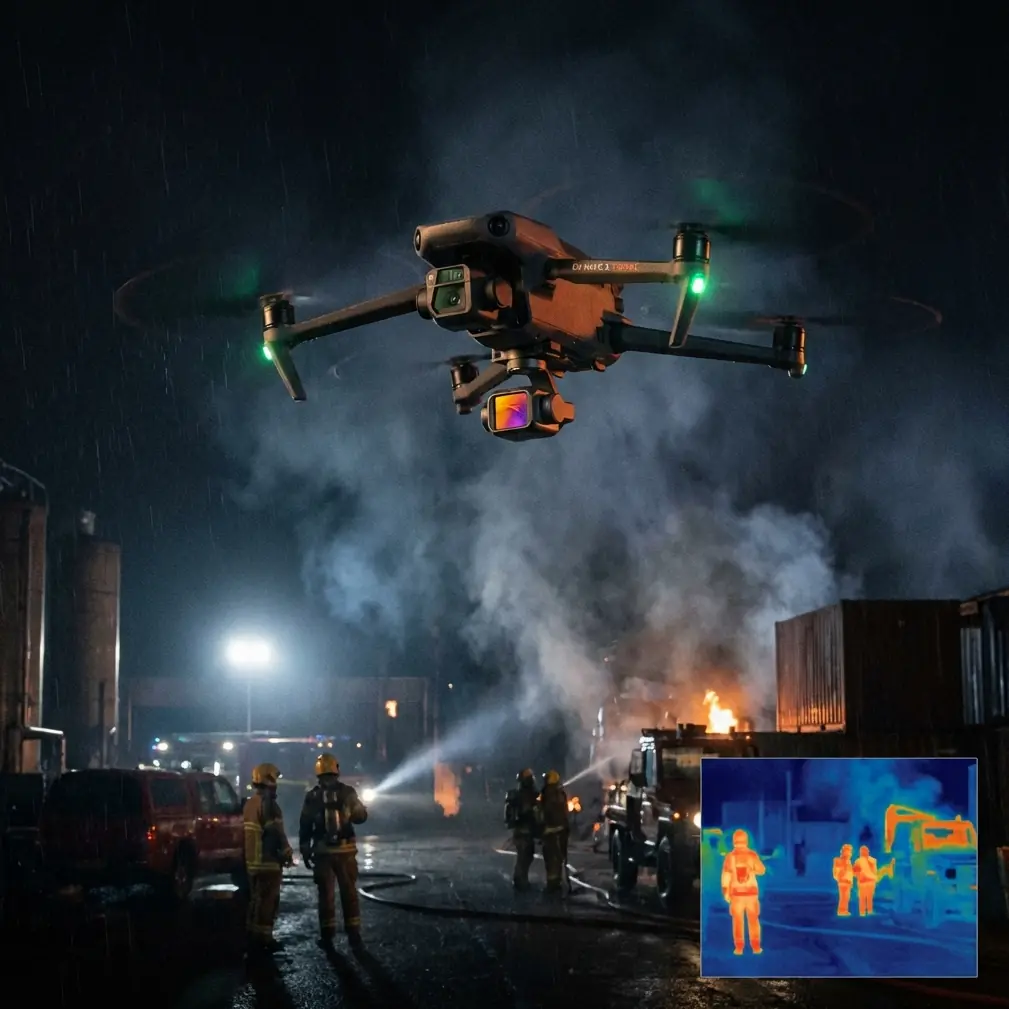
Neo 2 in Dusty Fields: A Photographer’s Field Report on What Actually Holds Up
META: A practical field report on using the Neo 2 for dusty field mapping, obstacle avoidance, subject tracking, QuickShots, Hyperlapse, D-Log, and ActiveTrack in real outdoor conditions.
I took the Neo 2 into a dry agricultural corridor at first light, the kind of place that looks simple until you start flying it. Dust hangs low. Wind pushes loose soil across access roads. Fence lines cut through the landscape at awkward angles, and irrigation hardware sits just high enough to ruin a lazy pass. For anyone mapping fields in dusty conditions, that combination matters more than spec-sheet theater.
This is not a studio drone story. It is a report from the field, where visibility shifts by the minute and every automated feature has to prove itself against real texture, clutter, and airflow.
The job was straightforward on paper: build clean visual coverage over a set of dry parcels, capture repeatable perspective for later comparison, and grab enough cinematic material to make the survey useful for client communication rather than just internal analysis. In practice, the site demanded three things from the Neo 2 at once. It needed to hold a stable line over open ground, recognize hazards that blend into an earthy background, and keep footage flexible enough in post to separate dust haze from the actual condition of the crop rows.
That is where the Neo 2 becomes interesting.
A lot of small drones fly well in calm air over clean scenery. Dusty field work is a better filter. Fine particles flatten contrast. The visual environment gets busy without becoming visually obvious. Brown on brown sounds easy for onboard sensing until the drone has to distinguish between a harmless texture shift and a wire gate, scrub branch, or pivot structure sitting inside its path. In those conditions, obstacle avoidance is not just a convenience feature. It is the difference between confidently completing a low-altitude run and climbing higher than the mission really wants.
On this flight, the most revealing moment came along a drainage edge where a kestrel lifted out of dry grass just off the route. That sudden movement would test any aircraft operator’s reflexes, but it was also a test of the Neo 2’s sensor logic. The drone adjusted its path instead of lurching into a panicked stop, giving enough space for the bird to break away while maintaining control authority over the shot. Operationally, that matters for two reasons. First, wildlife encounters are not rare in agricultural mapping. Second, a system that can interpret a fast, unexpected change near the flight path without turning the whole run into a failed capture is a system you can plan around.
That moment also clarified something people often miss when discussing obstacle avoidance. The real value is not that the drone can “see things.” It is that sensing changes pilot workload during a repetitive mission. When you are running overlapping passes over dusty acreage, mental fatigue builds quickly. You are watching orientation, wind, light angle, edge features, and flight path consistency all at once. Reliable detection and route adjustment reduce the number of micro-corrections you need to make, which preserves attention for the decisions that genuinely require a human.
The Neo 2’s subject tracking tools play an unexpected role here too. Most pilots think of ActiveTrack and general subject tracking as features for people, vehicles, or action footage. In field operations, they become useful for documenting moving farm equipment along perimeter roads, following inspection walks, or creating reference clips that show scale and context around a mapped zone. I used ActiveTrack on a slow-moving utility vehicle crossing the boundary lane, not because the mission depended on it, but because that pass created a simple visual reference for later review. It answered a practical question: how close was the vehicle corridor to the dry edge where dust drift was worst? The automated tracking kept framing consistent while I watched separation and route.
That consistency is more useful than it sounds. Manual framing during a dusty shoot often degrades over time because the pilot is constantly compensating for atmospheric softness and ground glare. With tracking engaged, the Neo 2 removes some of that variability. You get footage that is easier to compare across dates, especially if you are building recurring visual records of the same field.
QuickShots, on the other hand, are often dismissed as social media shortcuts. That is too simplistic. In a professional field context, a well-chosen QuickShot can create a fast establishing sequence that explains topography, access layout, and surrounding risk factors in seconds. One orbital move around the pump infrastructure near the parcel entrance produced a better briefing visual than several static frames combined. The reason is operational, not aesthetic. Stakeholders reviewing the material do not always understand field geometry from overhead orthographic-style passes alone. A short automated motion clip can reveal elevation change, service access, and obstacle density far more intuitively.
Hyperlapse has a similar dual purpose. Yes, it can look dramatic. But in dusty fieldwork, it also helps show pattern development over time. Wind direction becomes visible. Dust plumes reveal how exposed a section really is. Vehicle traffic leaves a readable trace. During the late-morning period, I used Hyperlapse to compress a stretch of activity near a dry turnout road. The resulting sequence made one issue immediately clear: every equipment transit was throwing dust toward the same bordering rows. That is the kind of visual evidence that can inform operational conversations well beyond the drone team.
Image flexibility matters just as much as flight behavior, and this is where D-Log earns its place. Dusty scenes are hostile to ordinary color profiles. Highlights off pale soil can clip early, shadows under equipment can block up, and the entire frame can take on a washed beige cast that hides useful detail. Shooting in D-Log gives you more room to recover the scene later without forcing aggressive correction that falls apart under scrutiny. In this case, that latitude helped separate actual plant stress tones from airborne haze and reflected soil brightness. If your output needs to support field interpretation, not just visual appeal, that distinction is critical.
There is a practical caveat, though. D-Log is only useful if you know why you are using it. Flat footage in bad light does not magically become informative. The advantage appears when you have difficult contrast and particulate atmosphere, exactly the kind of environment dusty field mapping creates. The Neo 2 gives you a better starting point for grading those scenes into something readable and honest.
One of the biggest misconceptions around small drone performance in agriculture is that open land equals easy flying. Open land is often visually deceptive. You may have fewer buildings, but you are dealing with narrower cues for depth, subtle hazards, thermal instability over bare ground, and long distances that encourage complacency. The Neo 2’s strongest trait in this setting is not any single feature. It is how several features stack together into a more manageable workflow.
Obstacle avoidance reduces low-pass risk near hidden structures. Subject tracking and ActiveTrack stabilize contextual documentation. QuickShots accelerate scene explanation for non-pilot viewers. Hyperlapse exposes environmental movement that a still frame would miss. D-Log gives the footage a fighting chance in post when dust strips out contrast. None of those tools replace mission planning. Together, they make the aircraft more useful for the kind of mixed creative-technical work that field operators increasingly need.
That mixed role is worth emphasizing. A mapping day rarely stays pure. Even when the original assignment is straightforward coverage, someone eventually asks for material that communicates conditions clearly to a landowner, manager, consultant, or remote team member. This is where a photographer’s instincts become valuable. You are not only collecting imagery. You are translating terrain, condition, and risk into frames people can understand quickly.
The Neo 2 supports that translation better when you work with the environment instead of against it. In dusty fields, I found the best results came from resisting the temptation to fly every pass low and fast. A slightly more conservative altitude improved obstacle interpretation and reduced the visual chaos kicked up by prop wash near the ground. Tracking features were more dependable when the subject had clear lateral separation from dusty background clutter. QuickShots worked best when used selectively, especially around fixed infrastructure where motion helped reveal spacing. D-Log paid off most during the harsher light window, when the soil was bright enough to create real tonal compression.
The wildlife encounter with the kestrel stayed with me because it exposed the difference between brochure features and operational features. In marketing language, sensors sound abstract. In the field, they become ethics, safety, and continuity. A drone that can react smoothly around an unexpected bird near a field edge is not just more convenient. It supports better flying habits. You are less likely to force a rushed manual correction, less likely to abandon a useful route, and more likely to leave the environment with both your aircraft and the local wildlife unharmed.
For pilots working similar sites, that is the real takeaway. The Neo 2 is not interesting because it promises everything. It is interesting because, in the messy middle ground between mapping, documentation, and storytelling, it stays composed. Dust does not disappear. Wind does not become irrelevant. The land does not simplify itself for your mission. But the aircraft gives you enough sensing, automation, and image control to keep working methodically when conditions get visually noisy.
If you are building a repeatable field workflow, think of the Neo 2 less as a one-mode tool and more as a flexible recorder of conditions. Use obstacle avoidance to protect low inspection passes near hidden hardware. Use ActiveTrack when moving reference subjects can explain scale or site behavior. Use QuickShots to create orientation clips for clients and teams who need the “where” before the “what.” Use Hyperlapse when time and movement are part of the story. Use D-Log when dust and harsh light threaten to flatten everything into the same colorless layer.
That is the practical shape of this drone in the real world. Not theory. Not launch-day hype. A capable aircraft meeting a difficult environment and proving its value through small decisions that add up over a long morning.
If you want to compare workflows or share your own field setup, you can message me here. I am always interested in how other pilots balance mapping precision with visual clarity in rough agricultural conditions.
The Neo 2 makes the most sense for operators who need one aircraft to do more than one job during the same deployment. In dusty fields, that matters. The mission is never only about flight time or only about footage. It is about whether the drone helps you leave the site with usable data, clear visuals, and fewer avoidable problems than you arrived with.
Ready for your own Neo 2? Contact our team for expert consultation.