
Neo 2 on Harsh Construction Sites: A Practical Case Study
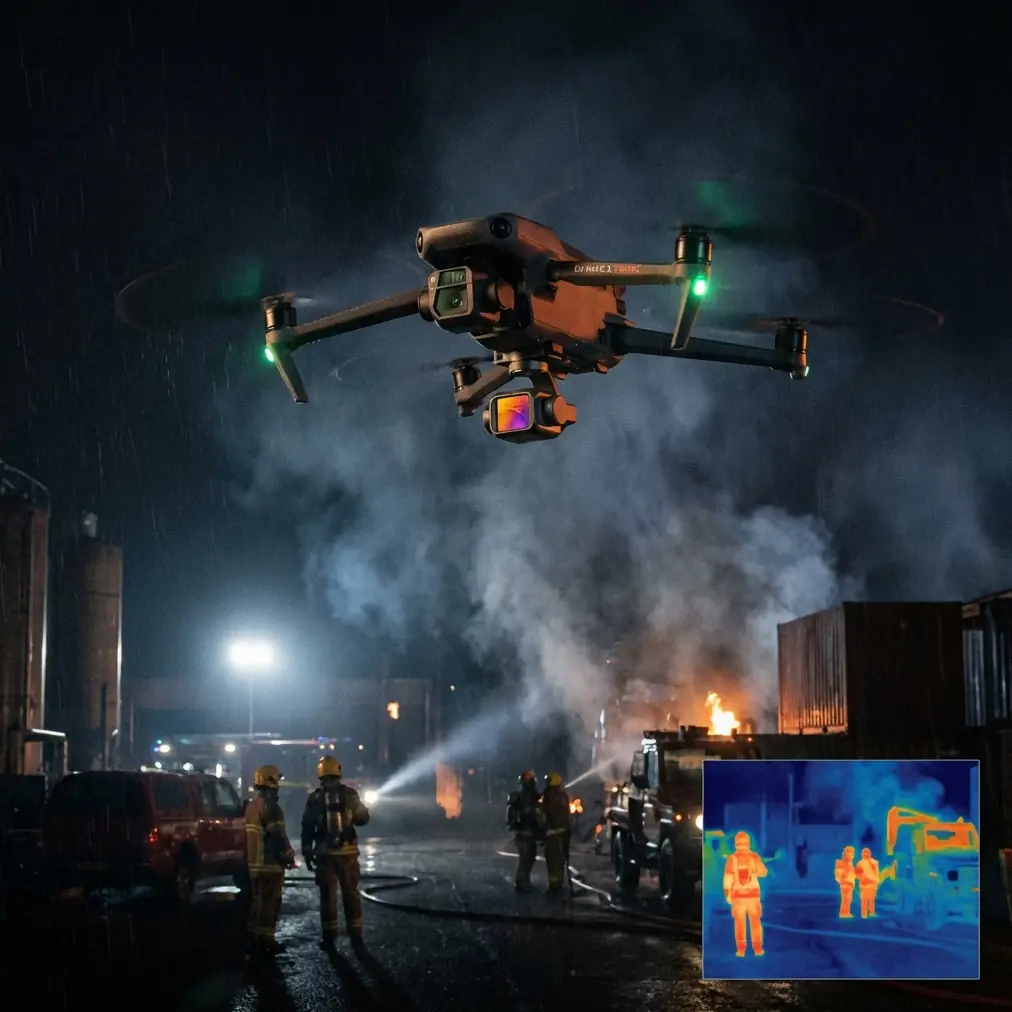
Neo 2 on Harsh Construction Sites: A Practical Case Study in Faster Mapping and Safer Capture
META: A field-focused Neo 2 case study for construction site inspections in extreme temperatures, covering aerial survey workload, efficiency gains, flight planning, and antenna positioning for maximum range.
Construction sites do not wait for ideal weather. Concrete pours continue in summer glare. Steel frames get inspected in winter wind. Earthworks shift by the hour. That is exactly where a compact aircraft like Neo 2 becomes interesting—not as a toy for quick footage, but as a serious field tool when the job demands fast visual intelligence without dragging a full survey crew across unstable ground.
I want to frame this around a real operational question: what happens when a team needs to inspect and document a large construction area under punishing conditions, and they are deciding whether a lightweight UAV workflow can meaningfully reduce field burden?
The reference material gives a useful benchmark. For a 10 square kilometer UAV aerial survey workload, the documented effort varies by mapping scale. At 1:500, the workflow calls for 3 flight sorties, 3 days of control point measurement with 90 points, 3 days for aerial triangulation staffing, and then long downstream production stages such as 40 days for stereo collection and 20 days for field annotation, each shown as one-person tasks. At 1:1000, that drops to 2 sorties, 50 control points over 3 days, and 20 days for stereo collection. At 1:2000, it is leaner still: 1 sortie, 30 control points over 3 days, and 15 days for stereo collection.
Those numbers matter because they show something many site managers miss. The flight itself is rarely the bottleneck. Data quality planning, ground control, interpretation, and deliverable generation dominate the schedule. On an extreme-temperature construction site, Neo 2 is valuable not just because it can get airborne quickly, but because it can compress the riskiest and least efficient part of inspection work: physically sending people everywhere, repeatedly, to look at surfaces, stockpiles, perimeter changes, drainage paths, facade progress, and access constraints.
A Neo 2 case study: heat, dust, and a moving site
Picture a large mixed-use development in a semi-arid region. Daytime surface temperatures are brutal. Dust hangs in the air by noon. Ground teams are already stretched between safety meetings, subcontractor coordination, and progress checks. The site needs recurring visual records of crane zones, formwork progress, temporary road conditions, and cut-and-fill changes at the edge of the property.
The old habit on projects like this is familiar: an RTK rover, total station support, boots on the ground, and a lot of repeated walking. That works, but the reference benchmark shows how heavy the labor burden becomes at scale. The document contrasts UAV workflows with RTK plus total station, stating that drone-based work can deliver more than 6 to 8 times the efficiency. It also notes that for a 10 square kilometer scope, the labor savings can exceed 100,000 in local cost terms, and that around 50 square kilometers of work can justify an entire UAV system.
Even if your project is smaller than that threshold, the operational lesson is obvious: on a harsh construction site, reducing field exposure is not a convenience. It is a planning advantage.
Neo 2 fits that advantage when the mission is not full cadastral survey replacement, but recurring inspection capture with enough consistency to support engineering review, progress comparison, and fast decision cycles.
Why Neo 2 makes sense for inspection rather than brute-force survey replacement
Construction inspections in extreme temperatures reward speed, repeatability, and low setup friction. Neo 2 is especially useful when you need to launch, capture, verify, and clear the area before weather, dust, or on-site activity changes the scene.
This is where features often treated as marketing bullets become operationally relevant.
Obstacle avoidance is not a nice extra on dense sites
A construction site is a moving obstacle course: tower cranes, rebar stacks, temporary fencing, scaffold tubes, telehandlers, concrete pump booms, and partially enclosed structures. Obstacle avoidance on Neo 2 matters because inspections often happen near unfinished geometry where GPS paths alone are not enough. When ambient conditions are difficult—heat shimmer, glare, fast-changing shadows—the margin for pilot error narrows. Avoidance systems help preserve the aircraft during close visual work around structures and staging zones.
That does not make the drone autonomous in any magical sense. It does mean the operator can focus more attention on framing, stability, and hazard scanning instead of fighting every inch of positioning manually.
Subject tracking and ActiveTrack reduce repeat-pass fatigue
On active sites, some inspection subjects are not static. Think of following a haul route, tracking a moving crane pick zone from a safe stand-off distance, or documenting vehicle circulation around a temporary logistics yard. Subject tracking and ActiveTrack are useful because they create repeatable observation sequences. Instead of improvising each pass, the operator can maintain cleaner, more comparable footage across multiple days.
That consistency is valuable in progress meetings. Teams are not just asking, “What does the site look like today?” They are asking, “What changed since the last pour, the last rain event, or the last delivery window?”
D-Log helps in punishing light
Extreme temperatures often come with ugly light. Midday glare on steel decking, reflective membrane, or pale aggregate can crush detail in standard profiles. D-Log becomes practical here because it preserves more room in highlights and shadows for later review. On inspection work, that matters less for cinematic beauty and more for legibility. You want to see surface texture, edge conditions, staining, ponding, and material transitions without losing them to clipped brightness.
QuickShots and Hyperlapse are not just creative tools
Used properly, QuickShots and Hyperlapse can support progress documentation. A standardized orbit of a structural core every week creates a useful archive. A repeated hyperlapse over a staging area can reveal traffic patterns, congestion, or inefficient material flow. These modes should not replace careful manual capture where precision is required, but they can add structured visual summaries that management actually reviews.
What the reference data really says about workflow discipline
The most revealing detail in the source is not simply that UAVs are faster. It is that the workload still breaks into distinct production stages: aerial photography, control point measurement, aerial triangulation, stereo collection, field interpretation, and final deliverables.
For Neo 2 users on construction projects, that has two implications.
First, do not confuse “fast flight” with “finished inspection program.” If your team needs measurable outputs, repeatable orthomosaics, or sitewide progress maps, your process around control, naming, archiving, and post-processing has to be disciplined.
Second, choose the right level of survey rigor for the actual question you are trying to answer. The reference shows dramatically different requirements between 1:500, 1:1000, and 1:2000 scales. That is operationally significant. If the superintendent only needs a reliable visual status record and broad earthwork context, demanding a 1:500-style workflow every time can waste effort. If the engineering team is checking fine-detail geometry, a lighter inspection routine may not be enough.
Neo 2 works best when it is placed inside that decision logic rather than being asked to be everything at once.
Best practices for Neo 2 in extreme temperatures
Let’s move from the benchmark to the field.
1. Fly early, not heroically
In hot environments, the best inspection flights are often the least dramatic ones. Launch early. Capture the high-priority routes before heat shimmer builds above concrete and bare soil. You get cleaner imagery, less battery stress, and a more stable aircraft. In cold environments, the same principle applies in a different way: manage battery temperature before takeoff and avoid long idle periods in freezing air.
2. Build a short, repeatable route library
For construction inspections, the goal is rarely one perfect cinematic mission. It is a dependable sequence that can be repeated weekly or daily. Create a small set of routes:
- perimeter sweep
- vertical progress pass
- roof or deck condition pass
- earthwork overview
- logistics yard overview
This is where QuickShots and ActiveTrack can help, but only if used deliberately and repeated under similar geometry.
3. Match capture mode to decision type
Use wide establishing passes for coordination meetings. Use slower, lower manual passes for defect review. Use D-Log where high-contrast conditions threaten detail. Use Hyperlapse only when time-based site activity is the story.
4. Respect dust more than temperature
Heat gets the attention. Dust often does the damage. Construction dust affects motors, optics, landing surfaces, and image clarity. Choose clean launch points, avoid low hover in loose fines, and inspect the aircraft after every sortie.
Antenna positioning advice for maximum range
This is the field tip too many operators learn late.
If you want the best control link performance from Neo 2, treat the antennas as part of the flight plan. Do not point the tips straight at the aircraft. The strongest signal pattern usually projects broadside from the antenna faces, not directly off the ends. In practical terms, you want the flat sides oriented toward the drone’s expected operating area.
On a construction site, range is rarely just about distance. It is about signal quality through clutter. Cranes, temporary buildings, containers, steel stock, and reinforced concrete all interfere with the link. A few habits help:
- Stand where you have genuine line of sight to the largest portion of the mission area.
- Raise your body position slightly if terrain or stored material blocks the low-angle path.
- Keep the controller antennas aligned toward the working zone, especially when transitioning from a close facade pass to a wider perimeter leg.
- Avoid parking yourself beside site offices, metal fencing, or equipment stacks that can reflect or block signal.
- Reorient as the drone moves. Static operator posture is a common reason people think the aircraft has poor range.
If your team wants help tuning a real construction-site comms setup, this direct field support chat can be useful: https://wa.me/85255379740
That antenna discipline matters even more in extreme temperatures because operators tend to rush. They launch from the nearest shaded spot or from inside a vehicle opening, then wonder why the signal degrades near steelwork. Better positioning often does more for stable control than any setting tweak.
The real productivity edge: freeing your survey assets
One line in the reference stands out: the UAV can complete the flight portion in one day, while RTK and total station resources remain occupied, limiting how many projects can be handled at once.
That is a major business insight for contractors and consultants. The value of Neo 2 is not only that it captures a site faster. It also prevents your most specialized ground-survey resources from being consumed by routine visual documentation tasks. Those teams can stay focused on the measurements and layouts that truly require their instruments.
This is where the cited 6 to 8 times efficiency advantage becomes tangible. Not every task is accelerated equally, but the whole project pipeline becomes more flexible. You spend fewer labor hours walking hazardous terrain, fewer hours revisiting broad areas for missed context, and fewer coordination cycles arguing over outdated site photos.
Where Neo 2 fits best on construction projects
Based on the reference data and practical site conditions, Neo 2 is strongest in these roles:
- recurring sitewide visual inspections
- progress documentation between formal survey milestones
- access-limited area review
- roof, facade, and upper-structure observation
- temporary works monitoring
- stockpile and yard change tracking
- pre-meeting visual capture for project coordination
For high-precision deliverables, it should support—not casually replace—a well-structured survey workflow. The source material makes that clear. Even UAV-led mapping still relies on planning, control, and careful post-processing. But for real-world construction inspections in extreme temperatures, Neo 2 can remove a surprising amount of field friction.
That is the practical story here. A compact drone is not valuable because it flies. It is valuable because it changes who has to walk where, for how long, and how often. When the site is hot, cold, dusty, and constantly changing, that difference adds up quickly.
Ready for your own Neo 2? Contact our team for expert consultation.