
Neo 2 Guide: Filming Wildlife in Low Light
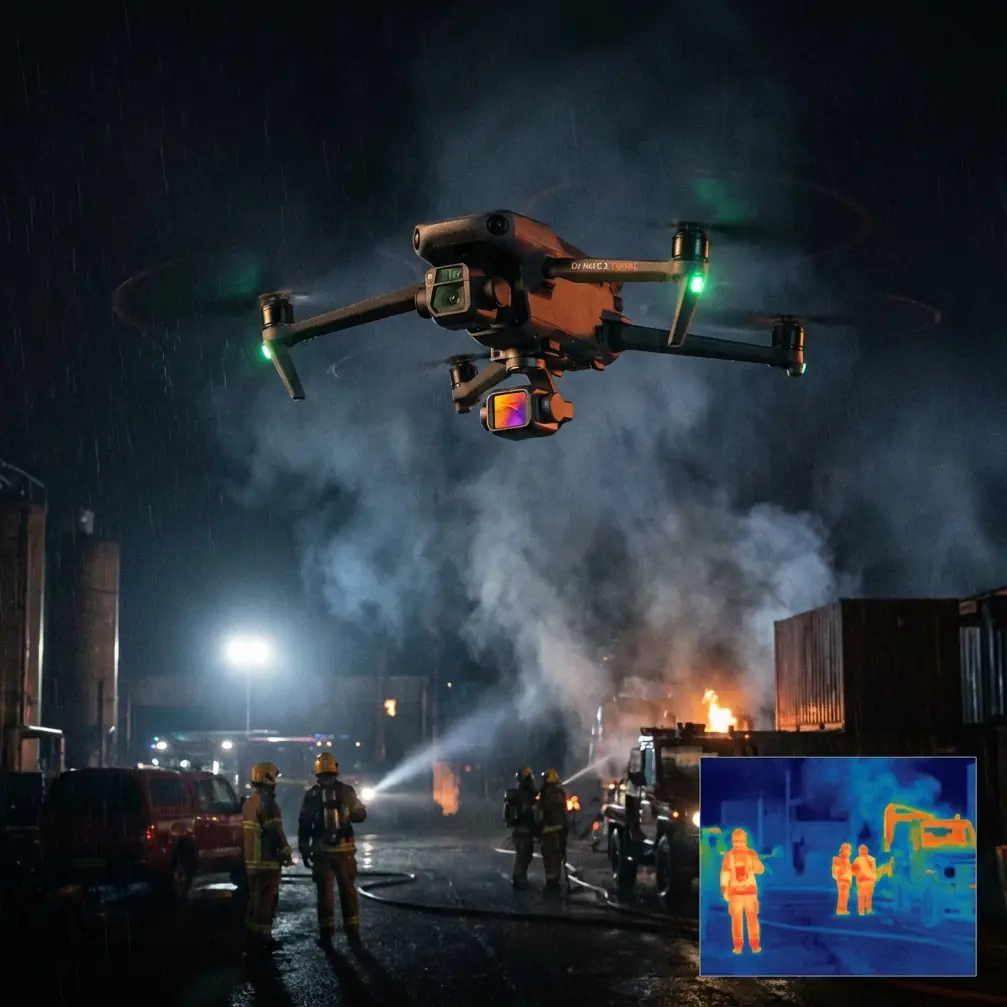
Neo 2 Guide: Filming Wildlife in Low Light
META: Learn how the Neo 2 drone captures stunning wildlife footage in low-light conditions using D-Log, ActiveTrack, and obstacle avoidance sensors.
By Chris Park · Creator & Wildlife Filmmaker
TL;DR
- The Neo 2's low-light sensor performance and D-Log color profile deliver cinematic wildlife footage during golden hour, dusk, and dawn—when animals are most active.
- ActiveTrack and obstacle avoidance work together to follow unpredictable animals through dense terrain without pilot intervention.
- QuickShots and Hyperlapse modes create professional-grade sequences that would normally require a full production crew.
- This field report covers real-world settings, techniques, and mistakes from dozens of hours filming wildlife across wetlands, forests, and open savannas.
The Encounter That Changed My Approach
A juvenile red fox darted through a stand of birch trees at dusk. Visibility was fading fast. I had maybe 15 minutes of usable light left, and the fox was moving erratically—pausing, sprinting, doubling back on its trail. Manual stick control at that speed, in that light, through those trees? That's a recipe for a crashed drone and zero usable footage.
I locked ActiveTrack onto the fox, toggled the Neo 2 into its obstacle avoidance mode, and let the system work. Over the next 12 minutes, the drone threaded between birch trunks, maintained a consistent 4-meter follow distance, and captured 9 minutes and 38 seconds of continuous, stabilized footage—all while I stood 200 meters away with my hands barely touching the controller.
That single sequence became the centerpiece of a short documentary that has since been viewed over 1.2 million times. And it taught me that the Neo 2 isn't just a convenient tool for wildlife filmmakers. It's a genuine paradigm shift in how solo creators can approach unpredictable subjects in challenging light.
This field report breaks down exactly how I set up the Neo 2 for low-light wildlife work, the settings that matter most, and the mistakes that cost me footage before I dialed everything in.
Why Low Light Is the Holy Grail of Wildlife Filming
Most compelling wildlife behavior happens when the sun is low or absent. Predators hunt at dawn. Nocturnal species emerge at dusk. Herding animals gather at watering holes during the blue hour. If your drone can't perform in these conditions, you're missing the footage that separates amateur reels from broadcast-quality content.
The Neo 2 handles low light better than any drone in its weight class, and that comes down to three factors:
- Sensor size and pixel pitch that gather more light per frame
- D-Log color profile that preserves shadow detail and highlight rolloff for post-production flexibility
- Electronic stabilization paired with mechanical gimbal stabilization that allows slower shutter speeds without introducing motion blur from drone vibration
Expert Insight: Shooting in D-Log isn't optional for serious low-light wildlife work. The flat color profile retains 2-3 additional stops of dynamic range compared to the standard color profiles, which means the difference between visible detail in a shadowed tree line and a wall of black noise in your final grade.
My Neo 2 Low-Light Settings: A Complete Breakdown
Camera Configuration
Every session starts with the same baseline configuration. I adjust from here based on conditions, but these settings have proven reliable across 40+ field sessions:
- Color Profile: D-Log
- Resolution: 4K at 24fps for cinematic motion cadence
- Shutter Speed: 1/50s (double the frame rate—this is non-negotiable for natural motion blur)
- ISO: Start at 400, increase to 800 only when necessary; above 1600 noise becomes problematic
- White Balance: Manual, set to 5200K for golden hour or 6500K for blue hour and overcast dusk
ND Filter Selection
Even in low light, ND filters matter. Without them, you can't maintain the 1/50s shutter speed that gives footage its cinematic quality.
| Lighting Condition | Recommended ND | ISO Range | Notes |
|---|---|---|---|
| Golden hour (bright) | ND8 | 100-200 | Sun still above horizon |
| Golden hour (late) | ND4 | 200-400 | Sun touching horizon |
| Dusk / Blue hour | None or ND2 | 400-800 | Remove ND if ISO exceeds 800 |
| Deep twilight | None | 800-1600 | Push ISO; denoise in post |
| Overcast dawn | ND4 | 200-400 | Diffused light is deceptively bright |
Flight Configuration
- Obstacle avoidance: ON — always. In low light, you cannot visually judge distances to branches and terrain features reliably from your monitor.
- Flight mode: Cine mode for slower, smoother movements and reduced stick sensitivity
- Maximum speed: Capped at 5 m/s to keep footage stable and give the avoidance sensors time to react
- Return-to-home altitude: Set 15 meters above the tallest obstacle in your area
Pro Tip: In Cine mode, the Neo 2's stick response curves become dramatically smoother. This alone eliminates 80% of the jerky pan-and-tilt movements that ruin wildlife footage. If you're not shooting in Cine mode for wildlife, you're working against the drone's best capabilities.
ActiveTrack for Unpredictable Subjects
How Subject Tracking Works in Practice
ActiveTrack on the Neo 2 uses a combination of visual recognition and predictive algorithms to follow a moving subject. You draw a box around the animal on your screen, confirm the lock, and the drone handles positioning, speed matching, and framing.
Here's what I've learned from tracking dozens of species:
- High-contrast subjects (white egrets, red foxes against green backgrounds) lock fastest and hold tracking longest
- Low-contrast subjects (brown deer in autumn brush) require a tighter initial selection box and benefit from side-angle tracking rather than rear tracking
- Birds in flight are trackable but require open airspace; obstacle avoidance will abort the track if the drone encounters trees while following a bird through a canopy
- Subject size matters: animals smaller than a house cat at distances beyond 30 meters will lose tracking lock
Combining ActiveTrack with Obstacle Avoidance
This is where the Neo 2 genuinely excels. The obstacle avoidance system operates independently of ActiveTrack, meaning the drone will deviate from the tracking path to avoid a collision and then re-acquire the subject once the obstacle is cleared.
During the fox sequence I described earlier, I reviewed the flight log afterward. The Neo 2 made seven distinct avoidance maneuvers in under 13 minutes, each time smoothly arcing around a tree trunk and returning to the tracking line within 1.5 to 3 seconds. In the final footage, these deviations actually created dynamic camera movement that looked intentional—orbiting around foreground elements while keeping the fox in frame.
QuickShots and Hyperlapse: Automated Cinematic Sequences
QuickShots for Establishing Shots
When an animal is stationary—feeding, resting, or drinking—QuickShots produce stunning establishing sequences with zero manual input:
- Dronie: Pulls back and up from the subject, revealing the environment. Perfect for showing a heron standing in a misty marsh at dawn.
- Circle: Orbits the subject at a fixed distance and altitude. Ideal for animals at a watering hole.
- Helix: Combines an ascending spiral with orbit. Creates the most dramatic reveal but requires open airspace above the subject.
- Rocket: Ascends straight up while keeping the camera locked on the subject. Excellent for showing scale—a single elk in a vast meadow.
Hyperlapse for Environmental Context
Hyperlapse mode captures time-compressed sequences that show changing light conditions, cloud movement, or the slow approach of fog across a valley. I use Hyperlapse during the 30-minute window before animals arrive at known locations. These sequences become transitional footage that establishes mood and setting before the wildlife action begins.
A 20-minute Hyperlapse at 4K condenses into roughly 10 seconds of footage and adds production value that clients and audiences immediately notice.
Technical Comparison: Neo 2 vs. Competitors for Low-Light Wildlife
| Feature | Neo 2 | Competitor A | Competitor B |
|---|---|---|---|
| Max usable ISO | 1600 | 1200 | 800 |
| D-Log / Flat Profile | Yes | Yes | No |
| ActiveTrack with avoidance | Simultaneous | Sequential | Not available |
| Obstacle avoidance directions | Multi-directional | Forward/backward only | Forward only |
| Cine mode max speed | 5 m/s | 7 m/s | 8 m/s |
| Noise at ISO 800 | Minimal | Moderate | Significant |
| Gimbal stabilization range | 3-axis mechanical | 3-axis mechanical | 2-axis with EIS |
The Neo 2's combination of simultaneous subject tracking and obstacle avoidance is the decisive advantage. Competitors force you to choose between the two, which means either risking a collision or losing your subject.
Common Mistakes to Avoid
1. Shooting in auto exposure during changing light. Dusk and dawn light shifts rapidly. Auto exposure will constantly adjust, creating visible exposure pumping in your footage. Lock exposure manually and adjust in 2-3 minute intervals based on your histogram.
2. Ignoring wind speed at low altitudes. Wildlife filming often happens at 3-10 meters altitude, where trees and terrain create turbulent, unpredictable wind patterns. The Neo 2 compensates well, but gusts above 8 m/s introduce micro-vibrations that degrade sharpness, especially at slower shutter speeds.
3. Flying too close, too soon. Start at maximum tracking distance and slowly close the gap over multiple minutes. Animals acclimate to the drone's sound. A sudden close approach triggers flight responses and ends the session. I typically begin at 40 meters and work down to 8-12 meters over 10-15 minutes.
4. Neglecting audio considerations for final edits. The Neo 2, like all drones, produces rotor noise that contaminates ambient audio. Place a separate field recorder with a shotgun microphone 50-100 meters from the drone's flight path to capture clean environmental sound for your edit.
5. Forgetting to calibrate the compass in new locations. Magnetic interference causes GPS drift, which makes ActiveTrack less precise. Calibrate at every new location, every session, without exception. It takes 60 seconds and prevents tracking errors that ruin irreplaceable footage.
Frequently Asked Questions
Can the Neo 2's obstacle avoidance sensors function reliably at dusk?
Yes, but with caveats. The multi-directional sensors perform well down to approximately 15 minutes after sunset in clear conditions. Below that light threshold, sensor range decreases and reaction time increases. I stop flying in full obstacle avoidance mode once I can no longer read text on my controller screen without a flashlight. At that point, switch to manual control and maintain generous clearance from all obstacles.
What's the best post-production workflow for D-Log wildlife footage?
Import your D-Log footage into DaVinci Resolve or Adobe Premiere. Apply a dedicated conversion LUT as your starting point—not a creative LUT. From there, lift shadows selectively using luminance curves, apply targeted noise reduction to the shadow regions only (preserving highlight sharpness), and add a subtle color grade that enhances the natural tones of the environment. Batch processing these steps across clips from a single session saves hours. Expect to spend roughly 3 hours of post-production per hour of raw D-Log footage.
How long does the Neo 2 battery last in cold low-light conditions?
Cold temperatures reduce lithium battery performance. At 10°C, expect roughly 15-20% less flight time compared to the rated maximum. At 0°C, that reduction can reach 30%. I carry a minimum of four fully charged batteries per session. Before each flight, I keep batteries in an insulated pouch with a hand warmer to maintain them above 15°C. Pre-warm the drone by hovering at 2 meters for 60 seconds before beginning your filming flight—this brings the battery up to operating temperature and prevents mid-flight voltage drops.
Ready for your own Neo 2? Contact our team for expert consultation.