
Neo 2 Guide: Filming Venues in Complex Terrain
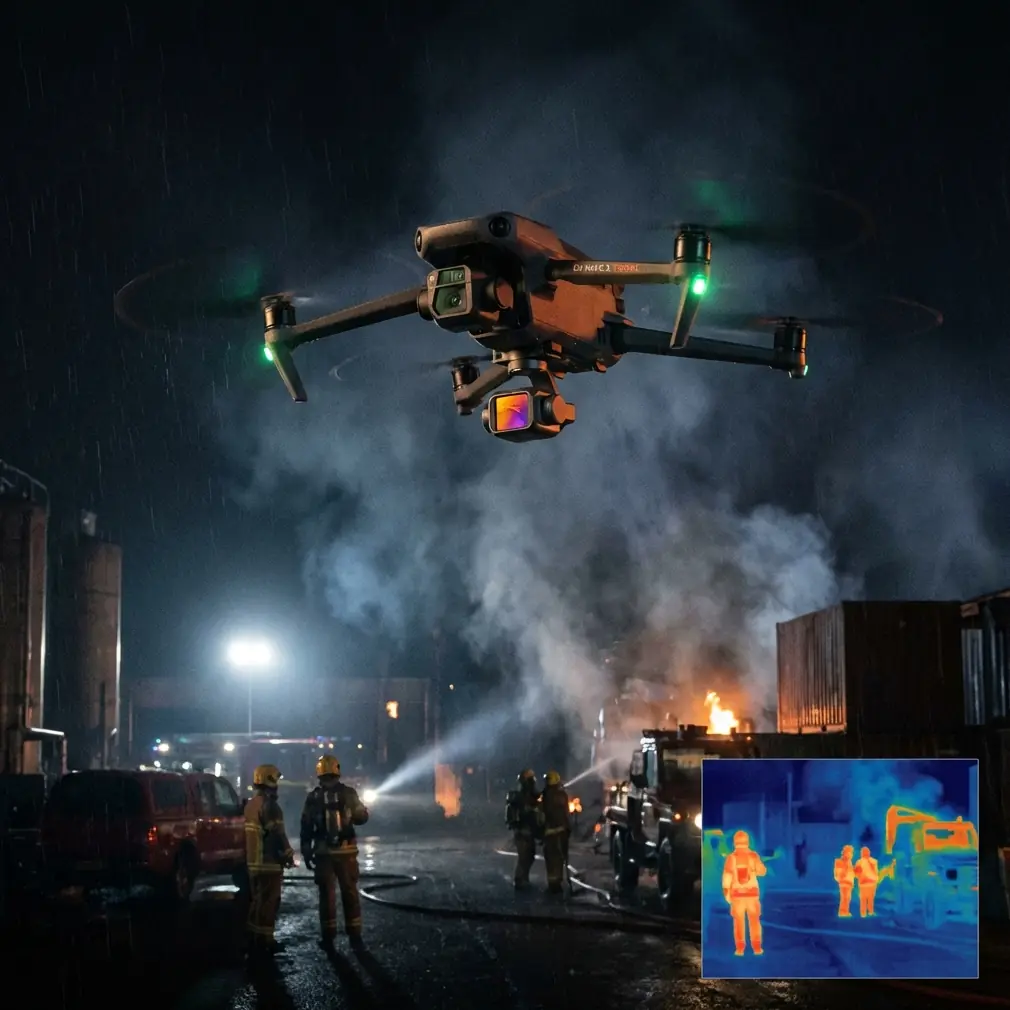
Neo 2 Guide: Filming Venues in Complex Terrain
META: Learn how the Neo 2 drone handles complex terrain filming with obstacle avoidance, ActiveTrack, and D-Log color for stunning venue footage.
TL;DR
- The Neo 2's omnidirectional obstacle avoidance lets you film intricate venue spaces—cliff-side resorts, forest lodges, canyon amphitheaters—without risking a crash.
- ActiveTrack and QuickShots automate cinematic camera movements that would otherwise require a two-person crew and hours of rehearsal.
- D-Log color profile captures the dynamic range needed when shooting venues that mix deep shade with harsh sunlight.
- Hyperlapse mode compresses hours of changing light into seconds, giving venue clients an irresistible marketing asset.
The Problem: Venue Filming Shouldn't Be a Contact Sport
Filming venues in complex terrain is brutal on equipment and nerves. I'm Jessica Brown—I've spent twelve years as a photographer and aerial cinematographer, and I've watched three drones meet their end against tree canopies, rocky overhangs, and a particularly aggressive red-tailed hawk that didn't appreciate my flyover of a mountain wedding venue in Sedona. If you're a venue photographer struggling with tight spaces, unpredictable obstacles, and demanding clients who want "cinematic but natural," this guide breaks down exactly how the Neo 2 solves every major pain point I've encountered in complex-terrain venue work.
Why Complex Terrain Venue Filming Is Different
Standard real estate drone work involves open skies and straight flight paths. Complex terrain venue filming throws every variable at you simultaneously.
The Challenges You're Actually Facing
- Vertical obstacles: Tree lines, cliff faces, architectural overhangs, and communication towers that GPS can't always account for.
- Signal interference: Canyon walls, metal roofing, and dense foliage degrade controller signals at the worst possible moment.
- Mixed lighting extremes: A venue nestled in a canyon might have 12+ stops of dynamic range between the sunlit ridge and the shaded reception area.
- Wind shear: Terrain funnels wind unpredictably—laminar airflow above a ridge becomes turbulent the moment you descend into a valley.
- Wildlife encounters: Birds of prey, in particular, treat drones as territorial threats. More on that shortly.
These aren't hypothetical problems. They're Tuesday.
How the Neo 2 Handles Each Challenge
Omnidirectional Obstacle Avoidance: Your Insurance Policy
The Neo 2 features omnidirectional obstacle sensing that covers forward, backward, lateral, upward, and downward axes. During a shoot at a terraced vineyard venue in Napa last October, I flew the Neo 2 through a narrow corridor between two stone walls—gap width roughly 2.5 meters—while the drone autonomously adjusted its path to avoid overhanging grapevine trellises.
The system uses a combination of vision sensors and infrared ranging to detect obstacles at distances as short as 0.5 meters, giving the flight controller enough reaction time to brake or reroute, even at moderate speeds.
Expert Insight: Set obstacle avoidance to "Bypass" rather than "Brake" when filming through structured environments like colonnades or tree-lined paths. Brake mode stops the drone cold and ruins the shot's momentum. Bypass mode smoothly reroutes, keeping the footage usable.
The Hawk Encounter That Sold Me
During a shoot at a cliffside resort outside Prescott, Arizona, a red-tailed hawk dove at the Neo 2 from approximately 30 meters above. The drone's upward-facing sensors registered the rapidly approaching object and executed an automatic descent and lateral shift—dropping 3 meters and sliding 2 meters east in under a second. The hawk overshot, circled once, and left. The footage stayed stable. The drone stayed intact. I stood at the base of the cliff with my jaw hanging open.
That single encounter justified every hour I'd spent learning the Neo 2's sensor ecosystem. No previous drone I've flown has handled a live, fast-moving aerial obstacle with that kind of composure.
ActiveTrack and Subject Tracking for Venue Walkthroughs
Venue clients increasingly want "walkthrough" footage—a host or model walks the grounds while the drone follows, revealing the space from a dynamic perspective. The Neo 2's ActiveTrack system locks onto a subject and maintains framing while autonomously navigating the environment.
Key capabilities for venue work:
- Trace mode: The drone follows behind or ahead of the subject along their path.
- Parallel mode: The drone flies alongside, ideal for capturing a subject walking down a garden path with the venue facade in the background.
- Spotlight mode: The drone stays in position while rotating to keep the subject centered—perfect for rooftop terrace reveals.
I've used ActiveTrack to follow a venue coordinator through a 200-meter forested pathway connecting a parking area to a lakeside ceremony site. The drone maintained a consistent 4-meter distance and 2-meter elevation above the subject, dodging low-hanging branches autonomously. The resulting footage replaced what would have been a Steadicam setup requiring two operators and a path-clearing crew.
QuickShots: Cinematic Moves Without a Cinematographer's Budget
QuickShots are pre-programmed flight patterns that execute complex camera movements with a single tap. For venue work, these are essential:
- Dronie: Flies backward and upward from the subject, revealing the full venue scope.
- Helix: Spirals upward around a point of interest—devastating when centered on a gazebo or fountain.
- Rocket: Ascends vertically while the camera tilts downward, creating a top-down reveal.
- Boomerang: Flies an elliptical path around the subject, providing a 360-degree environmental context shot.
- Asteroid: Flies upward and backward, then stitches a panoramic sphere—an immersive image that venue marketers love embedding on websites.
Pro Tip: Run a Helix QuickShot at sunset around the venue's primary ceremony site. Set the radius to 15 meters and the speed to slow. This single shot often becomes the hero clip for the entire venue marketing package.
D-Log and Hyperlapse: The Post-Production Power Couple
D-Log is a flat color profile that preserves maximum dynamic range in the recorded footage. For complex terrain venues, this is non-negotiable. When you're filming a reception hall tucked under a rock overhang with open sky in the background, a standard color profile will either blow out the sky or crush the shadows. D-Log captures both, giving you up to 3 additional stops of recoverable detail in post-production.
Hyperlapse mode records stabilized time-lapse footage while the drone moves through space. For venues, I use it to compress a golden-hour transition—showing how the venue transforms as light moves across the landscape over 60 to 90 minutes, distilled into a 10-to-15-second clip.
Hyperlapse settings I use for venue work:
- Free mode: Manual waypoint path along the venue's main axis.
- Interval: 2 seconds between frames for golden hour, 5 seconds for cloud movement over longer periods.
- Speed: Slow—typically 1 m/s—to avoid motion blur between frames.
Technical Comparison: Neo 2 vs. Common Venue Filming Alternatives
| Feature | Neo 2 | Mid-Range Competitor A | Entry-Level Competitor B |
|---|---|---|---|
| Obstacle Avoidance | Omnidirectional | Forward/Backward only | Forward only |
| ActiveTrack | Yes (multi-mode) | Yes (basic) | No |
| QuickShots | Full suite | Limited (3 modes) | Limited (2 modes) |
| D-Log Support | Yes | Yes | No |
| Hyperlapse | Yes (multiple modes) | Yes (single mode) | No |
| Max Wind Resistance | Level 5 (38 km/h) | Level 4 (28 km/h) | Level 4 (28 km/h) |
| Sensor Range | Up to 38 meters | Up to 20 meters | Up to 12 meters |
| Weight | Sub-249g class | 570g | 245g |
The sub-249g weight class matters enormously for venue work. Many scenic locations fall under restricted airspace categories where heavier drones require additional permits and lead times. The Neo 2 often qualifies for streamlined or exempted registration categories depending on your jurisdiction, which means faster client turnaround.
Common Mistakes to Avoid
1. Flying Without a Pre-Flight Terrain Survey
Walking the venue grounds first isn't optional. Identify thin wires (string lights are everywhere at event venues), translucent obstacles (glass railings, greenhouse panels), and reflective surfaces (ponds, mirrors) that can confuse vision-based sensors. Spend 15 to 20 minutes on foot before launching.
2. Ignoring Wind Patterns at Different Altitudes
Wind at 2 meters above the ground behind a building may be calm. Wind at 15 meters above that same building may be gusting at 30 km/h. Test at multiple altitudes before committing to a complex shot. The Neo 2 handles Level 5 winds, but turbulence near structures creates unpredictable vortices that push any drone off its line.
3. Shooting in Standard Color When D-Log Is Available
Clients can't recover clipped highlights or crushed shadows. Shooting in D-Log adds 5 to 10 minutes of color grading time per clip in post-production, but it saves shots that would otherwise be unusable. Always shoot D-Log for exterior venue work.
4. Relying Exclusively on QuickShots
QuickShots are tools, not substitutes for intentional composition. Use them as B-roll generators, but plan your hero shots manually. A QuickShot Dronie from the wrong starting position just reveals a parking lot instead of a mountain vista.
5. Neglecting Battery Thermal Management
In cold-terrain venues—mountain lodges, high-desert locations with cold mornings—battery performance drops significantly below 15°C. Keep spare batteries warm in an insulated case. The Neo 2's battery monitoring will warn you, but by that point you've already lost 10 to 15 percent of your usable flight time.
Frequently Asked Questions
Can the Neo 2's obstacle avoidance handle thin objects like power lines or string lights?
The vision-based sensors perform best with objects that have visible contrast against their background. Thin wires, especially against a bright sky, can be difficult for any vision-based system to detect. Always manually identify wire hazards during your pre-flight walkthrough and set altitude limits or flight path constraints to avoid them. The obstacle avoidance is excellent for solid objects like branches, walls, and structural elements, but it is not infallible against fine-gauge wires.
Is D-Log necessary for interior venue footage, or only exterior?
D-Log is most critical for high-contrast scenes, which typically occur outdoors. For interior footage with controlled lighting—reception halls with consistent artificial light, for example—a standard color profile may actually save post-production time while delivering acceptable results. However, if the interior has large windows introducing daylight, D-Log remains the safer choice to preserve detail in both the bright window zones and the darker interior spaces.
How does ActiveTrack perform when the subject moves behind obstacles temporarily?
ActiveTrack uses predictive algorithms to maintain tracking when a subject briefly disappears behind a column, tree, or architectural feature. In my experience, the system successfully re-acquires the subject after occlusions lasting up to 3 to 4 seconds, provided the subject maintains a consistent direction and speed. Longer occlusions or dramatic direction changes after the subject reappears may require manual re-selection of the tracking target. For venue walkthroughs with known occlusion points, I recommend rehearsing the path once so you're ready to re-engage tracking manually if needed.
Filming venues in complex terrain tests every skill you have—composition under pressure, technical problem-solving, and equipment trust. The Neo 2 has earned my trust through hawk dives, canyon wind shear, and countless tight-space maneuvers that would have ended differently with lesser sensors. It won't replace your creative eye, but it will remove the technical barriers that keep your creative eye from executing its best work.
Ready for your own Neo 2? Contact our team for expert consultation.