
Neo 2 Filming Guide for High-Altitude Construction Sites
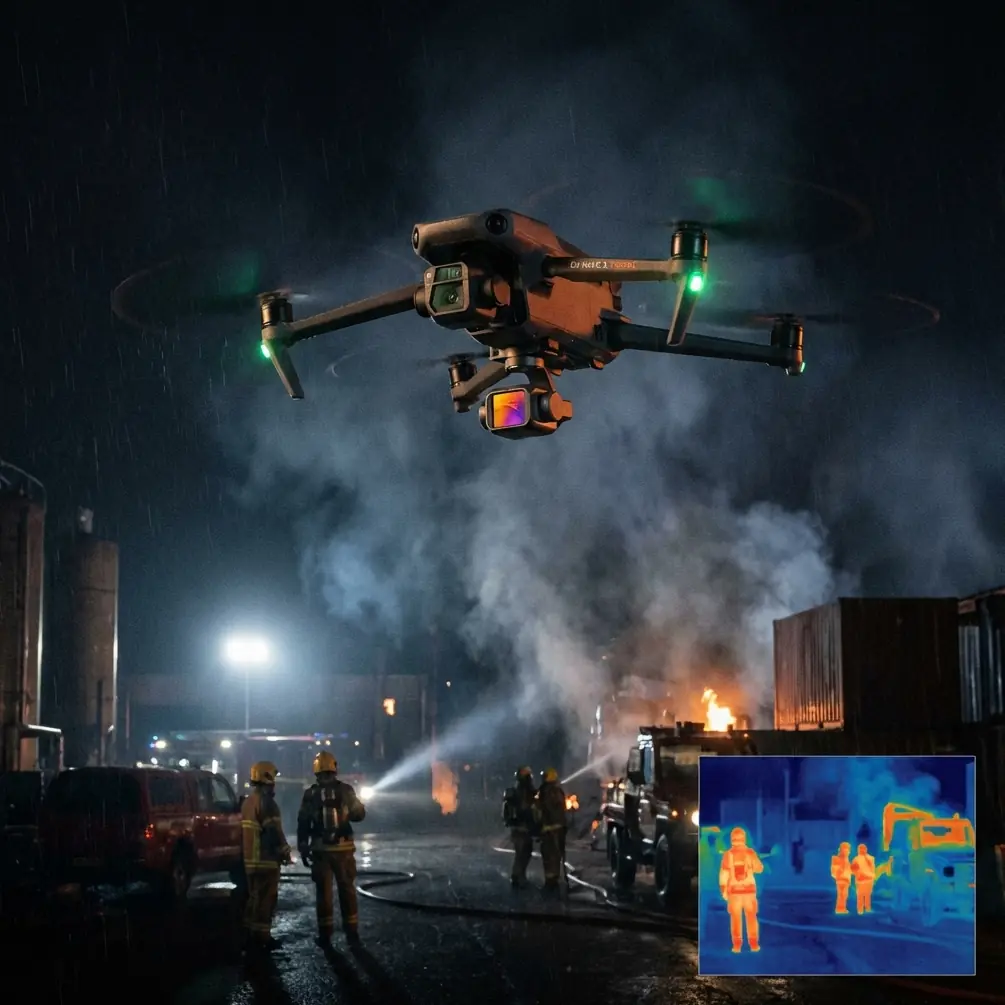
Neo 2 Filming Guide for High-Altitude Construction Sites: What Actually Matters in the Workflow
META: A practical Neo 2 filming guide for high-altitude construction work, covering image integrity, distortion correction, obstacle avoidance, tracking, and aerial mapping accuracy.
High-altitude construction filming punishes weak drone workflows. Thin air changes flight behavior. Mountain light shifts fast. Surfaces alternate between reflective metal, raw concrete, scaffolding, shadowed pits, and dust haze in the same pass. If you are flying the Neo 2 on these jobs, the challenge is not just getting dramatic footage. It is producing imagery that remains useful after capture—useful for progress records, stakeholder updates, orthomosaic-style outputs, and repeatable site comparison.
That distinction matters.
A lot of drone advice focuses on cinematic results alone. On a construction project in elevated terrain, that is too narrow. The better question is this: can your Neo 2 footage survive post-processing without losing the geometric and tonal information your project team may need later?
That is where the reference standard behind low-altitude digital aerial photogrammetry becomes surprisingly relevant to a filming workflow. Even if your primary deliverable is video or short-form visual reporting, the standard’s logic points to two operational truths that serious Neo 2 pilots should respect:
- Any format conversion done for post-processing must not lose geometric or radiometric information.
- Image distortion correction and triangulation quality are not academic details; they directly affect whether imagery can support measurement, alignment, and repeatable documentation.
For construction work in high-altitude locations, those two ideas separate professional drone output from pretty-but-fragile footage.
Why Neo 2 fits this kind of site better than lighter, more casual camera drones
Neo 2 makes sense when the brief sits between media production and operational documentation. That middle ground is where many construction teams actually live. They want footage that looks polished enough for reporting, but also stable and consistent enough to compare one flight with the next.
This is where features like obstacle avoidance, ActiveTrack-style subject tracking, QuickShots, Hyperlapse, and D-Log stop being marketing bullets and start becoming workflow tools.
Competitor drones in the same casual-use tier often do one of two things poorly on job sites: they either oversimplify capture automation to the point that repeatability suffers, or they produce footage that looks good straight out of camera but gives you very little room in post when the lighting on a mountain site gets ugly. Neo 2’s advantage is that it can support both easier flight execution and more disciplined post work.
For example, D-Log matters far more on a high-altitude construction site than on a recreational shoreline flight. At elevation, you often deal with bright sky, pale dust, white safety materials, and dark cut slopes in one frame. A flatter recording profile gives you more latitude to balance those extremes without clipping highlights on concrete or crushing detail in retaining structures.
At the same time, obstacle avoidance has practical value beyond safety. On active sites with cranes, temporary lifts, netting, and partially completed steelwork, avoidance systems help preserve shot continuity. Every forced manual bailout breaks consistency, and consistency is exactly what you need if the footage may later support comparisons across time.
Start with a survey mindset, even if you are “just filming”
The reference document, CH/Z 3003-2010, is not a camera creativity manual. It is a technical standard. That is precisely why it is useful. It reminds us that once imagery enters a production chain, careless handling early on creates problems no editing trick can fully repair later.
The standard explicitly allows new technologies and methods if they have been validated in practice and supported by test reporting, provided the requirements are clearly stated in the project design. For Neo 2 operators, that is a strong cue: if you want to use automated tracking, QuickShots, or compressed social deliverables on a construction assignment, define what each mode is for before launch.
Do not improvise your entire mission in the air.
Instead, break the flight into three layers:
- Documentation passes for repeatable site coverage
- Context passes for storytelling and stakeholder communication
- Creative passes using QuickShots or Hyperlapse for presentation value
The mistake I see most often is pilots mixing all three into one battery without preserving a clean, stable baseline dataset. Neo 2 is capable of elegant automated moves, but the disciplined operator captures the structured material first.
Protect image integrity before you think about editing style
One of the clearest requirements in the standard is that format conversion may be performed for post-processing needs, but geometric information and radiometric information must not be lost.
This is not obscure technical language. It has immediate practical consequences for Neo 2 users.
What geometric information means on a construction site
Geometry is the spatial truth inside the image. It affects how accurately edges, distances, alignments, and overlaps appear. If you aggressively crop, stabilize, transcode, or export at lower quality too early, you may make the footage look smoother while damaging its value for later frame grabs, progress overlays, or photogrammetric extraction.
On a high-altitude construction project, geometry matters when you need to compare:
- retaining wall progress between weeks
- excavation depth changes
- stockpile movement
- roof deck sequencing
- road cut development
- crane access paths
What radiometric information means
Radiometric information is the tonal and brightness data captured by the sensor. Lose too much of it, and you make grading harder. You also reduce visibility in shadows or bright reflective areas. In practical terms, this affects whether a site engineer can actually read surface conditions in your imagery.
So if you are filming with Neo 2, avoid a rushed workflow where you:
- record,
- instantly convert,
- over-compress,
- sharpen aggressively,
- then try to extract stills later.
If the mission has any documentation value, preserve your highest-quality originals and delay destructive conversions as long as possible.
Distortion correction is not optional if you want reliable site visuals
The standard also states that raw image data should undergo lens distortion correction, either through dedicated software or during aerial triangulation processing.
That sounds like a back-office photogrammetry issue. It is not.
Wide-angle drone imagery can subtly bend lines and proportions, especially near frame edges. On a mountain construction site full of vertical columns, retaining faces, grid layouts, and access roads, those distortions can mislead the viewer. A superintendent comparing facade alignment across weeks does not need artistic barrel distortion. They need believable structure.
If your Neo 2 workflow includes still extraction from video, or if you plan to build progress mosaics from captured imagery, distortion correction becomes even more important. It improves consistency between flights and reduces the visual noise that makes comparison harder.
This is one area where a more casual competitor drone workflow often falls short. Many consumer-first setups encourage pilots to trust the out-of-camera look without considering whether edge distortion, digital stabilization artifacts, or baked-in processing are undermining the utility of the capture. Neo 2 performs best when you treat it as a data-collection camera as well as a storytelling camera.
Tracking workers, vehicles, and machinery: use subject tools carefully
The context mentions subject tracking and ActiveTrack, and both can be useful on construction jobs if used responsibly and within site rules.
Tracking is excellent for:
- following a haul truck along a defined path
- showing material transfer from staging area to work face
- documenting the movement of a lift or support vehicle
- creating repeatable walking sequences with a site manager
But tracking should not become a substitute for flight planning. On high-altitude sites, terrain drop-offs and elevation changes can confuse assumptions about distance. Add cranes, suspended loads, or temporary structures, and a fully automated follow shot may not remain as clean as it starts.
My rule with Neo 2 is simple: use tracking for predictable movement in controlled sections of the site, not as a universal mode. If your subject route passes near rebar forests, tower sections, or scaffold edges, switch back to deliberate manual framing with obstacle avoidance working as your backup layer rather than your only layer.
The hidden significance of the “2/3 pixel” standard
One of the most useful technical figures in the reference material is the requirement for relative orientation accuracy: the vertical parallax error of tie points should be 2/3 of a pixel, with a maximum residual of 4/3 of a pixel. In difficult terrain or visually challenging areas, the threshold may be relaxed by 0.5 times.
Even if you never run formal aerial triangulation yourself, that number teaches something important: precision in drone imagery is measured at a very fine level. Tiny alignment errors accumulate.
Operationally, this means:
- maintain strong overlap when capturing documentation passes
- avoid erratic yaw changes during repeatable coverage
- keep flight speed appropriate for the level of site detail needed
- do not rely on shaky last-second reframing to “fix it in post”
- be more cautious in visually confusing environments like dusty slopes, uniform gravel, or dense forested edges around the site
That last point matters because many high-altitude construction projects sit beside terrain with sparse visual features, exposed rock, or repetitive surfaces. Those are exactly the kinds of environments where alignment becomes more difficult. The standard’s allowance for tougher areas is a reminder that terrain affects data quality. Your Neo 2 settings and flight pattern should reflect that reality.
Best-practice flight structure for Neo 2 on elevated construction projects
Here is the workflow I recommend.
1. Baseline orbit first
Start with a slow, high safety-margin orbit that establishes the entire site and surrounding terrain. This creates your repeatable master reference. Keep motion smooth and avoid dramatic pitch swings.
2. Mapping-style passes second
Even if you are not producing a formal orthomosaic, fly straight, overlapping passes over the key work zone. This gives you frames that are far more useful later than freestyle cinematic movements. Think in rows, not vibes.
3. Medium-altitude progress sequences
Move lower for work-face detail, but keep the route repeatable. Capture retaining walls, slab zones, vertical structures, and access roads from matching angles each visit.
4. Tracking shots only after documentation is secured
Use ActiveTrack or subject tracking for vehicle movement, supervised walk-throughs, or logistics demonstrations once the critical dataset is already in hand.
5. Creative outputs at the end
QuickShots and Hyperlapse can add stakeholder-friendly visuals, especially to show the scale of mountain terrain or the pace of daily activity. Just do not let them consume the battery window reserved for operational material.
Using D-Log without making post-production harder than it needs to be
D-Log is valuable, but only if you handle it with discipline.
For high-altitude construction scenes, use it when:
- sky brightness is intense
- shaded excavation areas matter
- white and metallic surfaces dominate
- you need a unified look across multiple flight days
Do not use it casually if your team lacks a consistent grading pipeline. Flat footage that is poorly managed can create confusion for project stakeholders who simply want clarity. The ideal approach is to preserve the flexibility of D-Log in the master files, then create a clean viewing version for meetings and updates.
If you need help refining that workflow for your own site team, you can message a drone workflow specialist here.
A note on post-processing discipline
If there is one lesson from the standard that deserves to be translated directly into a Neo 2 filming tutorial, it is this: post-processing should support interpretation, not rewrite the source material.
Image enhancement is allowed in the reference material, but the outcome still needs to preserve final image quality. For a construction operator, that means:
- enhance carefully
- correct distortion
- preserve originals
- avoid heavy-handed sharpening
- do not crush tonal range
- export copies for review, not replacements for source files
This is how you keep your footage credible.
The real benchmark for a successful Neo 2 construction flight
Not whether the opening reveal looked dramatic.
Not whether the Hyperlapse got applause in the meeting.
Not whether the social cut felt cinematic.
The benchmark is whether the footage remains dependable after the flight: dependable for comparison, dependable for communication, dependable for downstream processing.
Neo 2 is at its best on high-altitude construction sites when flown with that standard in mind. Obstacle avoidance helps protect the route. Tracking tools can add efficiency when used selectively. D-Log protects difficult tonal scenes. But the bigger advantage comes from respecting image integrity, distortion control, and repeatability from the moment you launch.
That is what turns a drone from a flying camera into a serious site documentation instrument.
Ready for your own Neo 2? Contact our team for expert consultation.