
Neo 2 in Windy Highway Delivery Work: What an Old
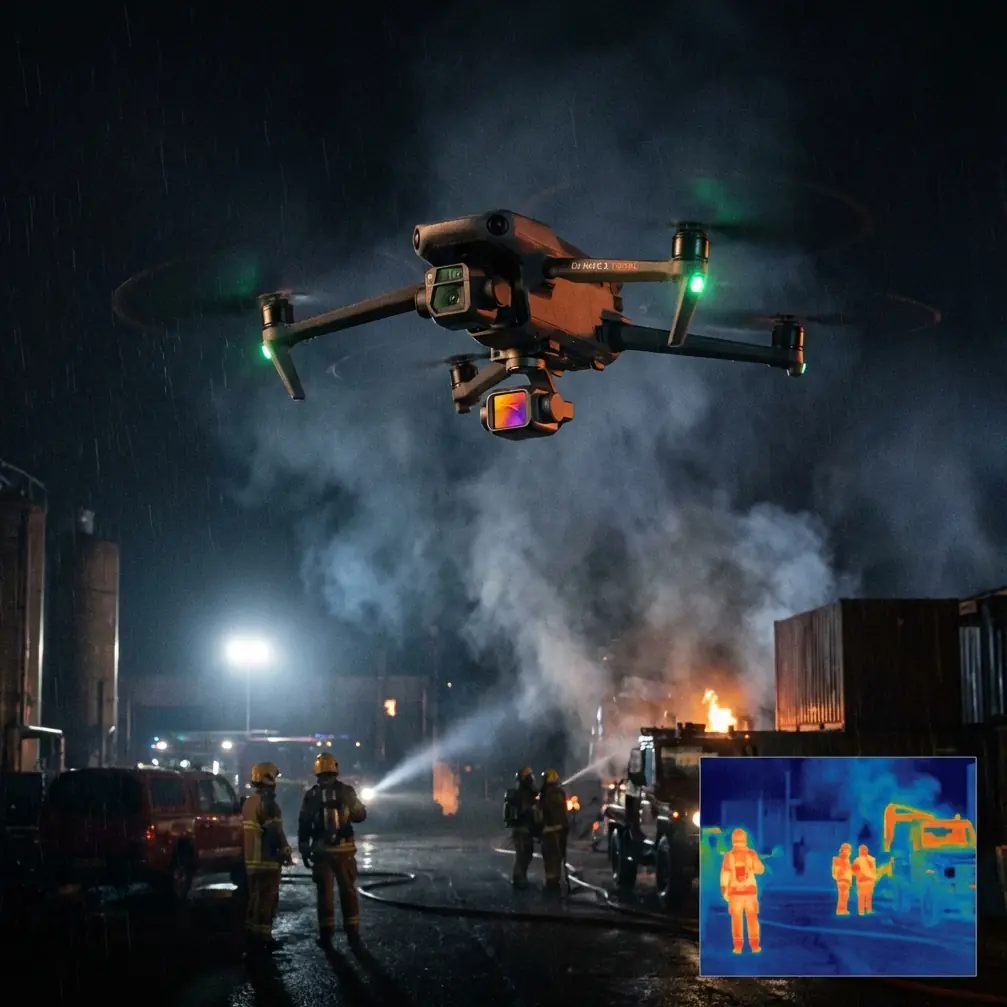
Neo 2 in Windy Highway Delivery Work: What an Old-School Autopilot Manual Still Teaches Us
META: A technical review of Neo 2 for windy highway delivery scenarios, using APM 2.8.0 autopilot principles to explain ground control, telemetry, simulation, mission planning, and field battery discipline.
When people talk about a compact aircraft like Neo 2, the conversation usually drifts toward camera tricks, subject tracking, and short-form content capture. That misses the point in harder operational environments. If your job involves highway corridor work in gusty conditions—site progress checks, roadside asset inspection, logistics route scouting, or training crews to operate near moving traffic—the aircraft is only half the system. The other half is control architecture.
That is why an older autopilot reference, the APM 2.8.0 Chinese introductory manual, remains surprisingly useful as a lens for evaluating Neo 2. Not because Neo 2 is the same class of platform. It clearly is not. The value is deeper: the manual lays out a disciplined framework for how reliable UAV operations are built. It emphasizes the relationship between onboard sensing, mission planning, telemetry, logging, and simulation. For windy highway work, those fundamentals matter more than marketing labels.
As a photographer, I came into drones through image quality. Wind taught me to care more about systems.
Neo 2 is not just a flying camera when the environment turns difficult
Highway operations are awkward for small drones. Open lanes create long wind funnels. Heat rising from asphalt can add instability. Passing trucks produce turbulent bursts that don’t behave like steady headwinds. Visual composition changes fast, and if you are documenting infrastructure or delivery paths, you often need repeatable positioning rather than artistic improvisation.
This is where the APM manual’s logic becomes relevant. It describes an autopilot ecosystem, not merely a control board. The document highlights support for ground stations such as Mission Planner and HK GCS, with the ability to update firmware online, tune parameters, review flight records, and plan missions. That matters operationally because any platform used near highways benefits from pre-briefed route logic and post-flight traceability. Even if Neo 2 users rely on a different software stack, the operational principle is the same: don’t treat flight as a one-off manual act. Treat it as a managed workflow.
For a windy delivery-support mission, that changes behavior on site. Instead of launching and “seeing how it goes,” you define the route segment, identify likely turbulence pockets, pre-plan return logic, and verify battery reserve with a margin that reflects real conditions rather than brochure endurance.
The old APM hardware list still explains what to look for in modern flight behavior
One of the most practical parts of the manual is its plain hardware breakdown. It names the ATMEGA2560 8-bit MCU, the MPU6000 six-axis MEMS sensor, the MS-5611 digital barometric pressure sensor, the HMC5883 three-axis magnetometer, and 16MB of onboard storage. On paper, that sounds dated. In practice, it reminds us that stable flight comes from sensor fusion, not from one single headline feature.
The operational significance is straightforward:
- A six-axis IMU like the MPU6000 class exists to help the aircraft understand motion and attitude changes in real time.
- A barometric sensor such as the MS-5611 supports altitude awareness, which is especially valuable when flying low over uneven highway shoulders, embankments, or elevated interchanges.
- A magnetometer helps preserve directional awareness when the aircraft must hold a route in crosswind rather than simply face the easiest aerodynamic direction.
- Onboard storage—in the manual’s case, 16MB—means flight records exist for review, which is essential when diagnosing drift, oscillation, or power-use anomalies after a rough sortie.
Modern aircraft like Neo 2 package these functions in a more integrated, user-friendly way, but the job has not changed. In windy corridor operations, you want to know how confidently the platform holds heading, how cleanly it maintains altitude under gust loading, and how well it recovers from brief disturbances. If it cannot do those things consistently, obstacle avoidance and ActiveTrack become secondary conveniences rather than dependable tools.
Why simulation matters more than most Neo 2 users realize
The APM document states full support for X-Plane and Flight Gear semi-hardware simulation. That is not a nostalgic footnote. It points to one of the best habits any serious Neo 2 team can adopt: rehearse before the field day gets expensive.
For highway delivery support, simulation has two big uses.
First, it sharpens pilot decision-making. Wind near overpasses, gantries, and noise barriers can create confusing visual cues. A simulated mission lets a pilot rehearse waypoint order, camera orientation, emergency return choices, and alternate recovery zones without pressure.
Second, it helps non-pilot stakeholders understand aircraft behavior. If a project manager expects a drone to track a moving vehicle flawlessly in gusts while also maintaining perfect framing, simulation becomes a neutral reality check. It reveals what the aircraft can likely do, where the margin narrows, and when a manual reposition is smarter than trusting automation.
Neo 2’s easier interface should not tempt crews into skipping this mindset. A simplified front end is useful. It is not a substitute for rehearsal.
Ground control is where a windy mission is won or lost
The manual stresses a full-duplex wireless data link between ground station and autopilot, enabling a complete unmanned control system. That phrase sounds technical, but the practical meaning is simple: the aircraft and the operator must stay in conversation.
For highway work, that conversation includes more than stick input. You want status visibility. You want fast access to mission changes. You want confirmation that return logic, route updates, and flight-state information are coherent. The manual also notes that the ground station can handle mission planning, in-air parameter adjustment, video display, voice synthesis, and flight log review. Not every Neo 2 workflow will expose these exact functions in the same format, but the mission benefit is clear: control quality is not just about airframe stability. It is about operator awareness.
This is also where consumer-friendly features can become genuinely useful in professional tasks. Subject tracking and ActiveTrack, for example, can help maintain visual continuity on service vehicles or moving inspection subjects along a straight corridor. QuickShots and Hyperlapse may sound creative-first, but in documentation work they can also help produce clear progress visuals for stakeholders, especially when repeated from the same launch point over time. D-Log matters because windy, high-contrast highway scenes often include bright concrete, reflective vehicle roofs, and dark underpasses in the same frame. More grading flexibility can preserve details that standard profiles clip or crush.
Still, all of these features perform better when grounded in a mission-control mindset rather than used impulsively.
The “hundreds of 3D waypoints” idea has a modern lesson for Neo 2 operators
A standout detail from the APM manual is support for autonomous planning across hundreds of three-dimensional waypoints. Even if a Neo 2 mission does not require that level of waypoint density, the principle is operationally significant.
Highway jobs are inherently linear. Linear jobs reward repeatability.
If you need to document a corridor after wind events, inspect roadside works, or compare weekly changes in material placement or barrier installation, consistency becomes more valuable than spontaneity. A route that can be repeated with the same altitude logic, same directional passes, and same turnaround points gives you cleaner comparisons and lower pilot workload.
That is especially helpful in wind. A repeatable route lets you identify where the aircraft repeatedly draws more power, where tracking becomes unreliable, or where the best line is slightly offset from the carriageway to avoid turbulence coming off tall vehicles. Over several missions, those small insights turn into safer and more efficient operations.
A field battery tip I learned the hard way
Here is the battery management habit I wish more Neo 2 users adopted: in windy highway work, ignore the comfort of percentage alone and watch for how quickly the first third of the pack disappears after the outbound leg.
Why the first third? Because that segment reveals the day’s aerodynamic tax.
On calm jobs, battery percentage often declines in a smooth, predictable pattern. In gusts, especially with repeated heading corrections or a long crosswind leg, the opening portion of the flight tells you whether the aircraft is fighting the air much harder than expected. If I see that first section drop faster than planned, I shorten the mission immediately—even if the aircraft still shows plenty of nominal reserve. I do not wait for the final return calculation to become uncomfortable.
This habit pairs neatly with the APM manual’s emphasis on telemetry and flight logs. Real-time awareness is useful; logged history is what improves the next mission. After a few flights on the same corridor, you begin to spot patterns: outbound leg into turbulence near a bridge always costs more; a slightly higher line above the shoulder is smoother; one camera mode encourages unnecessary hover time. Battery discipline becomes procedural rather than emotional.
And yes, temperature matters too, but wind is the silent drain that operators underestimate.
Obstacle avoidance is helpful, but not magic near roadside geometry
The context around Neo 2 often brings up obstacle avoidance, and rightly so. In road-adjacent environments, poles, signs, barriers, utility lines, and trees can appear in messy combinations. But windy conditions expose the limits of overconfidence. Gusts can push a small aircraft into conservative braking behavior, interrupted tracking, or awkward lateral corrections near clutter.
That is another reason the APM-style systems view is helpful. The manual highlights MAVLink-based two-way telemetry and real-time command transfer. The lesson is that automation should remain accountable to operator intent. If obstacle avoidance is slowing progress unpredictably or causing the aircraft to abandon a cleaner line, the mission plan—not the feature list—should decide what happens next.
A smart operator uses these assistance tools as buffers, not as a replacement for route design and spacing discipline.
Why flight logs deserve more attention in Neo 2 workflows
The manual’s mention of viewing flight records is easy to overlook, yet it may be the most valuable concept in the entire document for professional users. A windy sortie that “felt fine” can still reveal bad habits in the data: unnecessary hover periods, repeated acceleration spikes, heading wander, or a return segment that consumed too much reserve.
For highway delivery-support and corridor documentation teams, logs turn anecdote into process. They help answer practical questions:
- Did wind or pilot behavior drive the heavier battery use?
- Was the route too ambitious for the day?
- Did tracking modes save workload or create extra corrections?
- Was altitude selection appropriate for the turbulence layer?
- Did one segment consistently degrade image stability?
This is where a camera-led user matures into an operations-led user. Good footage is the output. Good data is how you keep getting it.
The real takeaway for Neo 2 buyers and operators
The APM 2.8.0 manual comes from a more hands-on era of autopilot culture. It talks about open-source control, mission planning with mouse clicks, firmware updates, full-duplex telemetry, simulation support, and hardware building blocks like the MPU6000 and MS-5611. On the surface, that seems far removed from a modern, approachable aircraft like Neo 2.
It is not.
For windy highway delivery support, route inspection, progress imaging, and pilot training, the same pillars still determine success: sensing, telemetry, repeatable planning, disciplined battery management, and post-flight review. Neo 2 may package the experience more elegantly, and features like ActiveTrack, QuickShots, Hyperlapse, D-Log, and obstacle avoidance certainly expand what a small aircraft can do. But the operators who get reliable results are the ones who think like system managers, not casual fliers.
That older manual quietly makes the best argument for evaluating Neo 2 seriously: not by asking whether it flies, but by asking whether your workflow around it is strong enough to handle wind, linear routes, and the unforgiving rhythm of highway operations.
If you want to compare mission setups or discuss corridor workflows, you can message me here.
Ready for your own Neo 2? Contact our team for expert consultation.