
Neo 2 Guide: Capturing High-Altitude Venues When
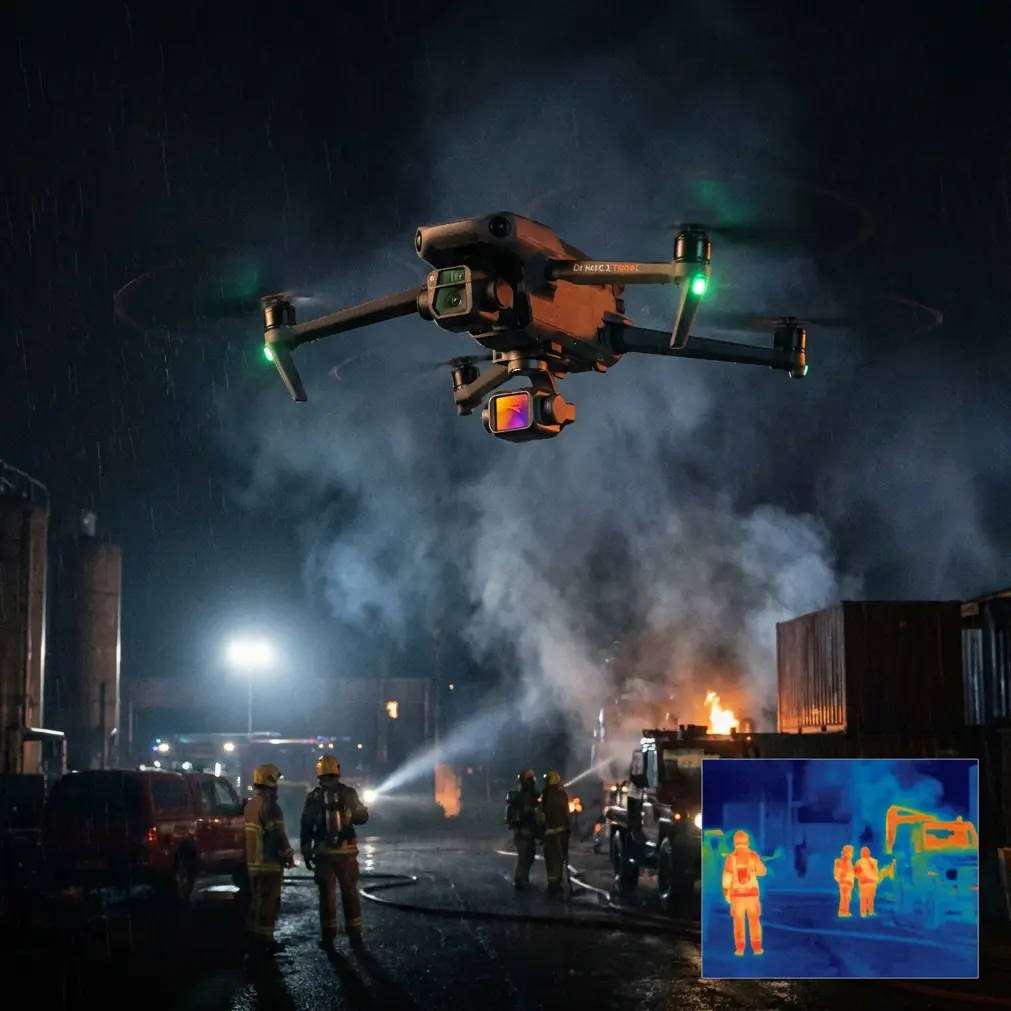
Neo 2 Guide: Capturing High-Altitude Venues When the Weather Turns
META: A technical review of the Neo 2 for high-altitude venue photography, covering obstacle avoidance, ActiveTrack, QuickShots, Hyperlapse, D-Log, and real-world handling in changing weather.
I shoot venues for a living, which means I spend a lot of time chasing the kind of images clients can’t get from a ladder, a hotel balcony, or a long lens from the parking lot. Stadiums, hillside resorts, amphitheaters, mountain lodges, cliffside event spaces—these locations look effortless in finished marketing campaigns, but the actual capture process is usually a negotiation with wind, thin air, shifting light, and very little room for sloppy piloting.
That is where the Neo 2 becomes interesting.
This is not a broad overview of a drone category. It is a technical review shaped around one job: capturing venues at altitude, where conditions can change in minutes and where a drone has to do more than simply get airborne. It has to hold a line, protect itself around structures, keep track of a moving subject when needed, and deliver footage that stands up in post.
I approached the Neo 2 from the perspective of a working photographer, not a spec-sheet collector. The question was simple: can it handle the pressure points that actually matter when filming elevated venues?
Why high-altitude venue work is a different problem
A venue in the mountains or on elevated terrain creates a stack of small operational problems that become one big one. Wind tends to funnel around buildings and ridgelines. Light shifts faster because clouds move across open terrain with very little warning. GPS performance may be fine, but visual orientation can get tricky when the background is all rock, tree line, or bright sky. Add guests, staff, parked vehicles, decorative lighting rigs, temporary staging, and roofline details, and you have a flight environment that demands awareness from both pilot and aircraft.
That is why features like obstacle avoidance and subject tracking are not just nice extras in this setting. They change how confidently you can work.
With the Neo 2, the combination of obstacle avoidance and ActiveTrack matters most when you are flying near venue geometry rather than over empty ground. A hillside wedding venue, for example, often has pergolas, string-light poles, terraces, retaining walls, and abrupt elevation changes. In those situations, obstacle avoidance is operationally significant because it reduces the margin for a costly misread during lateral moves or reveal shots. It does not replace pilot judgment. It does help preserve the shot when conditions become distracting.
ActiveTrack has a different value. On paper, it sounds like a convenience feature. On an actual venue shoot, it can free up attention for composition. If I am tracking a coordinator walking from the main reception area toward a viewpoint deck, I would rather spend my brainpower refining altitude, framing, and motion than manually correcting every tiny directional change. Subject tracking becomes useful when the venue story includes movement—staff preparing a space, a host walking a property line, or a golfer crossing a ridge-side fairway near a clubhouse. That is especially true when the terrain itself is competing for your concentration.
The weather test that tells you what a drone is made of
The most revealing part of my Neo 2 venue workflow happened during a high-altitude property shoot when the weather changed mid-flight.
The morning started clean enough: thin sunlight, manageable air, decent visibility across the valley. I had already captured a standard venue opener—high establishing pass, gradual ascent over the entrance road, then a slow reveal of the main building and event lawn. Ten minutes later, the atmosphere was different. A wall of cloud moved over the ridge, flattening contrast almost immediately. Wind picked up in pulses instead of a steady push. One section of the property remained bright while the upper terraces fell into cool shade.
This is the moment when a drone either feels predictable or starts to feel like extra workload.
The Neo 2 stayed usable because its flight assistance features supported decision-making instead of complicating it. Obstacle avoidance mattered first. Wind near elevated structures often nudges the aircraft sideways in subtle increments, especially during slow cinematic movement. At a venue, subtle is enough to become a problem. The system helped maintain a safer envelope while I adjusted my route to avoid decorative fixtures and the outer edge of a terrace.
Then came the image side of the problem. The scene’s dynamic range changed almost instantly as the cloud cover rolled in. That is where D-Log became more than a checkbox on a feature list. Flat capture profiles are often discussed in abstract terms, but in practical venue work, D-Log gives you more room to reconcile bright sky and darker architecture when the weather stops cooperating. If the venue’s white roofline is catching the last of the sun while seating areas have dropped into shade, that flexibility in grading can save a sequence that would otherwise feel patchy or brittle. You are not forcing a dramatic look. You are preserving consistency across clips that were shot just minutes apart under different conditions.
That matters to clients. Venue marketing lives on continuity. The footage has to feel like one experience, not three different days stitched together.
QuickShots are more useful here than many pilots admit
I tend to be skeptical of automated modes until they prove themselves on a paying assignment. QuickShots made more sense on the Neo 2 than I expected, particularly for venue content where the client wants multiple short-form deliverables from a limited flight window.
In high-altitude locations, weather volatility can cut your shooting time. You may have one clean gap before the wind rises or fog reaches the property. In that environment, QuickShots can be operationally valuable because they speed up repeatable motion patterns without demanding a full manual reset for each pass. A short pullback, orbit, or reveal can give a venue team usable social clips while preserving your time for more customized hero shots.
The trick is knowing where automation helps and where it cheapens the result. For broad architectural reveals, I still prefer manual control when the space is visually complex. But for clean, symmetrical movement over an open lawn, courtyard, or access road, QuickShots can help secure reliable assets quickly. That is not about laziness. It is about efficiency when the mountain weather has already started revising your schedule.
Hyperlapse at altitude: beautiful when used with restraint
Hyperlapse is another feature that gets thrown around too casually. Most venue operators do not need a hyperlapse just because the drone can make one. But when used well, it can describe altitude and atmosphere better than a conventional clip.
The best example is a cloud shadow moving across a large venue footprint. At elevation, light behaves like part of the architecture. It pours over a slope, leaves one structure glowing, then dulls an entire hillside in seconds. A Hyperlapse sequence can show that transition in a way that instantly communicates place. It tells the viewer this venue is not sitting on a flat suburban lot. It lives inside a moving weather system.
That said, Hyperlapse at altitude only works if the drone holds a disciplined path. Any wobble, drift, or overcorrection becomes obvious. This is where the Neo 2’s broader flight stability and sensing package matter. You are not using Hyperlapse as a novelty; you are using it to compress environmental change into a shot that explains the location.
ActiveTrack in a venue workflow
A lot of venue marketing has shifted away from empty-property imagery. Clients increasingly want motion and presence—someone opening doors, walking a terrace, crossing a courtyard, approaching a viewpoint. Static architecture still matters, but human scale helps a venue feel bookable and real.
That makes ActiveTrack one of the more practical tools in the Neo 2 kit.
I found it useful when following a subject through spatial transitions: from parking area to reception entrance, from lodge exterior to overlook, from lower garden path to upper event deck. Those transitions are where a venue’s layout starts to make sense to a prospective visitor. A smooth tracking shot can show access, flow, and scenery in one pass. At altitude, where terrain can interrupt sightlines and produce distracting depth changes, subject tracking reduces the cognitive load of having to micro-manage both the person and the aircraft every second.
Used carelessly, tracking modes can encourage lazy composition. Used well, they let you think like a visual storyteller instead of a joystick mechanic.
Obstacle avoidance is not about fear, it is about consistency
There is a strange habit in drone culture of treating obstacle avoidance as if it is mainly for beginners. For venue work, that is a shallow reading of its value.
The point is not fear. The point is consistency under imperfect conditions.
When wind shifts around rooflines, pergolas, tree edges, or stone facades, obstacle sensing provides an extra layer of protection during movements that have to stay graceful. Clients do not care whether a shot was technically difficult. They care whether it feels smooth and intentional. If obstacle avoidance helps preserve that standard in a tight environment, it is doing professional work.
This becomes even more relevant in high-altitude venues because environmental instability increases the chance of small corrections. Tiny corrections become visible in footage. Anything that helps the aircraft maintain a cleaner operating margin has downstream value in both safety and image quality.
D-Log and post-production realism
D-Log deserves a more practical conversation than it usually gets. People often frame flat profiles as something you use only if you want “cinematic” footage. In venue photography, the real reason is control.
When weather changes mid-flight, color and contrast can drift from clip to clip. If you are cutting together exterior establishing shots, approach paths, terrace reveals, and property-wide sweeps, that inconsistency becomes obvious fast. D-Log gives you latitude to bring those pieces back into the same visual language. White architecture, dark timber, reflective glass, shaded seating, and bright sky all coexist in venue scenes. A standard baked-in look can struggle to keep those elements balanced once conditions start moving.
So yes, D-Log is a technical feature. More importantly, it is a workflow feature. It buys forgiveness when nature refuses to hold still.
How I would actually use the Neo 2 on a venue assignment
For a high-altitude venue shoot, I would build the sequence around three priorities.
First, secure the property read. That means wide establishing frames, elevation reveals, and layout shots while conditions are still cooperative. QuickShots can help gather shorter social-ready clips here if time is tight.
Second, capture movement through the space. This is where ActiveTrack earns its place—following a host, guest stand-in, or staff member through routes that explain how the venue feels in use.
Third, collect atmosphere. That is the Hyperlapse window if clouds, mist, or moving light are telling a story. If the weather is changing, lean into it rather than fighting it. Some of the strongest venue footage comes from contrast: a terrace disappearing briefly into cloud, then re-emerging under cleaner light.
If you want to compare setup ideas for this kind of location work, I would point people to this direct WhatsApp contact for practical flight planning discussions: https://wa.me/85255379740
Where the Neo 2 fits best
The Neo 2 makes the most sense for venue creators who need a drone that supports both capture speed and visual control. If your work is mostly open farmland or simple overheads, some of its smarter capture tools may feel secondary. If you are filming elevated hospitality properties, wedding venues, event spaces, mountain retreats, or hillside sports facilities, they start to matter a lot more.
That is because venue work is not just landscape work and not just architecture work. It sits between the two. You need the perspective of an aerial platform, the caution of a close-proximity operator, and the eye of someone who understands how guests experience a place.
From that angle, the Neo 2’s most relevant strengths are not isolated features but how those features interact. Obstacle avoidance helps preserve control near structures. ActiveTrack simplifies motion-based storytelling. QuickShots speed up asset collection when the weather window is short. Hyperlapse turns altitude and atmosphere into something visible. D-Log keeps the final edit coherent when the light breaks apart.
That combination is what stood out to me.
The real test of a drone is not whether it performs on a blue-sky demo flight. It is whether it remains useful when the ridge goes dark, the wind shifts, the timeline tightens, and you still need footage that makes a venue look worth visiting. On that job, the Neo 2 felt less like a gadget and more like a working camera tool.
Ready for your own Neo 2? Contact our team for expert consultation.