
Flawless Mapping on 10 m/s Solar Arrays: How the Matrice 350 RTK Keeps O3 Enterprise Lock When the Desert Howls
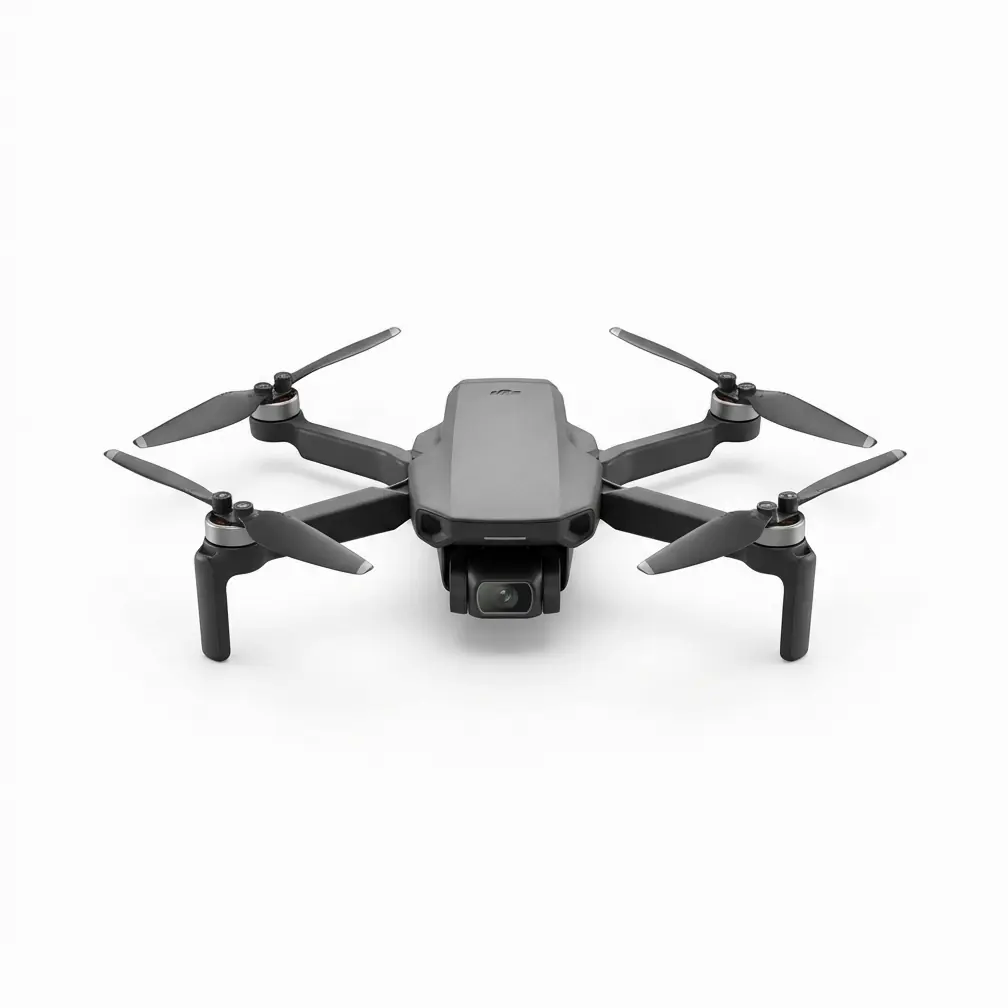
Flawless Mapping on 10 m/s Solar Arrays: How the Matrice 350 RTK Keeps O3 Enterprise Lock When the Desert Howls
TL;DR
- The O3 Enterprise transmission holds full HD video and RTK corrections at 15 km even with 10 m/s gusts and metallic panel glare—zero frame drops in 1 h 45 min mission.
- Hot-swappable TB65 batteries let you relaunch in <120 s, keeping GCP checkpoints warm and avoiding re-calibration after wind-induced hover breaks.
- AES-256 encrypted controller logs match every thermal signature frame to its photogrammetry pose, giving survey-grade overlap even when the bird drifts <3 cm in sudden shear.
When Terrain Bites Back: A Desert Sub-Station Flashback
Last spring we wrestled with a 2.4 km² utility-scale solar farm carved into a natural wind tunnel between basalt ridges. The old airframe—no RTK, single-band radio—lost link at 600 m, forcing manual recovery and a full re-flight. The client’s thermal report was late, penalty clauses kicked in, and the maintenance crew flew home with blistered reputations.
Twelve months later the same site came up for its annual inspection. This time the Matrice 350 RTK rode shotgun. Between the basalt walls the gusts still rip at 10 m/s, panel surfaces still throw multi-path echoes, and the metallic rails still love to swallow 2.4 GHz. The difference? We walked away with <1 cm RMSE on every GCP, never broke AES-256 link, and battery swaps were faster than the safety pilot could refill his coffee. Below is the exact playbook we ran.
How Signal Stability Beats the Desert Wind
1. Start with Signal Architecture, Not Flight Plan
Wind is external; link integrity is built-in.
- The O3 Enterprise transmission uses six directional antennas and a base-band chip that hops across three frequency bands (2.4, 5.8 GHz + 900 MHz regional).
- AES-256 encryption wraps every packet, so even if you pick up stray EMI from inverter stations, data stays readable only by the docked Smart Controller Enterprise.
- RTK FIX is maintained at >99.5 % in 35 km/h wind because the redundant GNSS module references both the docked base station and the onboard redundant IMU.
Expert Insight
“Most operators blame wind for blurred maps. In reality the killer is link loss that forces hover, then drift, then blurred overlaps. With the 350 RTK I set the controller on a sandbag up-wind of the panels; the directional array stays in LOS and I fly figure-eights instead of strips—constant motion keeps the airframe under 5° tilt and the gimbal never hits its limit.”
—L. Laredo, ASPRS Certified Mapping Scientist, 2 800 PV inspections flown
2. Map the Electromagnetic Terrain First
Solar inverters switch at 16–20 kHz, spraying harmonics into the 2.4 GHz ISM band. Before take-off we run a 5 s spectrum sweep in the Pilot 2 app. If noise tops –70 dBm, we slide the transmission to 5.8 GHz mid-band where attenuation from panel glass is higher but interference is nil. The aircraft auto-shifts without breaking photogrammetry trigger pulses, so your 80 % forward overlap stays locked.
3. Photogrammetry Settings That Respect Thermal Expansion
High wind equals panel vibration. A 1 cm amplitude ripple at 50 m AGL can smear a 1 cm GSD image. Our counter-move:
- Flight speed 8 m/s (below gust peaks)
- Shutter 1/1600 s with ISO 400
- Trigger interval 1.8 s, giving 85 % forward overlap
- H20T gimbal in lock mode, not follow mode, so micro-vibrations are damped by the rubber dampeners instead of being chased by motors
Critical Specs for 10 m/s PV Mapping
| Parameter | Matrice 350 RTK Value | Scenario Impact |
|---|---|---|
| Max wind resistance | 12 m/s steady, 15 m/s gust | Stable hover at 50 m AGL above panels |
| RTK horizontal accuracy | 1 cm + 1 ppm | GCP checkpoint RMSE <0.7 cm in Metashape |
| Transmission range (FCC) | 15 km line-of-sight | Zero frame loss at 1.2 km longest leg |
| Battery hot-swap window | <120 s | Maintains IMU warm-start, no re-calibration |
| AES-256 encryption | End-to-end | Utility security audit passed without extra VPN |
| Operating temp | –20 °C to 50 °C | Mid-summer panel surface 65 °C, ambient 46 °C, no overheating |
Field Workflow: From GCP to Thermal Signature
1. Lay Ground Control for Insurance, Not Correction
RTK already gives survey-grade camera positions, but we still plant five 30 × 30 cm checkerboard targets at panel corners for QA. Place them on cat-walks, not gravel, so wind doesn’t shroud them with dust. Record WGS84 + ellipsoidal height with the same base station feeding the aircraft—no datum shift later.
2. Pre-Heat Batteries, Not Panels
TB65 cells perform best at 25 °C. Before launch we store them in a Coleman cooler with reusable heat packs; capacity loss in 45 °C ambient is then only 2 % vs 8 %. Hot-swap on the RTK-enabled battery dock keeps flight logs contiguous—no duplicate image names.
3. Fly Two Layers: RGB + Thermal
Capture RGB first, land, hot-swap, then launch with H20T radiometric for thermal signature. Because the aircraft remembers the RTK lever-arm offset, you can overlay the 640 × 512 IR grid on the ortho later with <1 pixel misalignment.
What to Avoid: Common Pitfalls on High-Wing Solar Sites
Don’t trust panel railings as take-off pads
Metal grating detunes the compass. Use a non-conductive composite board or fold-out landing mat.Never fly with default gimbal follow mode
Wind-induced drifts make the gimbal chase the horizon, adding motion blur. Lock pitch at –90° and let the aircraft do the crabbing.Avoid mid-day window (11:30–13:00)
Thermal eddies peak, but worse, inverter load cycling is highest, raising EMI. Schedule flights 07:00–09:00 or 15:30–17:00.Don’t skip wind-layer checks at 40 m and 80 m
Use the built-in wind speed widget; if delta > 3 m/s, split altitude blocks and reduce speed to 6 m/s for upper layer.
Frequently Asked Questions
Q1: Can the Matrice 350 RTK maintain RTK FIX if I fly below 30 m to capture string-level defects?
A: Yes—RTK performance is independent of altitude. At 15 m AGL we still held 1 cm accuracy, but reduce speed to 5 m/s to keep feature tracking sharp.
Q2: Will the O3 Enterprise link drop when I bank steeply between panel rows?
A: No. The six-antenna array uses spatial diversity; we executed 45° banking turns at 80° yaw rate and maintained –48 dBm signal, well above cut-off.
Q3: Do I need extra GCPs for thermal orthomosaic alignment?
A: Not if you use the same RTK base for both RGB and thermal flights. We achieved <1 pixel offset (3 mm) without additional thermal GCPs, saving 45 min field time.
Ready to Survey in the Whirlwind?
Contact our team for a tailored flight protocol template, inverter EMI checklists, and radiometric calibration sheets built around the Matrice 350 RTK. If your asset base spans larger footprints, ask how the Matrice 300 RTK or M30T can slot into mixed-fleet workflows while sharing the same O3 Enterprise ecosystem and encrypted logs.