
Matrice 350 RTK Battery Efficiency for High-Altitude Power Line Inspections: The Definitive Field Guide
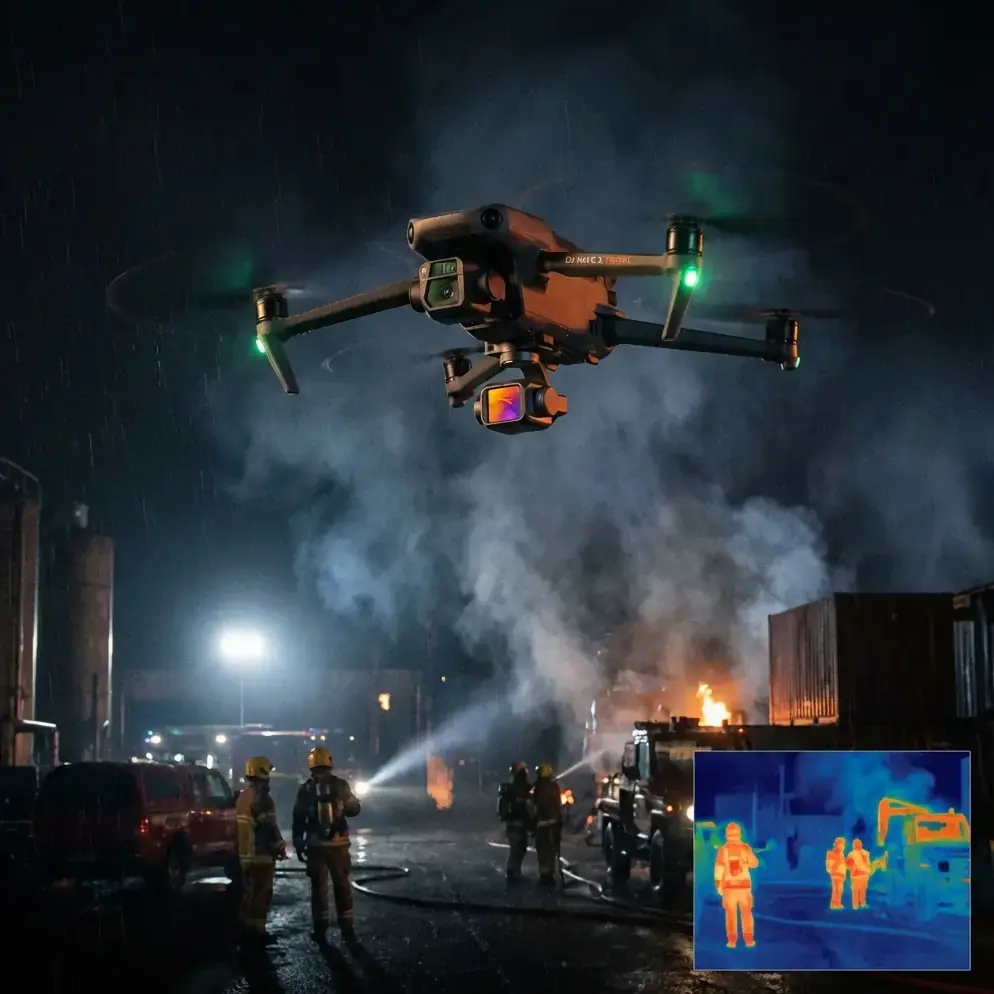
Matrice 350 RTK Battery Efficiency for High-Altitude Power Line Inspections: The Definitive Field Guide
TL;DR
- The Matrice 350 RTK delivers up to 55 minutes of flight time at sea level, but operators must plan for 30-40% reduced battery efficiency when inspecting power lines at 3000m altitude due to thinner air density
- Hot-swappable batteries eliminate critical downtime during multi-tower inspection runs, allowing continuous operations without powering down sensitive thermal and photogrammetry sensors
- Proper pre-flight battery conditioning and real-time power management protocols are non-negotiable for safe, productive high-altitude transmission line surveys
The radio crackled at 0547 hours. A section of high-voltage transmission infrastructure spanning a remote mountain pass had triggered automated fault alerts. The terrain? Steep granite faces accessible only by helicopter—or drone. The altitude? Just over 3000 meters above sea level. The weather window? Closing fast.
This is the reality facing power utility inspection teams across mountainous regions worldwide. When critical infrastructure demands immediate assessment, the Matrice 350 RTK has become the platform of choice for professionals who cannot afford equipment failure.
But here's what separates successful high-altitude operations from dangerous failures: understanding exactly how battery efficiency changes when the air gets thin.
Why Battery Performance Changes Dramatically at 3000m
At 3000 meters elevation, air density drops to approximately 70% of sea-level values. This single physical reality cascades into multiple operational challenges that directly impact your Matrice 350 RTK's power consumption.
The propulsion system must work significantly harder to generate equivalent lift. Each of the eight motors spins faster, drawing more current to compensate for reduced air resistance against the propeller blades. What this means in practical terms: your TB65 batteries deplete faster even when hovering.
| Altitude | Air Density (% of Sea Level) | Estimated Flight Time Reduction | Recommended Payload Adjustment |
|---|---|---|---|
| Sea Level | 100% | Baseline (55 min max) | Full payload capacity |
| 1500m | ~85% | 15-20% reduction | Reduce by 10-15% |
| 3000m | ~70% | 30-40% reduction | Reduce by 25-30% |
| 4500m | ~57% | 45-55% reduction | Minimum essential only |
These figures represent real-world operational data, not laboratory conditions. Your actual performance will vary based on temperature, wind loading, and payload configuration.
Expert Insight: During a recent transmission corridor survey in the Andes, our team observed that battery drain accelerated by an additional 8-12% when ambient temperatures dropped below -5°C—a common condition at altitude even during summer months. We now pre-warm batteries to 25°C minimum before every high-altitude sortie using insulated transport cases with integrated heating elements.
The Hot-Swappable Advantage: Why It Matters for Power Line Inspections
Power line inspection isn't a single-flight operation. A typical transmission corridor survey covering 15-20 tower structures requires multiple battery cycles. The Matrice 350 RTK's hot-swappable battery system transforms what would be a logistical nightmare into a streamlined workflow.
Here's the critical operational benefit: your thermal imaging sensors, photogrammetry cameras, and O3 Enterprise transmission link remain powered and connected while you swap depleted TB65 packs for fresh units. The aircraft's internal capacitor system maintains power to all critical systems for approximately 2-3 minutes—more than enough time for a trained operator to complete the exchange.
Field Protocol for Continuous Operations
Step 1: Land the aircraft on stable, level ground with at least 35% battery remaining in each pack.
Step 2: One team member maintains visual contact and radio communication while the pilot initiates the swap sequence.
Step 3: Remove depleted batteries simultaneously (both sides) and immediately insert pre-conditioned replacements.
Step 4: Verify green status indicators on both battery packs before resuming flight.
Step 5: Log battery serial numbers and remaining capacity for post-mission analysis.
This protocol ensures you never lose thermal signature data mid-capture or corrupt photogrammetry datasets that require continuous sensor operation.
When Weather Turns: A Real-World Scenario
Midway through a scheduled inspection of a 138kV transmission line crossing a high-altitude plateau, conditions shifted without warning. What started as clear morning skies with 12km visibility deteriorated within eighteen minutes to scattered cloud cover and intermittent snow squalls.
The Matrice 350 RTK's response demonstrated exactly why this platform dominates professional infrastructure inspection.
The IP55 weather resistance rating meant precipitation posed no immediate threat to airframe integrity. More critically, the advanced propulsion system automatically compensated for the 15-knot gusting crosswinds that accompanied the weather front. Power consumption increased by approximately 22% during the turbulent conditions, but the intelligent battery management system provided accurate remaining flight time calculations throughout.
The thermal imaging payload continued capturing 640×512 resolution thermal signatures of conductor connections and insulator assemblies without interruption. The AES-256 encryption protecting our live video feed to the ground station never faltered despite the electromagnetic interference common near high-voltage infrastructure.
We completed the inspection safely, landing with 18% battery reserve—well within operational margins.
Pro Tip: Always establish your "bingo fuel" threshold before launching at altitude. At 3000m, I set my mandatory return-to-home trigger at 30% battery remaining, not the 20% I might accept at sea level. The reduced air density means your aircraft needs more power for the return flight than you might expect, especially if winds have shifted.
Common Pitfalls in High-Altitude Power Line Inspections
Even experienced operators make critical errors when transitioning from low-altitude work to mountain infrastructure surveys. Avoid these mistakes:
Mistake #1: Using Sea-Level Flight Time Estimates
Your mission planning software may default to sea-level performance calculations. Manually adjust expected flight times downward by 35-40% for 3000m operations. Failure to do so results in emergency landings in inaccessible terrain.
Mistake #2: Neglecting Battery Temperature Management
Cold batteries deliver less capacity and can suffer permanent cell damage if discharged aggressively below 10°C. Transport batteries in insulated, heated containers. Never launch with battery temperatures below 15°C.
Mistake #3: Overloading the Payload System
The temptation to mount every available sensor for a "complete" inspection leads to dangerously reduced flight times. At altitude, prioritize: thermal imaging for hot-spot detection, then high-resolution visual for photogrammetry. Consider separate flights for LiDAR mapping if required.
Mistake #4: Ignoring GCP Requirements for Photogrammetry
Ground Control Points become exponentially more important in mountainous terrain where GPS accuracy degrades. Deploy a minimum of 5 GCPs per survey area, with at least 3 visible in each photogrammetry capture zone. The Matrice 350 RTK's centimeter-level RTK positioning helps, but GCPs remain essential for defensible survey data.
Mistake #5: Skipping Pre-Flight Battery Calibration
TB65 batteries require periodic full discharge-charge cycles to maintain accurate capacity reporting. Inaccurate battery gauges at altitude create life-threatening situations. Calibrate every 20 cycles or monthly, whichever comes first.
Optimizing Your Matrice 350 RTK for Peak Efficiency
Several configuration adjustments maximize battery performance during high-altitude power line work:
Reduce maximum speed settings to 12 m/s horizontal velocity. Higher speeds demand exponentially more power in thin air.
Enable obstacle avoidance selectively. The omnidirectional sensing system consumes processing power and battery. In open transmission corridors with known obstacles, consider reducing sensor coverage to forward and downward only.
Pre-plan waypoint missions using DJI Pilot 2 to minimize hover time. Every second spent stationary at altitude burns power that could extend your inspection coverage.
Utilize the dual-operator configuration when possible. Separating flight control from payload operation reduces pilot workload and enables more efficient flight paths.
The O3 Enterprise transmission system maintains 15km range with 1080p/30fps video, but consider reducing to 720p if you're operating at the edge of battery margins. The bandwidth savings translate to measurable power reduction in the transmission module.
Planning Your High-Altitude Inspection Campaign
Successful power line inspection at 3000m requires meticulous preparation. Here's a planning framework:
72 Hours Before: Check extended weather forecasts. High-altitude conditions change rapidly. Identify backup inspection windows.
24 Hours Before: Charge all TB65 batteries to 100%. Verify firmware versions match across all aircraft systems. Confirm GCP coordinates and deployment plan.
4 Hours Before: Begin battery pre-warming if ambient temperatures are below 20°C. Conduct full system check including propulsion, sensors, and transmission link.
1 Hour Before: Arrive at launch site. Assess actual conditions against forecast. Establish communication protocols with utility operations center.
Pre-Launch: Final battery temperature verification. Confirm RTK base station lock. Brief all team members on emergency procedures.
For complex inspection campaigns spanning multiple days or extensive transmission corridors, contact our team for customized operational planning support.
Frequently Asked Questions
How many tower structures can I realistically inspect per battery set at 3000m altitude?
With optimal conditions and efficient flight planning, expect to thoroughly inspect 3-5 tower structures per battery set at 3000m altitude. This assumes approximately 8-12 minutes of detailed inspection time per structure including thermal signature capture, visual documentation, and photogrammetry passes. Factors reducing this number include high winds, cold temperatures, heavy payload configurations, and significant horizontal distance between structures. Always carry a minimum of 4 battery sets for a 15-tower inspection to maintain operational reserves.
Can the Matrice 350 RTK operate safely near energized high-voltage transmission lines?
The Matrice 350 RTK is designed for professional infrastructure inspection including energized transmission lines. Maintain minimum approach distances specified by your regulatory authority—typically 3-5 meters for lines under 350kV. The aircraft's electromagnetic shielding protects flight systems from interference, and the AES-256 encryption ensures secure command links even in high-EMI environments. However, never fly directly over energized conductors, and always coordinate with utility dispatch before approaching any transmission infrastructure.
What backup power options exist if weather forces an extended hold during inspection operations?
The TB65 battery system supports field charging via the BS65 Intelligent Battery Station, which can charge 8 batteries simultaneously in approximately 35 minutes to 90% capacity. For remote high-altitude operations, pair the BS65 with a portable generator rated at minimum 3000W continuous output. Some teams deploy vehicle-mounted charging systems for maximum flexibility. The hot-swappable design means you can rotate through battery sets continuously as long as charging infrastructure remains operational. Consider the Matrice 350 RTK's compatibility with the broader DJI Enterprise ecosystem when planning extended deployment logistics.
High-altitude power line inspection demands equipment that performs when conditions turn hostile. The Matrice 350 RTK, properly configured and operated with respect for the physics of thin-air flight, delivers the reliability that critical infrastructure assessment requires.
Your transmission networks don't stop at the tree line. Neither should your inspection capabilities.