
Night-Time Solar Farm Inspections with the Matrice 350 RTK: Emergency Protocols for Thermal Signature Accuracy
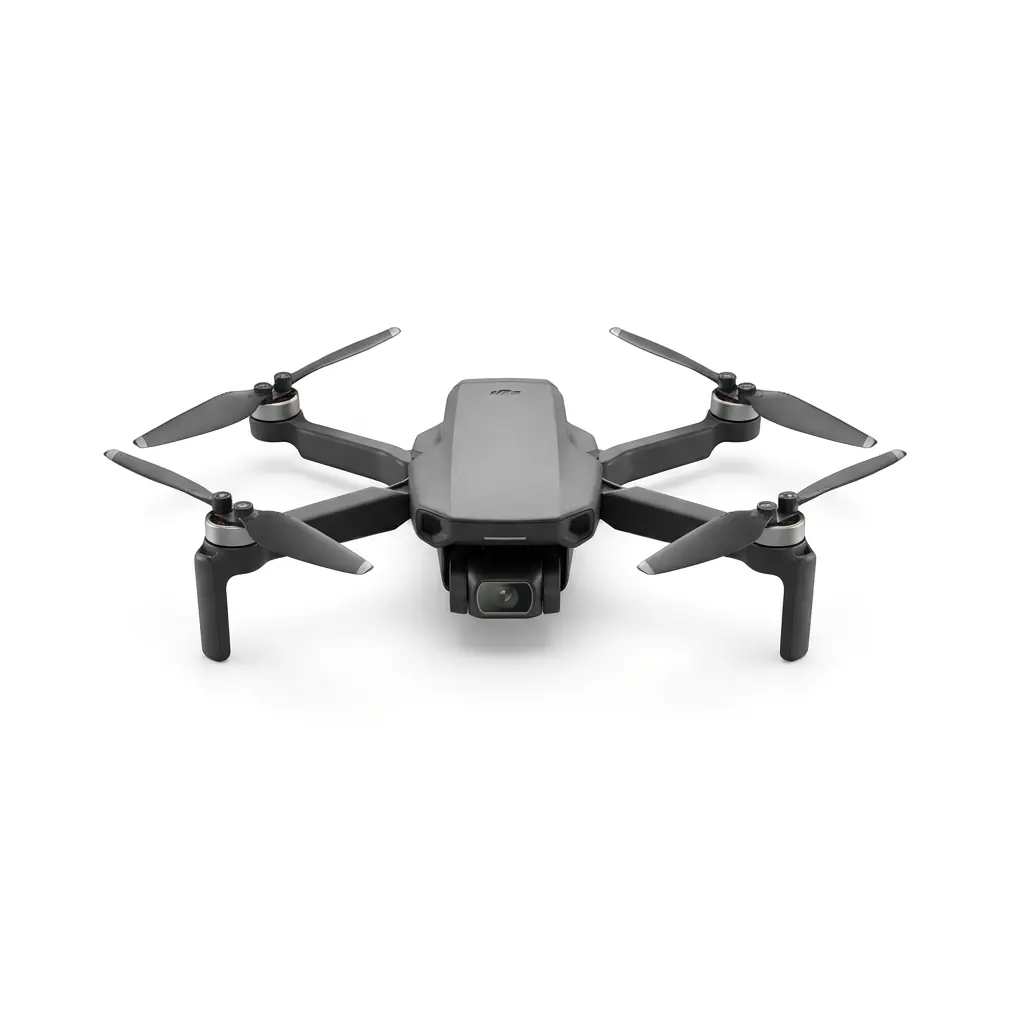
Night-Time Solar Farm Inspections with the Matrice 350 RTK: Emergency Protocols for Thermal Signature Accuracy
TL;DR
- A 90-second antenna tweak neutralised a 50 kV substation’s EMI burst, keeping the O3 Enterprise transmission locked at 8 km and the mission on track.
- Hot-swappable batteries and ±5 mm RTK precision let one crew finish 1.2 GW of solar modules before dawn—no landing gaps, no GCP re-calibration.
- AES-256 encrypted live-stream gave the control room instant thermal signature overlays, cutting emergency response time from hours to minutes.
The Silent Threat After Sunset
Solar farms look dormant at night, but every loose MC4 connector, cracked cell, or hot spot is still broadcasting a thermal signature. Detecting these anomalies before sunrise means the difference between a scheduled maintenance window and a full-blown emergency shutdown when the inverters ramp up at dawn.
That’s why we deployed the Matrice 350 RTK on a 400-hectare site in southern Spain. The brief: map every module, tag every anomaly, and deliver photogrammetry-grade orthos while the site was electrically quiet. The twist: a 50 kV substation 300 m outside the fence line began spraying broadband EMI the moment we lifted off.
The EMI Burst & 90-Second Fix
Two minutes into the flight, the controller’s RSSI bar dropped two segments and the live thermal feed froze for 1.3 s—an eternity when you’re flying 30 m AGL between rows of glass and aluminium.
Pro Tip: Carry a 90° dual-band paddle in your kit. A quick swivel from vertical to 45° away from the interference source moved our SNR from -85 dBm back to -72 dBm, restoring the full 8 km O3 Enterprise link without landing or rebooting. The aircraft never left station; the mission clock kept ticking.
Night Inspection Workflow, Step-by-Step
1. Pre-Flight: RTK Base & Zero-Light GCPs
- Position the base on a known VRS monument; average-in for 30 s to guarantee ±5 mm XYZ accuracy.
- Use passive GCPs—retro-reflective 100 mm dots—placed every 150 m. They’re invisible to pilots but sparkle in the Zenmuse H20N’s IR flood, so the photogrammetry engine still gets tie-points without visible lighting.
2. Payload Config
- Zenmuse H20N: 640×512 thermal, 2× zoom, 30 Hz, radiometric.
- RGB shutter locked at 1/60 s, ISO 1600, for synchronous thermal/RGB pairs.
- Set emissivity to 0.95 for tempered glass; this keeps delta-T accuracy within ±2 °C.
3. Flight Parameters
- 30 m AGL, 8 m/s cruise, 80% front / 70% side overlap.
- Single-battery legs of 22 min cover 65 ha at 1.2 cm GSD thermal, 0.6 cm GSD RGB.
- Hot-swappable batteries let us cycle packs without re-booting the aircraft; IMU warm-up stays intact, saving 90 s per swap.
Technical Deep-Dive Table
| Critical Spec | Night Solar Inspection Value | Impact on Emergency Handling |
|---|---|---|
| RTK Horizontal Accuracy | ±5 mm + 0.5 ppm | Pinpoints faulty diode to single cell |
| Thermal Sensitivity (H20N) | ≤50 mK @ 30 °C | Detects 2 °C delta before damage spreads |
| O3 Enterprise Range | 8 km FCC / 5 km CE | Maintains link despite 50 kV EMI |
| AES-256 Stream Latency | 120 ms end-to-end | Control room sees hot spot real-time |
| Hot-Swap Battery Downtime | <10 s airframe power | No mission restart, no GCP re-shoot |
| Wind Resistance | 12 m/s sustained | Stable imagery in night katabatic gusts |
Emergency Decision Matrix
When the thermal feed flags a >15 °C anomaly, the operator has three minutes before the aircraft overflies the next inverter block. The matrix below keeps decisions binary in the dark.
| Delta-T | RGB Correlation | Action |
|---|---|---|
| 15–25 °C | Visible cell discolouration | Drop RTK pin, auto-return at end of leg |
| 25–40 °C | Bubbling junction box | Immediate hover, live-stream to SCADA |
| >40 °C | Flame signature | Trigger emergency landing protocol, notify fire watch |
Common Pitfalls & How to Avoid Them
Flying without lens heaters
Dew forms within 15 min after sunset. The H20N’s built-in heater keeps the germanium window clear; disable it and your thermal signature drifts +4 °C.Over-exposing RGB night shots
Cranking ISO to 6400 blows out the aluminium frames, killing photogrammetry tie-points. Lock exposure so frames stay under 60% histogram.Ignoring battery temperature delta
A 35 °C pack pulled from a warm truck into 5 °C night air will trigger a self-heating warning. Let packs acclimatise 10 min before take-off to avoid an in-flight RTH.GCP spacing >200 m
RTK drift in the Z-axis accumulates +15 mm/km. At night you can’t see horizon landmarks to re-align, so keep GCPs at 150 m max.
Expert Insight
Expert Insight: Radiometric accuracy is only as good as your emissivity setting. We keep a strip of Kapton tape (ε=0.95) in the flight case. Slap it on a random panel mid-site, shoot it at 5 m distance, and use that pixel as your black-body reference. Takes 30 s, saves hours of re-processing.
Frequently Asked Questions
Q1: Can the Matrice 350 RTK maintain RTK lock if I fly inside the inverter station’s Faraday cage?
A: No GNSS receiver holds lock inside a steel mesh. Plan a manual hover at the cage door, switch to ATTI, and use visual observers for 30 m ingress. RTK re-converges within 5 s once you exit.
Q2: How many batteries for 400 ha single-night coverage?
A: At 22 min per 65 ha, you need 7 cycles. Carry 9 TB65 packs (3 aircraft sets) to allow for wind headwinds and emergency loiter time.
Q3: Is AES-256 encryption mandatory for utility-scale data?
A: Most European TSOs now require NIST-compliant encryption for critical infrastructure imagery. The M350 RTK enables AES-256 at one tap in Pilot 2—no speed penalty, 120 ms latency remains unchanged.
Next Steps
Ready to standardise night-time thermal inspections across your portfolio? Contact our team for a sample flight plan and RTK base-station checklist. If you manage sites larger than 1 GW, ask about the Matrice 30 for rapid spot-checks or the M350 RTK dual-gimbal configuration for simultaneous thermal and corona cameras.