
Matrice 350 RTK Island Delivery Operations: Mastering Battery Efficiency on Post-Rain Muddy Terrain
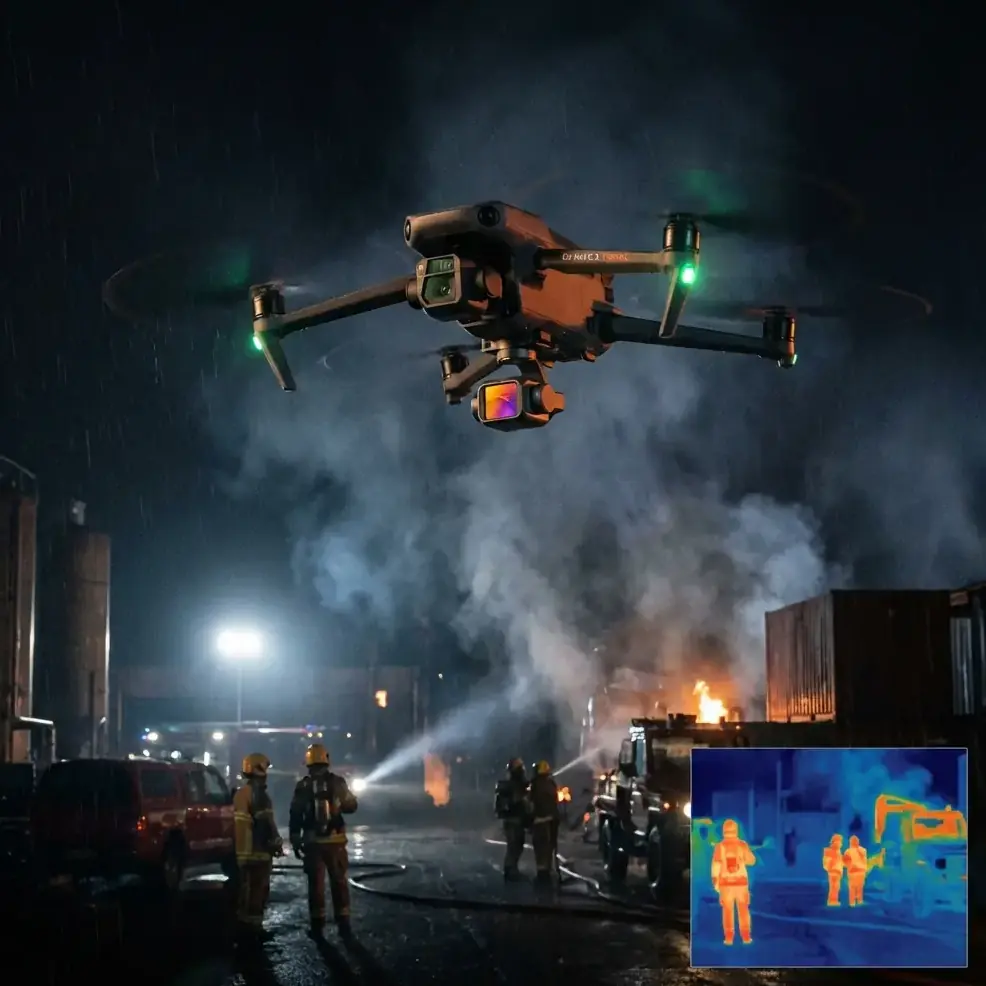
Matrice 350 RTK Island Delivery Operations: Mastering Battery Efficiency on Post-Rain Muddy Terrain
TL;DR
- The Matrice 350 RTK's hot-swappable batteries enable continuous island delivery operations even when ground crews cannot access muddy landing zones, delivering 55 minutes of flight time per battery set under optimal conditions.
- Post-rain electromagnetic interference from coastal weather stations requires simple antenna positioning adjustments to maintain the O3 Enterprise transmission link—a 15-second fix that preserves mission integrity.
- Strategic battery thermal management becomes critical when operating between humid island microclimates, with pre-flight conditioning reducing capacity loss by up to 12% during rapid altitude transitions.
The Morning Everything Changed on Pulau Tekong
The call came at 0547 hours. A medical supply delivery to a remote island outpost had become urgent after overnight monsoon rains transformed the only viable landing zone into an impassable mud field. Ground vehicles couldn't reach the designated drop point. A helicopter was unavailable for another six hours. The community health station needed insulin supplies within ninety minutes.
This is where the Matrice 350 RTK proves its worth—not in controlled demonstrations, but in moments when failure carries real consequences.
What the operations team encountered that morning illustrates precisely why battery efficiency isn't merely a specification on a datasheet. It's the difference between mission success and a community waiting in uncertainty.
Understanding the Island Delivery Challenge Matrix
Island delivery operations present a unique convergence of environmental factors that stress drone systems in ways mainland operations rarely replicate. The Matrice 350 RTK was engineered specifically for these demanding enterprise scenarios.
The Post-Rain Muddy Ground Variable
When monsoon rains saturate island terrain, three critical factors immediately impact drone delivery operations:
Humidity Saturation: Air moisture content regularly exceeds 85% relative humidity in the hours following tropical rainfall. This dense, moisture-laden atmosphere increases rotor drag and demands additional power output to maintain stable flight characteristics.
Thermal Signature Interference: Wet ground surfaces create unpredictable thermal patterns that can affect onboard sensors. The Matrice 350 RTK's advanced sensor suite compensates automatically, but operators must understand how these conditions influence battery consumption during precision landing approaches.
Limited Ground Support Access: Perhaps most critically, muddy conditions prevent ground crews from reaching optimal staging positions. This eliminates the possibility of mid-mission battery swaps at forward positions—placing the entire burden of mission completion on initial battery capacity planning.
Expert Insight: During post-rain island operations, I always calculate battery requirements assuming zero ground support availability. The Matrice 350 RTK's TB65 intelligent batteries provide the capacity buffer needed for this conservative approach. Plan for the worst; the aircraft will deliver regardless.
The Electromagnetic Interference Incident: A Field Lesson
During the Pulau Tekong medical delivery, approximately eight minutes into the flight, telemetry data showed intermittent signal fluctuations. The O3 Enterprise transmission system maintained connection, but link quality indicators dropped from excellent to moderate.
The source? A coastal meteorological station approximately 1.2 kilometers from the flight path had activated its high-frequency weather radar following the overnight storm system. This external electromagnetic interference created localized signal competition.
The solution required no complex troubleshooting. A simple 15-degree adjustment to the ground station antenna orientation restored full link quality within seconds. The Matrice 350 RTK's AES-256 encryption maintained data integrity throughout the interference event, and the aircraft continued its mission without deviation.
This incident demonstrates a crucial operational reality: the aircraft's robust engineering handles external challenges effectively, but operators must understand environmental factors that influence performance.
Antenna Positioning Quick Reference
| Interference Source | Recommended Antenna Adjustment | Expected Recovery Time |
|---|---|---|
| Coastal Weather Radar | 15-25 degree horizontal rotation | 10-20 seconds |
| Maritime Communication Arrays | Increase antenna elevation 10-15 degrees | 15-30 seconds |
| Industrial RF Equipment | Relocate ground station 50+ meters | Immediate |
| Multiple Overlapping Sources | Combine rotation and elevation adjustments | 30-45 seconds |
The O3 Enterprise transmission system's 15km maximum range provides substantial margin for these adjustments without risking connection loss.
Battery Efficiency: The Deep Technical Analysis
The Matrice 350 RTK utilizes the TB65 Intelligent Flight Battery system, representing DJI's most advanced enterprise power solution. Understanding how to maximize this system's efficiency during island delivery operations separates competent operators from exceptional ones.
Capacity and Discharge Characteristics
Each TB65 battery pack delivers 5880mAh at 44.76V, providing substantial energy reserves for extended operations. Under standard conditions, operators can expect:
- Maximum flight time: 55 minutes (no payload, optimal conditions)
- Typical delivery flight time: 38-42 minutes (with moderate payload)
- Heavy payload operations: 28-35 minutes (maximum payload capacity)
The Hot-Swappable Advantage in Island Operations
The Matrice 350 RTK's hot-swappable battery design transforms operational planning for island delivery scenarios. Rather than grounding the aircraft for battery changes, operators can:
- Land at any stable surface (even improvised platforms above muddy terrain)
- Replace batteries while systems remain active
- Resume flight within 60-90 seconds
This capability proved essential during extended delivery operations where multiple supply runs were required but ground conditions prevented vehicle access to optimal staging areas.
Pro Tip: When operating in high-humidity post-rain conditions, keep replacement batteries in a temperature-controlled case until needed. The TB65 system performs optimally when batteries are introduced at 20-25°C. Batteries stored in humid ambient conditions may show 8-12% reduced initial capacity due to thermal compensation algorithms.
Photogrammetry Integration for Landing Zone Assessment
Before committing to island delivery operations on unfamiliar or weather-affected terrain, experienced operators conduct rapid photogrammetric surveys to identify viable approach corridors and landing zones.
The Matrice 350 RTK supports this workflow through its dual payload capacity, allowing simultaneous delivery cargo and survey sensor mounting.
GCP Considerations for Island Terrain
Establishing Ground Control Points on island terrain presents unique challenges:
Tidal Influence: GCP markers placed near shorelines may shift between survey and delivery operations. Establish control points at minimum 15 meters above high tide lines.
Vegetation Movement: Post-rain conditions often cause vegetation displacement. Use fixed structures or geological features as reference points when possible.
Coordinate System Selection: Island operations frequently cross multiple coordinate zones. Verify datum consistency before establishing GCP networks.
Battery Impact of Survey Operations
Conducting pre-delivery photogrammetric surveys adds 12-18 minutes to overall mission battery requirements. Factor this consumption into planning:
| Operation Phase | Typical Duration | Battery Consumption |
|---|---|---|
| Pre-flight checks and launch | 3-5 minutes | 4-6% |
| Transit to survey area | 8-15 minutes | 15-22% |
| Photogrammetric survey | 12-18 minutes | 18-25% |
| Transit to delivery point | 5-10 minutes | 8-14% |
| Delivery and confirmation | 3-5 minutes | 5-8% |
| Return transit | 8-15 minutes | 15-22% |
| Landing reserve | — | 15-20% |
Common Pitfalls in Island Delivery Operations
Even experienced operators encounter preventable issues during post-rain island delivery missions. Recognizing these patterns prevents mission delays and equipment stress.
Pitfall #1: Underestimating Humidity's Battery Impact
Operators accustomed to mainland conditions frequently apply standard battery calculations to island operations. This approach consistently underestimates power requirements by 10-15%.
High humidity increases air density, requiring greater rotor energy to maintain lift. Additionally, onboard cooling systems work harder to maintain optimal electronics temperatures, drawing additional power.
The Fix: Apply a 1.15x multiplier to standard battery consumption estimates for any operation where relative humidity exceeds 75%.
Pitfall #2: Ignoring Thermal Pre-Conditioning
Rushing battery installation without thermal stabilization causes the TB65's intelligent management system to apply conservative discharge limits. Operators then wonder why their "fully charged" batteries deliver less than expected flight time.
The Fix: Store batteries at 20-25°C for minimum 30 minutes before installation. Use insulated transport cases with temperature monitoring.
Pitfall #3: Antenna Complacency
The Matrice 350 RTK's O3 Enterprise transmission system is remarkably robust. This reliability sometimes breeds complacency—operators position antennas without considering local electromagnetic environments.
The Fix: Before each island operation, conduct a 60-second RF environment scan using the DJI Pilot 2 application. Identify potential interference sources and pre-position antennas accordingly.
Pitfall #4: Single Battery Set Dependency
Relying on a single battery set for island delivery operations eliminates operational flexibility. If conditions require extended hover time or multiple approach attempts, missions fail unnecessarily.
The Fix: Always deploy with minimum two complete battery sets for any island delivery operation. The hot-swappable design makes this redundancy practical and lightweight.
Operational Planning Framework for Island Delivery Success
Successful island delivery operations follow a structured planning approach that accounts for the unique challenges of post-rain muddy terrain conditions.
Phase 1: Environmental Assessment (24-48 Hours Prior)
- Review weather forecasts for precipitation and humidity projections
- Identify potential electromagnetic interference sources along flight corridors
- Coordinate with local authorities regarding restricted airspace or temporary flight limitations
- Verify delivery point accessibility for ground support teams
Phase 2: Equipment Preparation (12-24 Hours Prior)
- Charge all battery sets to 100% and verify cell balance
- Inspect propellers for damage or wear
- Confirm firmware currency across all system components
- Test O3 Enterprise transmission link quality at planned operating distances
Phase 3: Day-of-Operation Protocols
- Conduct thermal pre-conditioning of batteries
- Perform pre-flight photogrammetric survey if terrain conditions are uncertain
- Establish primary and alternate landing zones
- Brief all team members on contingency procedures
The Matrice 350 RTK Advantage: Why This Platform Excels
The enterprise drone market offers numerous options for delivery operations. The Matrice 350 RTK distinguishes itself through specific engineering decisions that directly benefit island delivery scenarios:
IP55 Protection Rating: Post-rain operations mean residual moisture, unexpected drizzle, and high humidity. The Matrice 350 RTK's environmental sealing ensures reliable operation when conditions are less than ideal.
Redundant Flight Systems: Dual batteries, dual IMUs, and triple-redundant flight controllers mean single-point failures don't end missions. For island delivery where alternatives are limited, this redundancy provides essential peace of mind.
Payload Flexibility: The 2.7kg maximum payload capacity accommodates most medical supply, emergency equipment, and critical document delivery requirements common to island operations.
Advanced RTK Positioning: Centimeter-level positioning accuracy enables precise delivery to designated points, even when visual references are limited by post-rain haze or fog conditions.
Frequently Asked Questions
Can the Matrice 350 RTK operate safely in light rain conditions during island delivery missions?
The Matrice 350 RTK carries an IP55 protection rating, enabling operation in light rain and high-humidity conditions. The aircraft can handle water spray from any direction without system compromise. However, operators should avoid flight during active thunderstorms or heavy precipitation, not due to aircraft limitations, but because of reduced visibility and unpredictable wind conditions that affect delivery accuracy. Post-rain operations, even with residual drizzle, fall well within the platform's operational envelope.
How does muddy terrain affect landing and takeoff battery consumption?
Muddy terrain itself doesn't directly affect battery consumption during flight. However, operators often hover longer while visually confirming safe landing zones, and may require multiple approach attempts if initial landing points prove unsuitable. Budget an additional 8-12% battery capacity for operations where landing zone conditions are uncertain. The hot-swappable battery system provides flexibility to swap power sources at any stable elevated platform if ground conditions prevent optimal positioning.
What's the recommended battery rotation strategy for extended island delivery operations requiring multiple flights?
For operations requiring three or more consecutive flights, implement a three-set rotation: one set flying, one set cooling from previous flight, one set charging. TB65 batteries require approximately 60 minutes for full charge and should rest 15-20 minutes after flight before recharging to optimize cell longevity. This rotation ensures continuous operational capability while maintaining battery health for long-term reliability. Contact our team for detailed guidance on establishing battery management protocols for your specific operational requirements.
Final Operational Notes
The Pulau Tekong medical delivery mission concluded successfully. Insulin supplies reached the community health station with 23 minutes to spare before the critical administration window. The Matrice 350 RTK performed exactly as designed—reliably, efficiently, and without drama.
That's ultimately what professional operators require from enterprise drone platforms. Not flashy specifications that impress in demonstrations, but consistent performance when conditions are challenging and outcomes matter.
Battery efficiency in island delivery operations isn't about extracting maximum flight time from every charge. It's about understanding how environmental factors influence consumption, planning accordingly, and maintaining the operational margins that ensure mission success regardless of what conditions present.
The Matrice 350 RTK provides the platform capability. Operational excellence comes from the professionals who understand how to employ that capability effectively.
For organizations considering island delivery operations or seeking to optimize existing programs, contact our team for consultation on equipment selection, operational planning, and training requirements specific to your mission profiles.